Heat Pump Not Heating in Weymouth? When to Call for Repair


Heat Pump Not Heating in Weymouth, MA? Start Here
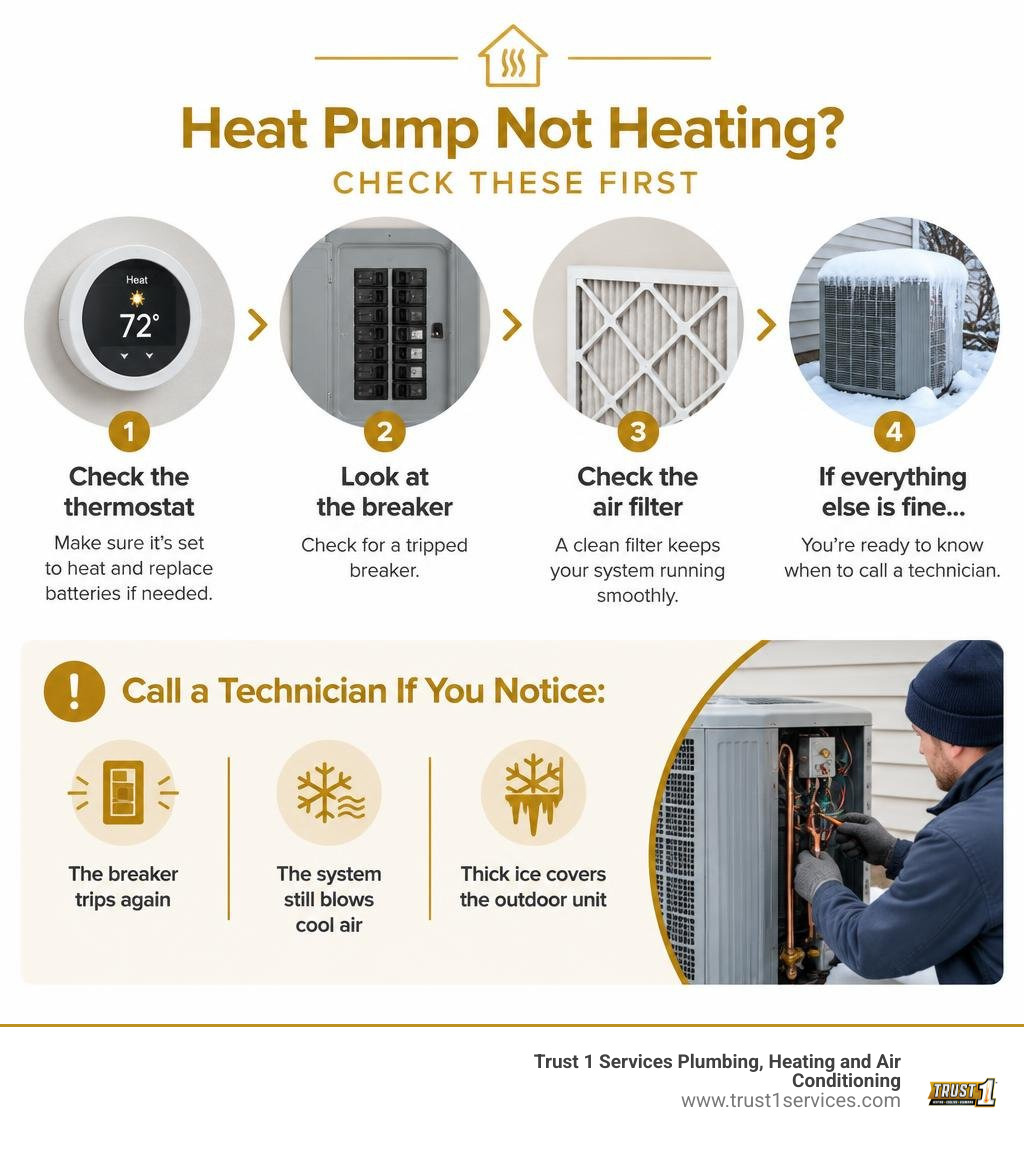
A cold Weymouth morning feels even colder when your heat pump blows cool air. If your heat pump stops heating, check that the thermostat is set to heat, replace its batteries if needed, and look for a tripped breaker. Check the air filter, too. If the breaker trips again, the system still blows cool air, or thick ice covers the outdoor unit, call for heat pump repair in Weymouth, MA. Leave electrical and refrigerant repairs to a trained technician.
Coastal moisture and cold weather can make heating problems more noticeable in Weymouth. A technician can find the cause and explain whether a repair makes sense.
Our team at Trust 1 Services Plumbing, Heating and Air Conditioning helps Weymouth homeowners understand what to check first and when to call a heat pump repair professional.
5 Common Signs You Need Heat Pump Repair in Weymouth, MA
A heat pump often gives warning signs before it quits entirely. Catching these early keeps your family warm and prevents minor issues from causing major component failures.
Here are five common signs you need professional heat pump repair:
- Lukewarm Air from Supply Registers: In heating mode, your heat pump should deliver steady, warm air. If the air feels room temperature or cool, your system may have a failing reversing valve, a bad sensor, or low refrigerant levels.
- Continuous Auxiliary or Emergency Heat Mode: Heat pumps use auxiliary electric heat during extreme cold. If your thermostat stays stuck on “AUX” during mild weather, your primary compressor is struggling, which drives up electric bills.
- Grinding, Squealing, or Rattling Noises: Modern systems run quietly. Metal-on-metal grinding often points to motor bearing failure, while rattling can signal loose hardware or a failing blower wheel.
- Frequent Short Cycling: If your system turns on and off every few minutes without reaching your set temperature, it is short cycling. Overheating components, bad sensors, or restricted airflow cause this issue.
- Sudden Electrical Spikes: A sudden jump in your monthly electric bill without a drop in outdoor temperature indicates your heat pump is working twice as hard due to mechanical friction or component wear.
Why Coastal Winter Weather Drives Heat Pump Repair in Weymouth, MA
Weymouth sits right along Massachusetts Bay, bringing damp ocean air and freezing temperatures all winter. This combination places unique demands on local heat pumps. High South Shore humidity accelerates frost buildup on outdoor coils during November and December cold snaps.
Your heat pump uses a defrost cycle to melt this ice automatically. However, coastal winter weather can overwhelm faulty defrost control boards, stuck reversing valves, or aging sensors. When the defrost cycle fails, ice blankets the coil, blocks airflow, and forces your system into an emergency stop. If you face total heat loss during a freeze, timely heating repair prevents frozen indoor plumbing lines and keeps your home safe.
Central Ducted Heat Pumps vs. Ductless Mini-Split Systems
Both central ducted units and multi-zone ductless mini-splits use the same basic refrigeration cycle, but their repair needs differ. Central heat pumps connect an outdoor condenser to an indoor air handler, distributing heat through ductwork across your home.
Ductless mini-splits use individual indoor heads mounted on walls or ceilings, powered by advanced inverter control boards and electronic expansion valves. These electronic components modulate heating output in real time. Because mini-splits use multi-zone electronic sensors and separate refrigerant lines for each zone, diagnosing them requires specialized diagnostic tools. Understanding these differences helps homeowners evaluate how a heat pump efficiently heats a home across varied layouts. For a closer look at how these systems compare to traditional furnaces, our heat pump vs furnace comparison breaks down the key differences.
Troubleshooting Steps Before Calling a Professional
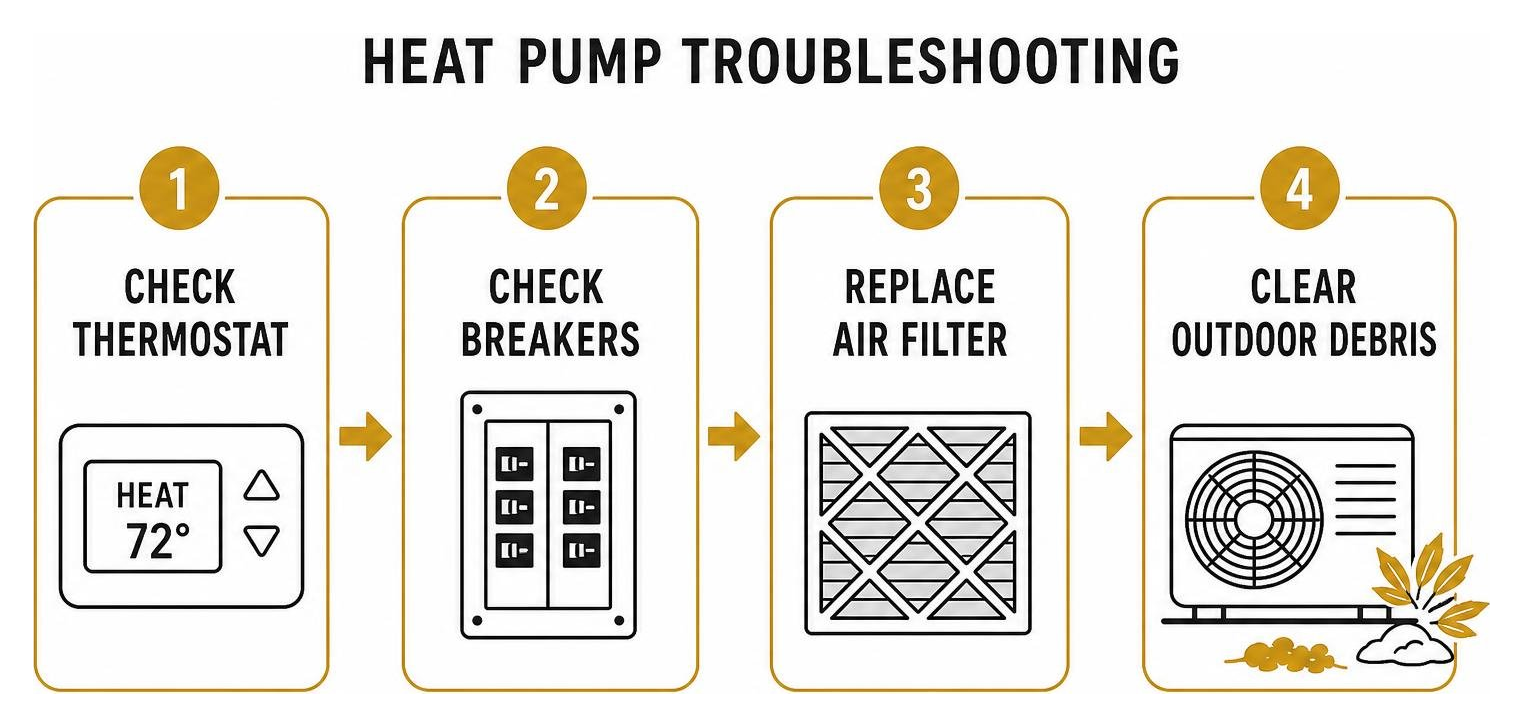
Before scheduling a service call, you can check a few safe, simple items yourself:
- Check Thermostat Settings: Ensure your thermostat is set to “HEAT” rather than “COOL” or “OFF.” Verify the temperature setting is at least three degrees above the current room temperature. Replace dead batteries.
- Inspect Electrical Breaker Panels: Heat pumps use two separate breakers: one for the indoor air handler and one for the outdoor unit. If a breaker has tripped, reset it once. If it trips immediately a second time, leave it off and call a technician.
- Examine Your Air Filter: A dirty, clogged air filter restricts airflow across the indoor coil. This causes the system to overheat and shut down on a high-pressure safety fault.
- Clear Snow and Debris Around the Outdoor Unit: Check your outdoor condenser. Remove fallen leaves, blowing snow, and drifting ice from the top and sides of the unit to ensure steady airflow.
- Verify the Outdoor Disconnect Switch: Make sure the emergency shut-off switch located in the weather-proof box next to your outdoor unit is fully engaged in the “ON” position.
Routine system maintenance keeps these issues from causing unexpected shutdowns. Scheduling regular heating maintenance ensures your system runs cleanly through freezing winter weather. For more detailed technical troubleshooting insights, you can review the A/C-Heat Pump System Troubleshooting Guide from Building Science Education.
Heat Pump Repair vs. Replacement: Making the Cost-Effective Choice
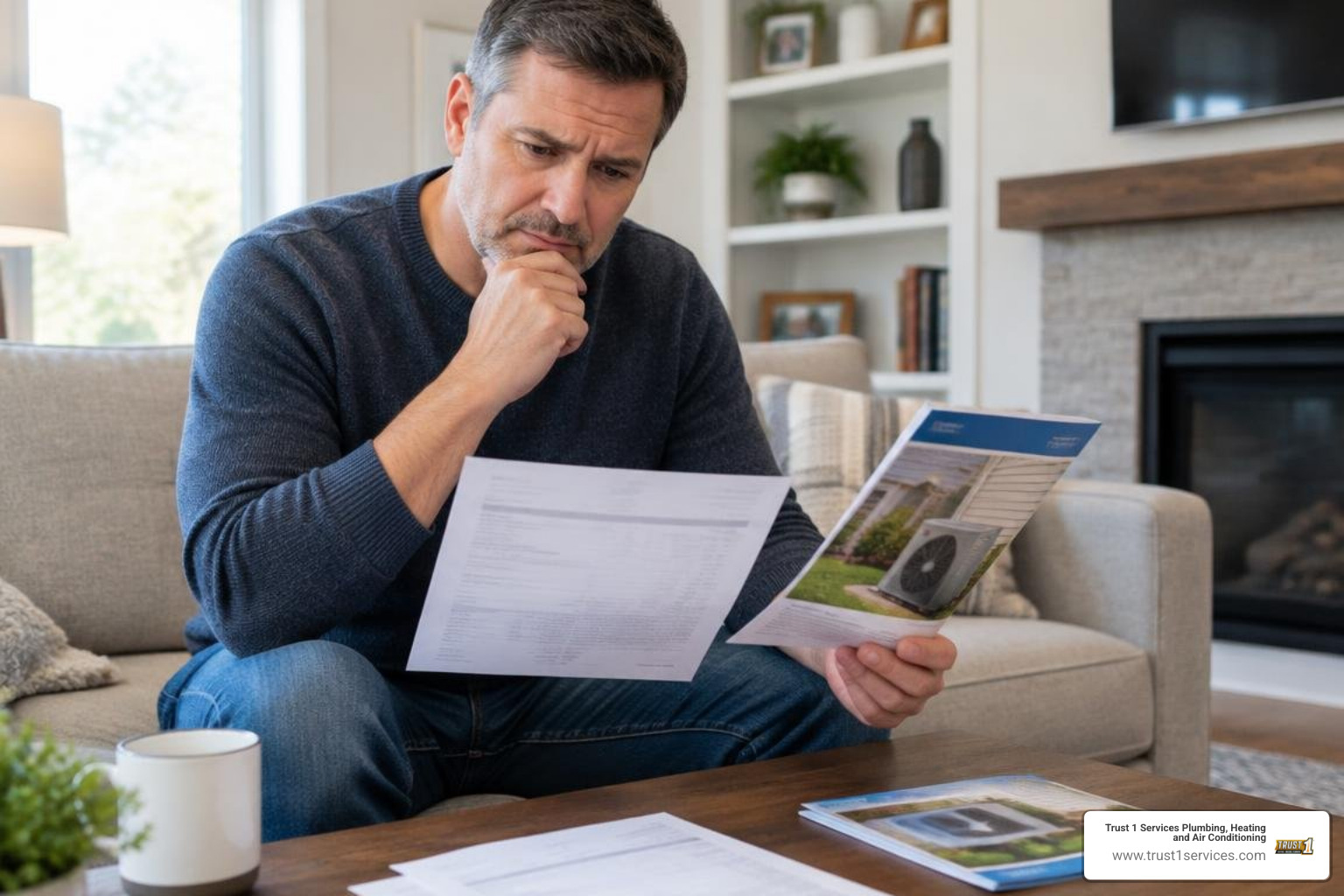
When an older heating system breaks down, you need to decide whether a repair makes financial sense or if replacing the equipment is the smarter choice.
A helpful guideline is the $5,000 rule. Multiply the age of your heat pump in years by the estimated repair cost in dollars. If the total exceeds $5,000, replacement is usually the better investment. For example, a $700 repair on an 8-year-old system equals $5,600, signaling that upgrading may save you more money over time.
| Decision Factor | Recommend Repair | Recommend Replacement |
|---|---|---|
| System Age | Under 10 years old | Over 10 to 15 years old |
| Repair Cost Frequency | First repair in several years | Recurring annual breakdowns |
| Refrigerant Type | Current R-410A / R-454B systems | Phased-out R-22 refrigerant |
| Comfort Consistency | Heats evenly once running | Chronic cold spots and poor heating |
| Energy Efficiency | High efficiency and normal utility bills | Noticeably rising electric bills |
If your system is near the end of its useful lifespan and suffers from major mechanical failures, exploring heat pump replacement helps you restore reliable comfort and avoid sinking money into an aging unit.
Estimating Costs for Heat Pump Repair in Weymouth, MA
Heat pump repair costs vary depending on the failed component, system accessibility, and whether emergency service is required. Here is what Weymouth homeowners can generally expect:
- Diagnostic Inspection: A professional visit typically begins with a diagnostic evaluation to identify the cause of the problem.
- Capacitors and Contactors: These common electrical parts may be more straightforward to replace than major system components.
- Blower and Fan Motors: Motor repairs can vary based on the equipment model, part availability, and labor required.
- Reversing Valves and Electronic Expansion Valves: These complex refrigerant-system repairs often require more extensive diagnostic work and specialized service.
- Refrigerant Leak Detection and Repair: The final cost depends on where the leak is located, the repair needed, and whether the system requires refrigerant recovery and recharging.
Upgrading and Rebate Opportunities in Massachusetts
If your system requires an expensive repair, modern cold-climate heat pumps deliver strong heating performance down to sub-zero temperatures with high SEER2 efficiency ratings.
Massachusetts homeowners can lower replacement costs through statewide clean energy programs. You can claim generous Mass Save incentives for whole-home and partial-home heat pump conversions. You can also explore local municipal incentives like heat pump rebates to save even more. To help manage project costs comfortably, Trust 1 Services provides financing options with flexible monthly payments.
What to Look for in a Weymouth Heating Repair Specialist
Hiring the right team protects your heating investment. When searching for a local heating contractor, keep these standards in mind:
- South Shore Climate Experience: Choose a contractor who understands the impact of coastal humidity, heavy salt air, and freezing Nor’easters on heat pump operation.
- Licensed, Insured, and Certified Technicians: Ensure every technician visiting your home is fully licensed, insured, and trained on both ducted and ductless heat pump platforms.
- Upfront, Transparent Pricing: Reliable contractors provide clear, flat-rate quotes before any work begins, so you never face surprise fees on your final bill.
- Emergency Heating Availability: Winter heating emergencies happen outside business hours. Look for teams that provide prompt same-day service and 24/7 heating support.
- Preventative Service Agreements: Long-term reliability is easier with regular care. Joining a dedicated membership plan ensures you receive routine annual check-ups, priority service scheduling, and discounts on future repairs.
Frequently Asked Questions About Heat Pump Repair in Weymouth
How often should a heat pump be serviced in Massachusetts?
You should service your heat pump twice a year: once in the spring for cooling readiness and once in the fall for heating performance. Because a heat pump works year-round to both heat and cool your home, it experiences double the wear and tear of a standard furnace or standalone AC. Scheduling dedicated heat pump maintenance keeps internal components clean, ensures correct refrigerant pressures, and prevents mid-winter breakdowns.
Why is my outdoor heat pump unit covered in ice during winter?
A thin layer of white frost on your outdoor coil is normal during cold, damp Weymouth winter days. The system periodically enters defrost mode to melt this frost away. However, if your unit is encased in a thick blanket of solid ice that does not melt after several hours, you likely have a problem. Common causes include a broken defrost sensor, a faulty defrost control board, a bad fan motor, or low refrigerant levels. Turn the system off and call for repair to avoid compressor damage.
Can a heat pump adequately heat a Weymouth home during sub-zero temperatures?
Yes, modern cold-climate heat pumps use variable-speed inverter compressors that extract usable heat from outside air even when temperatures plunge below zero degrees Fahrenheit. Many systems feature supplemental electric resistance heat strips to help maintain indoor comfort during intense New England cold snaps.
Restoring Reliable Winter Warmth in Your South Shore Home
When your heat pump struggles during cold weather, you need quick, dependable service from a team that treats your home with care. Trust 1 Services Plumbing, Heating and Air Conditioning provides complete heating, cooling, and plumbing solutions tailored to South Shore homes.
Our team backs every job with upfront pricing, same-day service availability, and a 100% satisfaction guarantee. With over 1,500 five-star reviews and an A+ BBB rating, we are ready to keep your home warm and comfortable all winter long. To schedule a diagnostic inspection or repair service, contact our professional heat pump repair technicians.