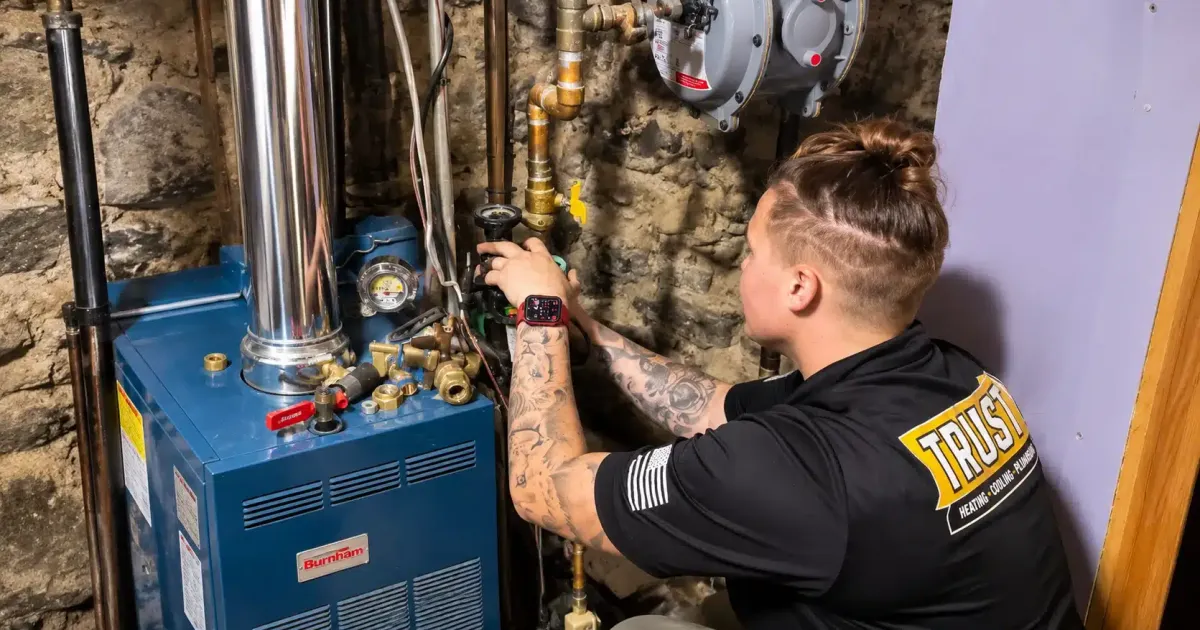
Boiler Maintenance in Quincy: Is Yours Ready for Winter?

Boiler Maintenance in Quincy: Get Ready Before Winter
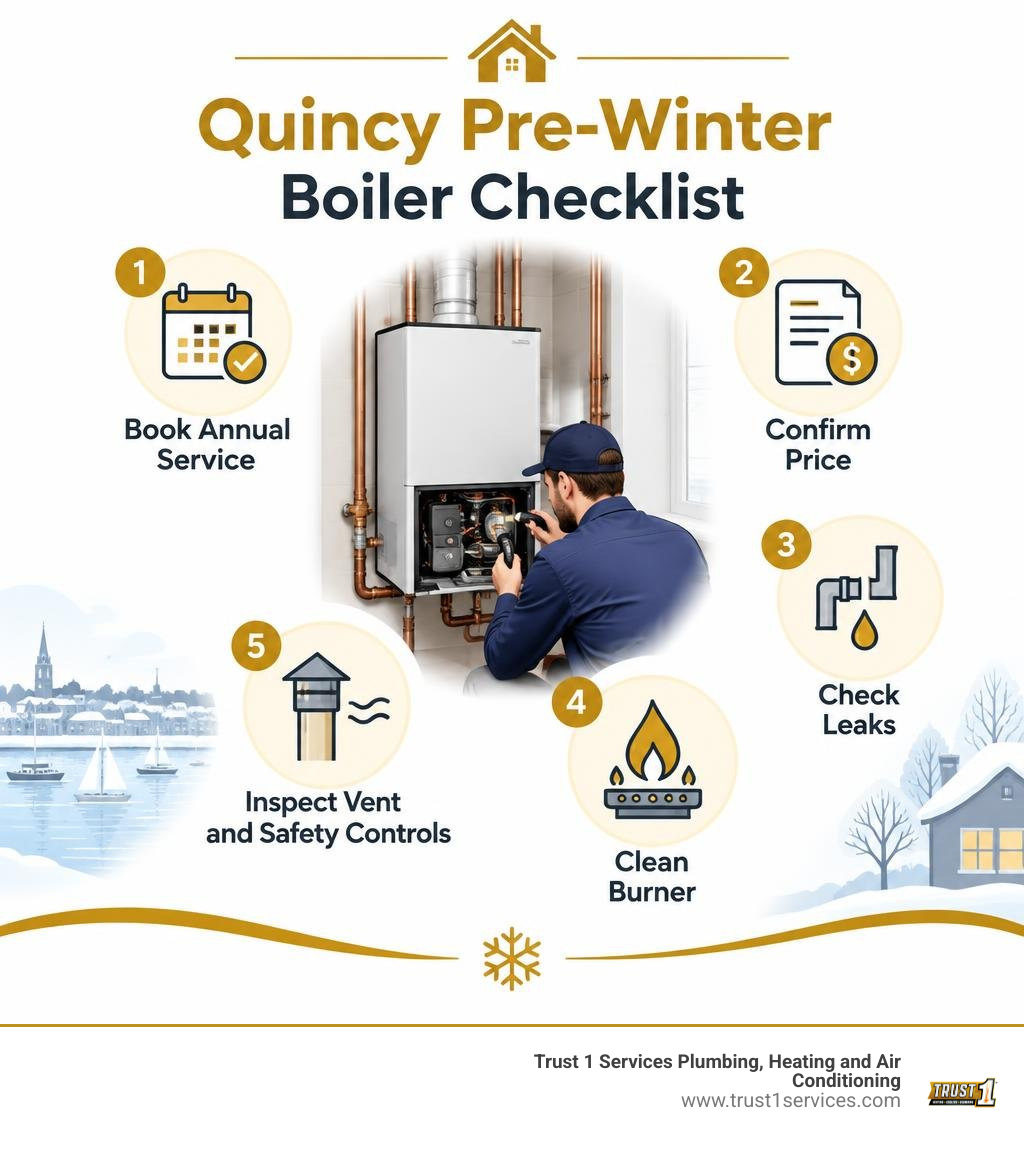
Will your boiler keep your home warm when the first cold night arrives? For boiler maintenance in Quincy, ask for an upfront price and a visit that includes leak checks, burner cleaning, vent inspection, and safety-control testing. You can contact our professional boiler maintenance technicians to discuss your system.
A fall check can catch trouble before a cold night leaves your family without heat. It also gives you time to plan a repair instead of facing an urgent decision during a winter breakdown.
Our team at Trust 1 Services Plumbing, Heating and Air Conditioning brings hands-on heating experience to this guide, helping Quincy homeowners prepare their systems for winter.
As November winds reach Quincy Bay, boilers begin running more often. Winter storms bring freezing weather and heavy snow, putting heating systems to work for long periods. Annual service can find hidden problems before a cold snap leaves your home without heat.
A neglected boiler can lose 10% to 15% of its rated efficiency, meaning it uses more fuel to deliver the same heat. This wastes fuel and makes its parts work harder.
1. 7 Critical Warning Signs Your Quincy Boiler Needs Immediate Service
Heating equipment rarely breaks down without warning. Spotting small problems early can help you avoid losing heat during a winter freeze. When your boiler struggles, a technician can test it, find the cause, and recommend repairs before key parts fail.
Key indicators that your system requires professional attention include:
- Cold spots on radiators: Cool sections may mean trapped air, sludge, or poor water flow.
- Ongoing banging or whistling: Trapped air or mineral buildup can cause overheating and noise.
- Puddles or drips: Leaks at pipe joints, pump connections, or the pressure relief valve need prompt repair to prevent water damage. The relief valve releases water if pressure gets too high.
- Changing pressure: On a hot water system, a reading below 12 pounds per square inch (PSI) or above 30 PSI can signal a problem.
- Yellow or flickering burner flame: Gas and propane burners normally have a steady blue flame. A yellow flame may mean the fuel is not burning fully and could produce carbon monoxide.
- Higher fuel use: A sudden bill increase may point to dirty heat-transfer surfaces or a burner that wastes fuel.
- Sulfur or burning smells: A lasting fuel or chemical smell needs urgent attention. If you smell gas, leave the home and call the gas utility from outside. Do not operate switches inside.
Unusual Banging, Whistling, and Kettling Noises
The heat exchanger transfers heat from the burner to the water. Mineral buildup on its surfaces can slow water flow. Small pockets of water may then boil and make popping or whistling sounds. Technicians call this noise kettling.
This process sounds like an overheating tea kettle. Over time, poor water flow strains the pump and can overheat or crack the heat exchanger.
Inconsistent Heating and Cold Radiators
Uneven heating in a home with several floors often comes from trapped air or worn parts that move hot water. Trapped air pockets can keep hot water from reaching the upper sections of radiators.
If releasing trapped air through the radiator valves does not restore even heat, a technician can check the zone valves and pump. Zone valves control water flow to different parts of the home. The pump impeller is the spinning part that moves water. A technician can also adjust water flow so each heating area gets enough heat.
Sudden Spikes in Winter Energy Bills
If fuel use rises sharply without a major weather change, your boiler may be wasting fuel. Soot in the burner openings can upset the mix of fuel and air. The burner may fail to light properly or turn on and off too often, a problem called short cycling.
When a boiler rapidly turns on and off without transferring steady heat into the home, fuel burns rapidly with little comfort return.
2. What a Professional Pre-Winter Boiler Tune-Up Includes
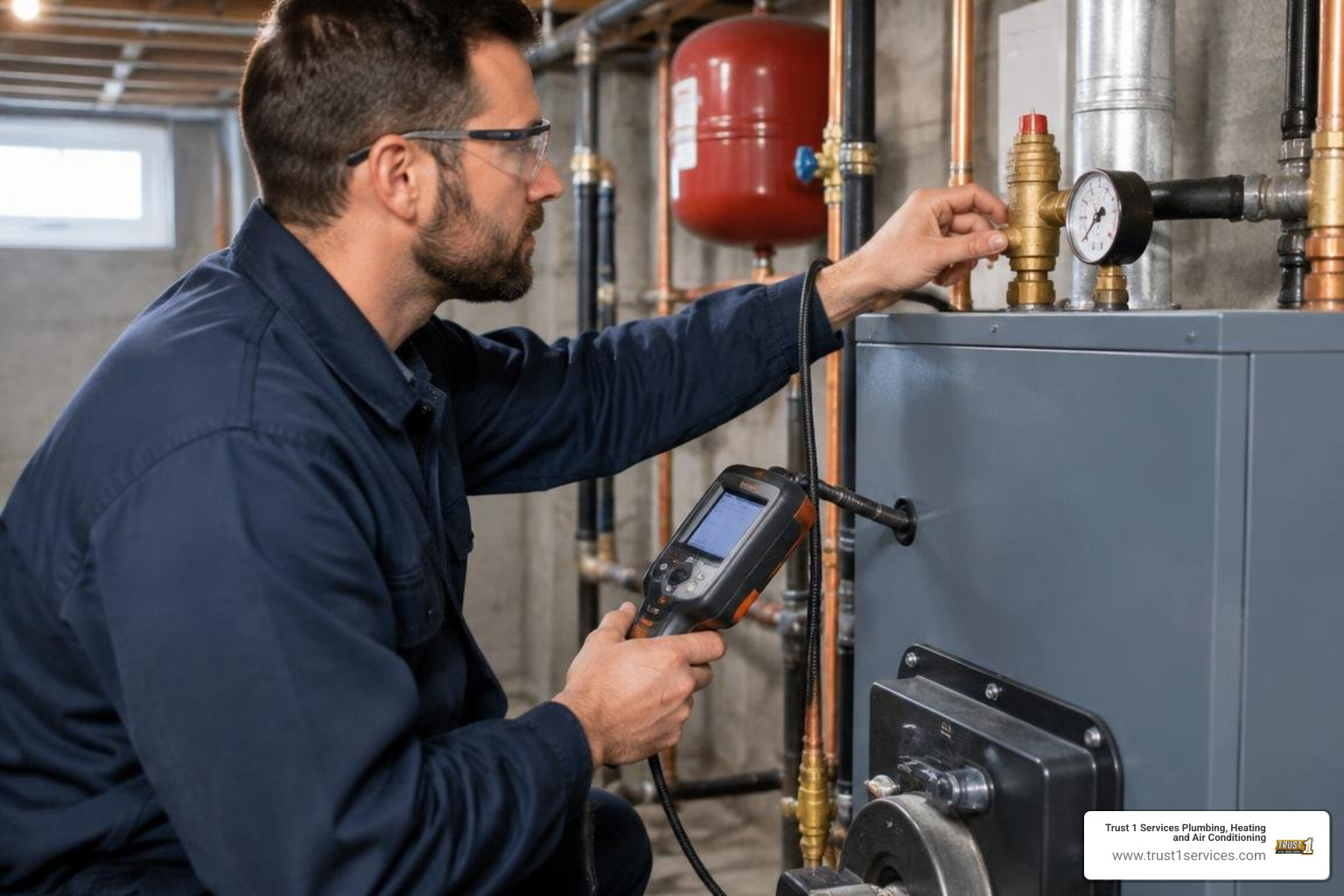
A full heating tune-up needs special tools and careful adjustments. Our technicians follow a detailed checklist to test safety controls and check how well your system runs before winter.
Our standard preventative tune-up covers:
- Fuel-burning test: Use an electronic tool to check oxygen and carbon monoxide in the exhaust and see how well the fuel burns.
- Burner and heat exchanger cleaning: Remove soot, mineral buildup, and rust from surfaces that transfer heat.
- Exhaust vent inspection: Check chimney connections and plastic vent pipes for blockages, rust, and exhaust flowing back indoors.
- Temperature and zone controls: Test the aquastat, which controls water temperature, along with high-temperature shutoffs and controls for separate heating areas.
- Expansion tank and relief valve checks: Check the tank’s internal air bladder, which helps control pressure as water heats. Test the pressure relief valve and check devices that prevent water from flowing backward into the drinking-water supply.
- Safety controls: Test low-water shutoffs, flame sensors, and electrical shutoffs. These stop unsafe operation.
- Hot water pipe inspection: Check exposed pipes for rust at joints, signs of small leaks, and damaged insulation.
Homeowners can use our heating maintenance services to keep boilers and other heating equipment ready for colder Quincy weather.
What to Expect During a Professional Boiler Tune-Up
A full tune-up takes between 60 and 90 minutes. When comparing boiler maintenance options in Quincy, look for a licensed technician who opens the access panels to check wiring, gas supply valves, and the parts that light the burner.
Our team checks for loose electrical connections and tests how the boiler responds to the thermostat. We also clear sediment from the bottom of the boiler. We give you a written report on system efficiency and worn parts before winter begins.
Steam Boilers vs. Hot Water Hydronic Maintenance Steps
Steam boilers turn water into steam. Hot water, or hydronic, systems keep the water liquid and move it through pipes. Each type needs different care.
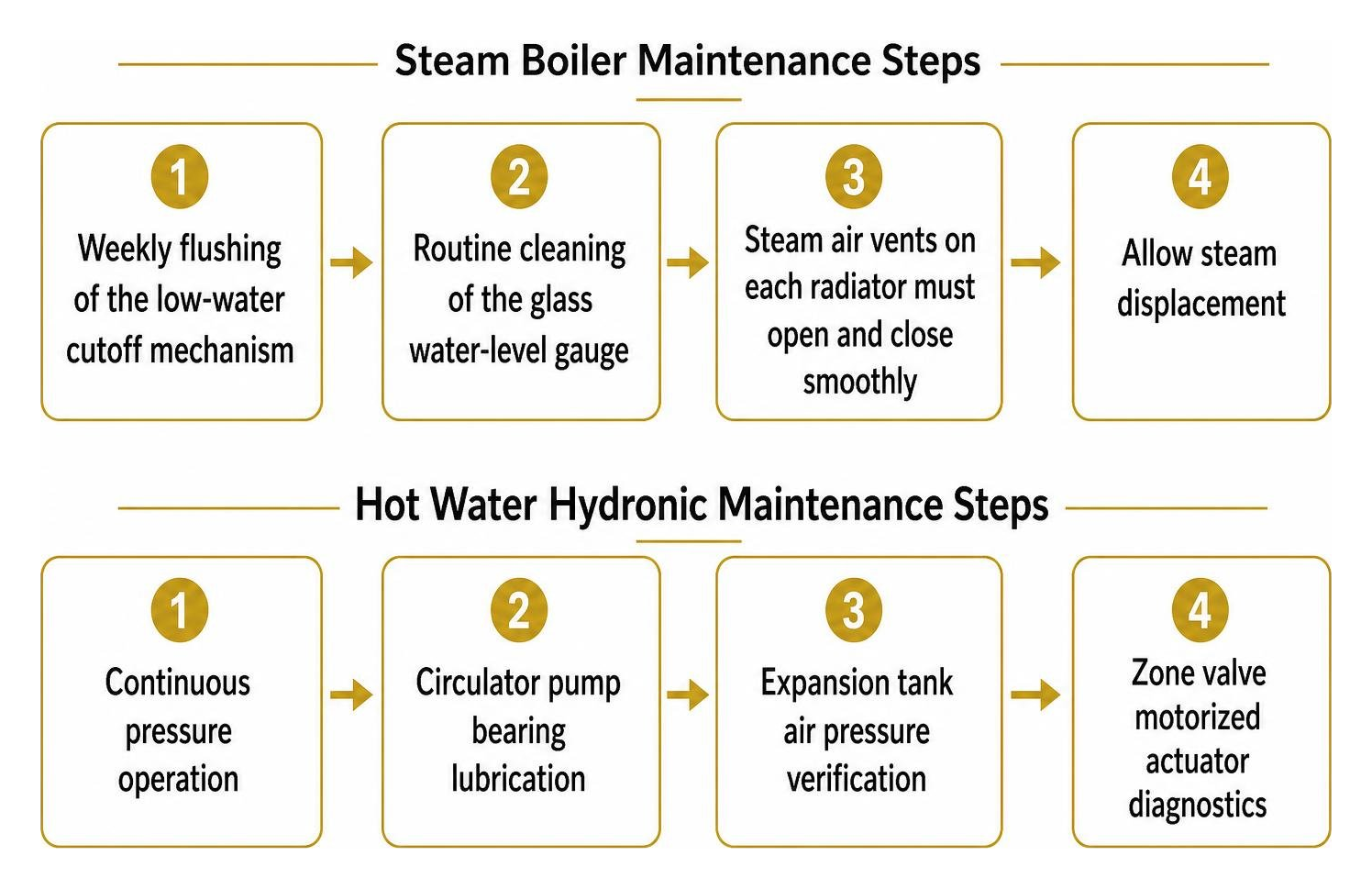
Steam boilers run at lower pressure than hot water boilers. Some low-water shutoffs need weekly flushing; ask your technician which schedule your model needs. The glass water-level gauge also needs regular cleaning. Radiator air vents must open and close freely so steam can push air out.
Hot water systems stay under pressure. A technician checks the expansion tank’s air pressure, tests the motors that open and close zone valves, and lubricates pump bearings if the model requires it. For more cold-weather preparation, see our article on protecting an outdoor HVAC unit in winter.
3. Benefits of Scheduling Boiler Maintenance in Quincy Before the Freeze
Annual boiler service can help your system run better and lower long-term costs. Routine maintenance helps your heating system handle Quincy cold snaps.
- Lower Monthly Fuel Bills: Removing soot and mineral deposits helps the boiler transfer heat, reducing winter fuel use by up to 15%.
- Fewer Mid-Season Breakdowns: Finding worn parts early can help prevent unexpected shutdowns during winter storms.
- Freeze-Up Protection: Reliable heat keeps indoor temperatures steady and helps protect pipes inside exterior walls from freezing and bursting.
- Valid Manufacturer Warranties: Leading equipment brands require records of annual professional service to keep parts warranties active.
- Longer Equipment Lifespan: Regular maintenance helps equipment operate for 25 to 30 years, compared to just 12 to 15 years for neglected systems.
- Quiet, Even Heating: Clearing trapped air and adjusting water flow can reduce pipe knocking and help rooms heat evenly.
Lower Fuel Bills and Restored AFUE Performance
Annual Fuel Utilization Efficiency (AFUE) shows how much fuel becomes useful heat over a typical year. For example, 90% AFUE means about 90% of the fuel’s energy becomes heat for the home. Dirty burner openings and mineral buildup on heat exchangers can lower efficiency.
Our technicians adjust the burners and air supply to help the boiler run closer to its rated efficiency. These adjustments can lower fuel bills and keep your home warm. For a related seasonal-maintenance perspective, see our guide on why fall is a good time to schedule a furnace tune-up in Quincy.
Avoiding Costly Mid-Winter Emergency Breakdowns
Most heating system failures occur during the coldest weeks of January when equipment operates continuously under heavy load. A boiler shutdown during freezing weather can quickly drop indoor temperatures, risking frozen domestic water pipes.
During tune-ups, technicians can spot and replace worn burner controls, seals, and parts that connect the water pump to its motor. Early repairs can help you avoid costly emergency calls. If a tune-up uncovers a deeper problem, our boiler repair services can address the cause before it leads to a winter breakdown.
4. Repair or Replace: Deciding the Fate of an Aging Boiler
Homeowners often face the choice between repairing an aging unit or investing in a modern replacement. Evaluating system age, repair history, and overall efficiency helps determine the most cost-effective path forward.
| Decision Factor | Keep and Repair System | Upgrade and Replace System |
|---|---|---|
| System Age | Under 12 to 15 years old | Exceeds 15 to 20 years old |
| Repair Cost Frequency | Minor, isolated issues under $500 | Frequent repairs exceeding $1,500 total |
| Operating Efficiency (AFUE) | 80% to 85% AFUE or higher | Obsolete unit running at 56% to 70% AFUE |
| Heat Exchanger Condition | Sound, clean, leak-free | Cracked, badly rusted, or leaking |
| Heating Reliability | Consistent heat across all zones | Frequent winter shutdowns and noisy operation |
| Parts Availability | Standard, readily stocked components | Outdated parts with long waits for delivery |
Homeowners evaluating system performance can consult state resources like Mass.gov winter home heating safety guidelines for regional safety recommendations.
When Ongoing Repairs No Longer Make Financial Sense
If your boiler needs repairs every winter, patching aging parts may no longer make sense. A technician must assess a cracked cast-iron section or leaking heat exchanger and determine whether the damaged part or the whole boiler needs replacement.
When single repair quotes approach 50% of the cost of a new heating installation, upgrading provides greater long-term reliability and financial value.
Long-Term Value of Modern High-Efficiency Upgrades
Modern condensing gas boilers achieve efficiency ratings between 90% and 98.5% AFUE. Their burners can raise or lower heat output to meet the home’s heating needs. This helps reduce fuel waste in milder weather.
Condensing boilers recover heat as water vapor in the exhaust cools into liquid. Some designs use a second stainless-steel heat exchanger for this step. Recovering this heat helps keep your home warm while using less fuel.
5. Homeowner Winter Upkeep: Safe Checks vs. Emergency Protocols
Leave electrical parts and fuel-burning parts to licensed technicians. Between visits, you can make a few basic checks to help your system run well through winter.
Safe Maintenance Checks Homeowners Can Do Between Services
- Monitor System Pressure: Check the pressure and temperature gauge regularly. A standard home hot water boiler should stay between 12 and 15 PSI when cold, rising to around 20 to 22 PSI when hot.
- Keep the Area Clear: Maintain at least three feet of open space around your boiler. Keep the area free of paint cans, cardboard boxes, laundry baskets, and cleaning chemicals.
- Check Outdoor Vents: Keep the outdoor ends of plastic exhaust and air intake pipes clear of drifting snow, ice buildup, and leaves.
- Test Carbon Monoxide Detectors: Test carbon monoxide (CO) alarms monthly on every floor of your home and replace backup batteries every fall.
- Inspect Visible Piping: Check visible pipe joints and valves near the water pump for mineral buildup, rust stains, or small drips.
Emergency Breakdown Steps During a Severe Cold Snap
If your heating unit stops working during freezing temperatures, follow these safety steps:
- Verify Thermostat Settings: Set the thermostat to “Heat” and choose a temperature at least five degrees above the current room temperature. Replace weak thermostat batteries.
- Check the Emergency Power Switch: Ensure the red emergency shutoff switch located near the basement stairs or boiler casing remains in the “ON” position.
- Inspect the Circuit Breaker: Check your main electrical panel to see if the dedicated heating circuit breaker tripped. Reset it once if tripped.
- Identify Gas Odors: If you smell rotten eggs or natural gas, evacuate the home immediately. Do not flip light switches or use landlines inside. Call your local gas utility from a safe outdoor distance.
- Contact a Heating Professional: Call for same-day heating repair to restore system operation before indoor temperatures drop significantly.
Frequently Asked Questions About Quincy Boiler Upkeep
How often should I schedule boiler maintenance in Quincy?
Residential heating systems require professional maintenance at least once per year. The ideal window for an annual tune-up is late summer or early fall before daily heating begins.
Steam boilers benefit from quick mid-winter checks by the homeowner.
How much does professional boiler maintenance typically cost?
A standalone annual boiler tune-up generally ranges between $249 and $349 for standard natural gas systems. Residential steam systems run between $349 and $499.
Maintenance plans often combine heating tune-ups with AC care. They may offer lower service prices and repair discounts.
How do I select the best provider for boiler maintenance near me?
Look for a locally owned heating contractor with certified, background-checked technicians and extensive hydronic experience.
Choose a company that gives clear prices without hidden fees. Look for positive local reviews and check its licenses and certifications. Ask whether it offers emergency help around the clock during winter storms.
Prepare Your Home for Winter with Quincy’s Trusted Heating Experts
Do not wait for a winter freeze to check whether your heating system is ready. Trust 1 Services Plumbing, Heating and Air Conditioning provides heating services across Quincy, MA, and nearby South Shore communities. Our licensed technicians offer upfront pricing and same-day service. We also offer flexible financing and a 100% satisfaction guarantee. More than 1,500 five-star reviews back our work.
To schedule service before winter, contact our professional boiler maintenance technicians today.