Can a Ductless Mini-Split Heat Your Home in Winter?


How Ductless Mini Split Heating Works in Extreme Cold
Wondering if a ductless system can keep your home warm through a Quincy cold snap? Yes. Ductless mini split heating can keep a home warm in winter, including during subzero weather, if you choose a cold-climate model sized for your home’s heat needs. It moves heat from outdoor air into your rooms without ducts. Each indoor unit heats its own zone, so you can keep busy rooms comfortable without heating every space the same way. A professional should check how much heat the system delivers at the lowest temperatures your Quincy home is likely to face.
Our team at Trust 1 Services Plumbing, Heating and Air Conditioning brings extensive heating experience to help explain what homeowners should look for when considering ductless mini split heating.
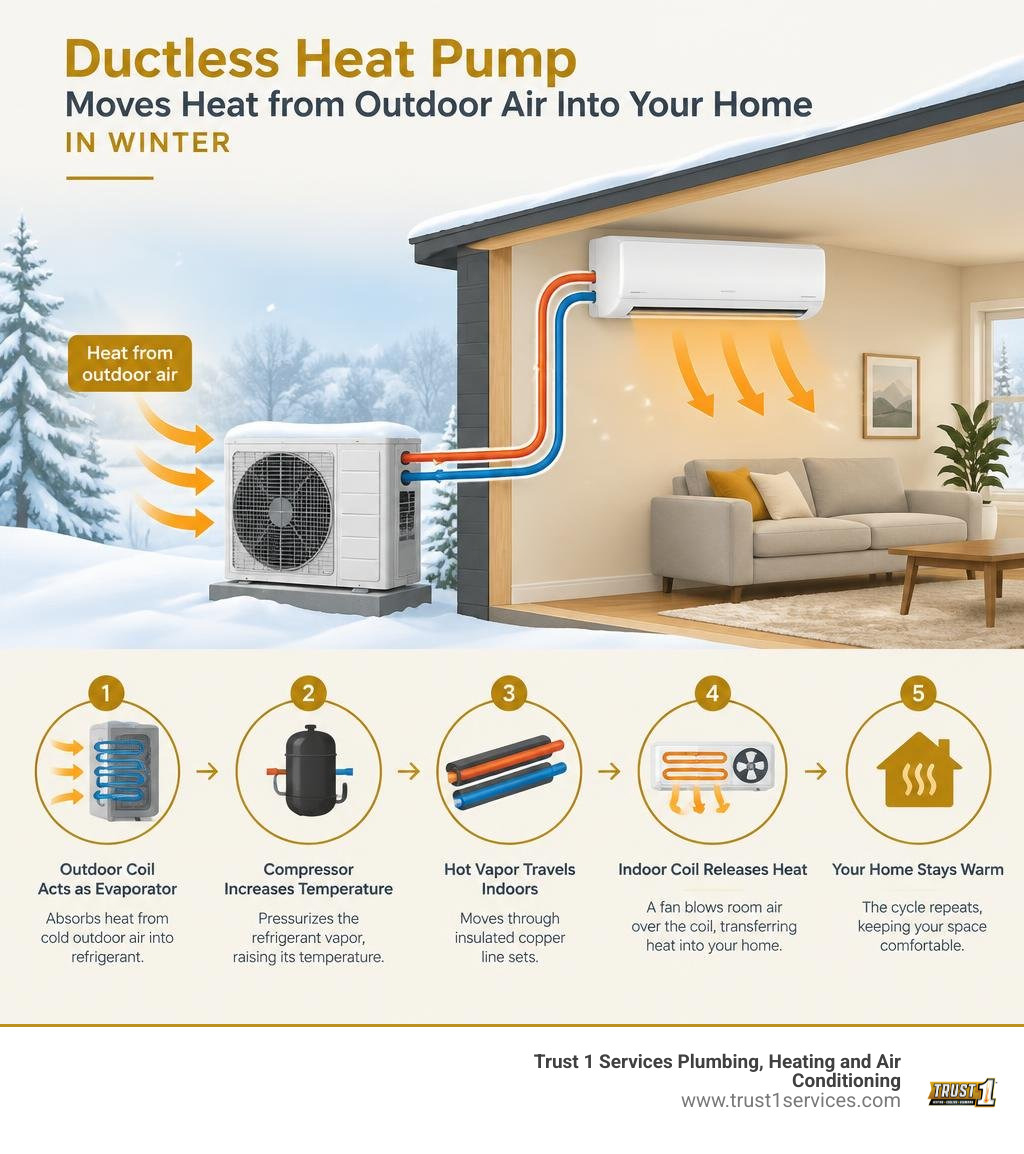
Many homeowners wonder how an HVAC system can pull heat out of freezing outdoor air. Even when outdoor temperatures fall below zero, ambient thermal energy exists in the atmosphere. Ductless systems use a closed refrigeration loop to capture this heat, compress it, and transfer it straight into your living space.
During winter, the system runs the refrigeration cycle in reverse. The outdoor coil acts as an evaporator, absorbing heat energy into cold liquid refrigerant. The compressor pressurizes the refrigerant vapor, raising its temperature significantly. This hot vapor moves through insulated copper line sets into your indoor air handlers, where a fan blows room air over the coil to deliver clean warmth. A technical overview of ductless mini-split heat pumps confirms that these systems provide an efficient alternative to traditional fuel-burning appliances.
Heat Transfer and Inverter Compressor Technology
Traditional heating systems turn on at full blast and shut off completely when they reach the set point. This on-and-off cycling creates noticeable temperature swings and wastes electricity. Modern ductless units rely on variable-speed inverter compressors that modulate their output smoothly.
An inverter compressor can ramp down to as low as 10% of its rated capacity when heating demands are light. It maintains a steady, continuous stream of gentle heat rather than blasting hot air in bursts. This continuous operation eliminates drafty cold spots, keeps indoor air temperatures steady within half a degree, and prolongs the lifespan of mechanical components.
Cold-Climate Heat Pumps and Sub-Zero Heating Thresholds
Standard mini-splits lose heating capacity as the thermometer drops, but cold-climate heat pumps are built specifically for tough northern winters. These advanced models incorporate specialized variable-capacity compressors and factory-installed basepan heaters that prevent defrost water from turning into ice buildup inside the outdoor chassis.
Leading cold-climate systems maintain nearly 100% of their rated heating capacity down to 5°F, with reliable heating down to -15°F or even -22°F. When evaluating if heat pumps can efficiently heat cold-climate homes, equipment selection plays a vital role. Modern multi-zone units, such as the Performance™ 25 Multi-Zone Mini Split Heat Pump | 37MGRA and the ultra-efficient Infinity® 35 Mini Split Heat Pump with Basepan Heater | 37MPRA, pair robust sub-zero performance with eco-friendly refrigerants like Puron Advance, which lowers global warming potential by 75%.
Ductless Systems vs. Traditional Central Heating
Understanding the difference between ductless heat pumps and central furnaces helps homeowners pick the best heating strategy for their properties. When exploring heat pumps versus furnaces for regional homes, duct losses and combustion safety represent two major decision factors.
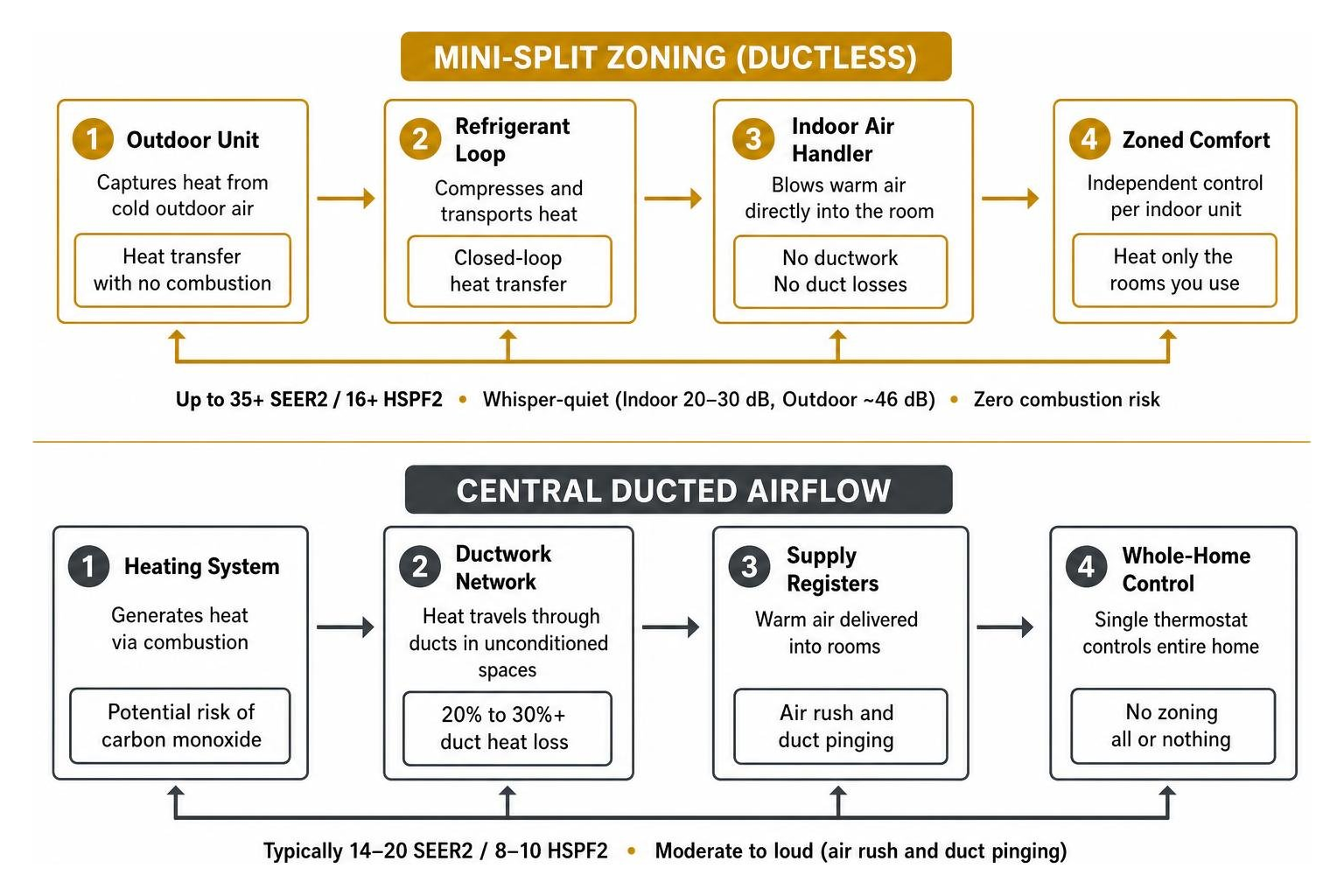
| Feature | Ductless Mini-Split Systems | Central Ducted Systems |
|---|---|---|
| Duct Heat Loss | 0% (No ductwork required) | 20% to 30%+ in unconditioned spaces |
| Zoned Temperature Control | Independent thermostat per indoor unit | Single thermostat controls entire home |
| Operational Sound Levels | Whisper-quiet (Indoor 20-30 dB, Outdoor ~46 dB) | Moderate to loud (Air rush and duct pinging) |
| Energy Efficiency | Up to 35+ SEER2 / 16+ HSPF2 | Typically 14-20 SEER2 / 8-10 HSPF2 |
| Combustion Safety Risk | Zero (All-electric heat transfer) | Potential risk of carbon monoxide leaks |
Eliminating Duct Losses and Enhancing Zoned Comfort
Central forced-air systems rely on extensive sheet metal ductwork routed through unconditioned basements, crawlspaces, and attics. Research demonstrates that thermal conduction and air leakage through these duct networks can account for more than 30% of total heating energy losses.
Ductless units deliver warm air directly into the room where the indoor head is installed, completely bypassing duct losses. Each head features its own wireless remote or smart wall thermostat, allowing you to heat only the rooms you use. You can keep your living room at 70°F while maintaining unoccupied bedrooms at 62°F. When understanding the pros and cons of residential ductless systems, the quiet operation stands out. Outdoor units run as quietly as 46 decibels, which matches a soft spoken conversation, while indoor heads operate near 23 decibels.
Energy Efficiency and Cost Savings of Ductless Mini Split Heating
Efficiency ratings for mini-splits use Seasonal Energy Efficiency Ratio 2 (SEER2) for cooling and Heating Seasonal Performance Factor 2 (HSPF2) for heating. Modern ductless units achieve HSPF2 ratings exceeding 14.0 to 16.0, compared to older ducted systems that hover between 7.5 and 9.0.
Because these units move existing heat rather than generating it by combustion, they deliver up to 3 to 4 units of heat energy for every unit of electricity consumed. Switching from baseboard electric resistance or outdated heating systems can reduce home heating energy use by up to 40%. When homeowners are diagnosing electric utility costs after switching to heat pumps, setting continuous comfort temperatures rather than making drastic thermostat setbacks yields the highest savings.
Sizing and System Design for New England Winters
Choosing the right equipment size ensures dependable winter warmth without wasting energy. Oversizing causes the system to cycle frequently, while undersizing leaves your home chilly during blizzard conditions.
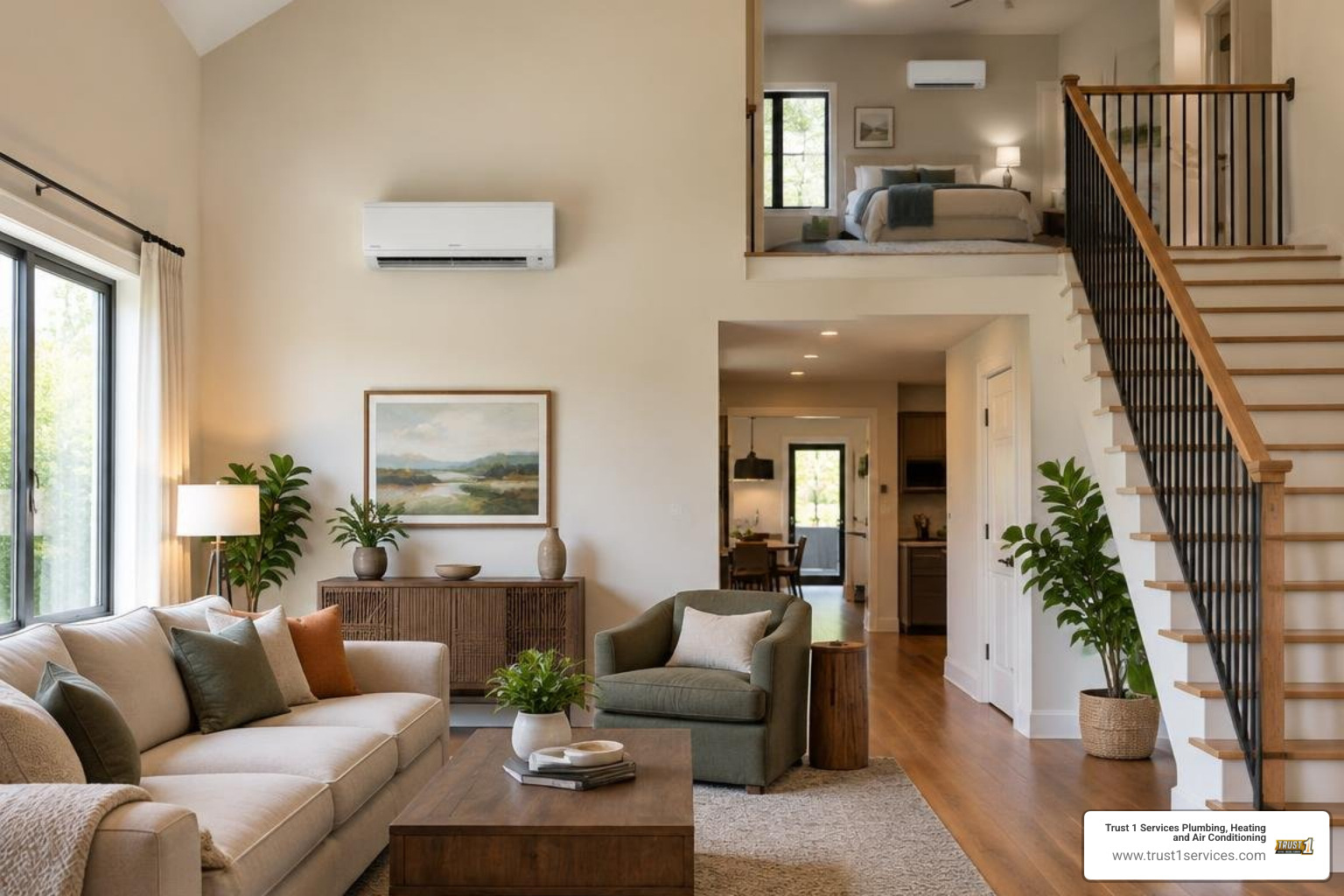
Sizing Ductless Mini Split Heating for Winter Performance
A simple rule of thumb suggests 20 to 30 BTU per square foot of living space, but real-world engineering requires a thorough ACCA Manual J heating load calculation. This calculation evaluates wall insulation, window quality, ceiling heights, air infiltration rates, and historical winter design temperatures.
Systems also experience a derating factor in extreme sub-zero weather. A unit rated for 24,000 BTU at 47°F may produce 18,000 BTU when outdoor temperatures plunge to -10°F. Our technicians size the equipment to match your home’s heat loss at winter design lows so the system maintains capacity without struggling. For deeper insights on sizing, listen to our comprehensive guide to heat pump installation and system performance.
Single-Zone vs. Multi-Zone System Configurations
Single-zone systems pair one outdoor condenser with one indoor air handler, making them popular for primary living rooms, garages, or primary suites. Multi-zone systems connect multiple indoor heads to a single high-capacity outdoor unit.
Smaller single-zone models between 6,000 and 12,000 BTU often operate on standard 115V electrical circuits. Larger multi-zone setups require a dedicated 208/230V line. Multi-zone outdoor units can support up to 8 individual indoor units, including high-wall heads, recessed ceiling cassettes, and low-wall floor consoles. However, all indoor units linked to a shared outdoor condenser must run in the same mode: heating or cooling. If you prefer to keep a legacy boiler in place for extreme freezes, our team can help evaluate dual-fuel heat pump and boiler integration options.
Key Benefits, Drawbacks, and Real-World Applications
Ductless heat pumps offer flexible layout options for homes with architectural challenges, though proper system management remains important.
Ideal Scenarios: Historic Homes, Additions, and Basements
Many classic New England homes feature historic plaster walls, solid wood framing, or radiant radiators that make retrofitting sheet metal ductwork intrusive and expensive. Ductless mini-splits require only a small three-inch hole through an exterior wall for refrigerant piping, electrical wiring, and condensate drainage.
These systems provide ideal heating and cooling for:
- Historic colonial, cape, and craftsman homes without existing ductwork.
- Converted basements, attics, and seasonal sunrooms.
- Detached garages, home workshops, and backyard studios.
- Room additions that sit outside the reach of the central heating system.
Homeowners seeking expert heat pump installation in Weymouth MA rely on mini-splits to gain modern comfort without altering their property’s historic architecture.
Potential Limitations and Operational Considerations
While ductless heat pumps deliver high heating performance, you should consider a few operational realities:
- Sensible Heat Ratios: High-efficiency ductless systems feature high Sensible Heat Ratios (SHRs), meaning they prioritize sensible temperature changes. In humid summer conditions, running the system in dedicated dry mode or utilizing supplemental dehumidification provides balanced humidity control.
- Air Filtration: Mini-splits use compact mesh filters that protect internal coils. Homeowners should wash or vacuum these mesh filters every two weeks to maintain peak airflow.
- Sensor Placement: Wall-mounted units measure room temperature at the indoor head near the ceiling. Because warm air rises, setting the thermostat two degrees higher than your target comfort level helps balance room air temperatures.
- Startup Fan Delay: During winter startups, the system holds back the indoor fan for several minutes while the coils warm up. This built-in feature prevents cold air drafts from blowing into the room.
When mechanical issues or error codes occur, Trust 1 Services Plumbing, Heating and Air Conditioning provides prompt heat pump repair to restore your warmth quickly.
Frequently Asked Questions About Winter Mini-Split Performance
How low of an outdoor temperature can a mini-split heat a home?
Modern cold-climate ductless heat pumps operate in temperatures down to -15°F or -22°F. High-tier systems retain 100% of their rated heating output at 5°F without using electric resistance heat strips. Advanced inverter compressors and basepan heaters keep the refrigeration cycle running reliably in sub-zero weather.
Do I need a backup furnace or boiler in freezing weather?
If you install a cold-climate heat pump sized to meet your local winter design temperature, you do not need a backup boiler or furnace. Many homeowners in Quincy and surrounding South Shore communities keep their older heating system as a secondary backup or remove it entirely to free up floor space and reduce fossil fuel usage.
Can individual indoor units heat and cool at the same time on a multi-zone system?
No. On standard residential multi-zone systems, all indoor heads connected to the same outdoor condenser must operate in the same mode. The outdoor unit features a single reversing valve that directs refrigerant flow in either heating mode or cooling mode. Homeowners switch the whole system from AC to heat as the seasons transition.
Maximizing Heating Efficiency and Rebates with Trust 1 Services
A dependable ductless installation requires precise refrigerant line evacuation down to 300 microns, proper electrical wiring, and accurate heating load calculations. Trust 1 Services Plumbing, Heating and Air Conditioning brings extensive local expertise to every installation across Quincy, Weymouth, and the South Shore. We provide upfront pricing, same-day service availability, and a 100% satisfaction guarantee backed by over 1,500 five-star reviews.
Homeowners can take advantage of substantial energy efficiency rebates. Our team helps you navigate the Mass Save program incentives and identify local heat pump rebates for Braintree Hingham and Norwood. To learn how state programs offset upfront costs, check out our discussion on maximizing heating upgrade savings through state rebates.
Ready to upgrade your home to whisper-quiet, zoned winter warmth? Contact our professional ductless mini-split technicians today to schedule your free in-home consultation.