Bathroom Sink Leaking From Wall? Call for Repair


What to Do When a Bathroom Sink Leaks at the Wall
Finding a puddle inside your bathroom vanity is an unwelcome start to the day. If you have a bathroom sink leaking from wall connections, stop using the sink immediately to prevent water damage from spreading. When moisture appears behind the vanity or around the wall drain stub-out, the short drainpipe that extends from the wall, contacting a licensed plumber is the safest way to protect your home. At Trust 1 Services Plumbing, Heating and Air Conditioning, our team finds leaks at wall connections, repairs hidden drain problems, and restores your plumbing safely.
Diagnosing Why You Have a Bathroom Sink Leaking from Wall Connections
Finding standing water inside your bathroom vanity requires prompt professional attention. Dark cabinets create an enclosed space where minor moisture issues can remain hidden for weeks. By the time water seeps out onto your bathroom floor, the underlying leak has often soaked the back panel, drywall, and structural framing.
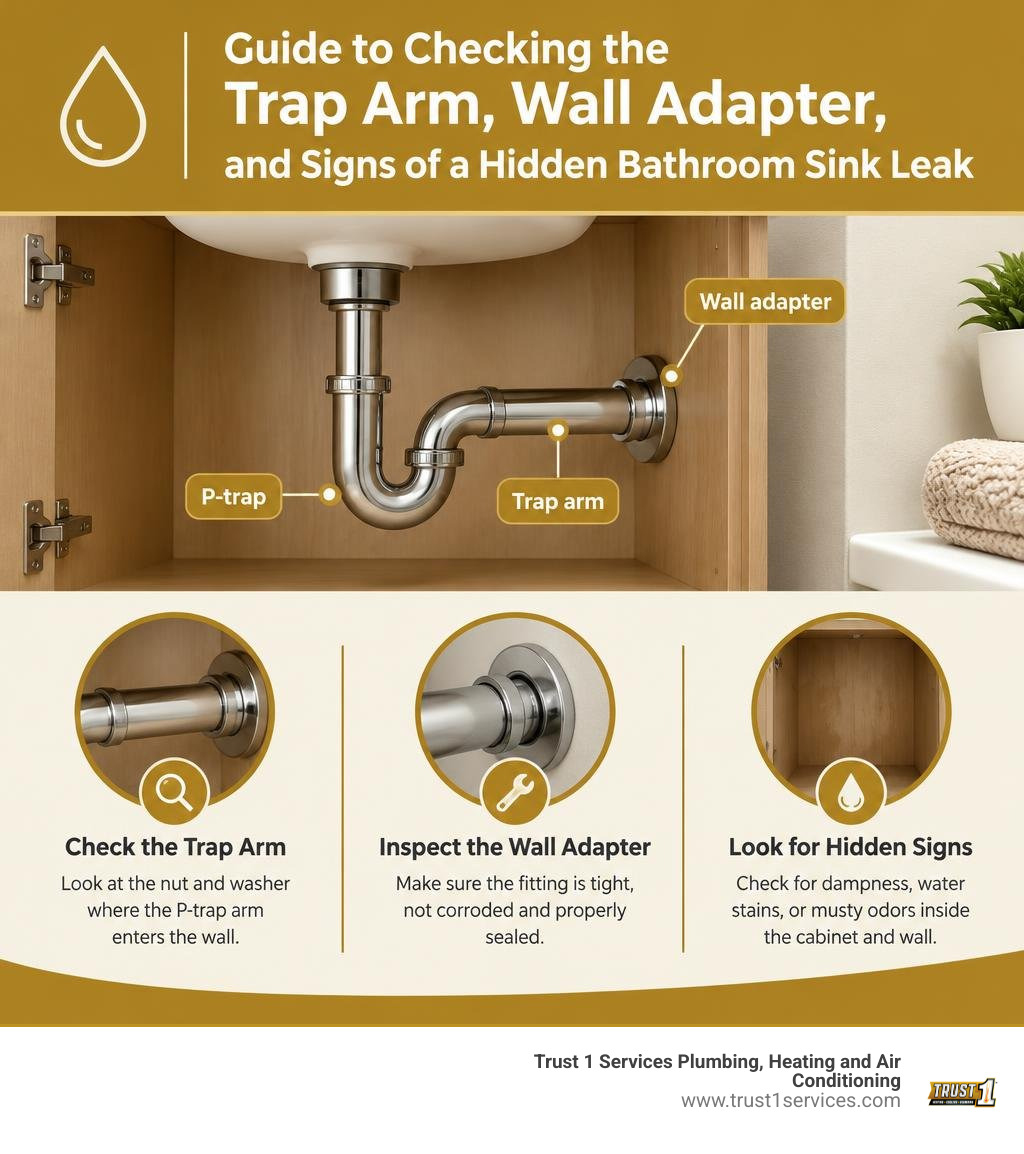
A licensed plumber checks whether the leak starts at a pipe connection beneath the sink or in the space behind the drywall. The trap arm is the straight pipe that runs from the P-trap, the curved drainpipe beneath your sink, toward the wall. A trap adapter connects this arm to the drainpipe at the wall. Plumbers also use the names marvel connector and Desanco fitting.
| Leak Detail | Leak at the Nut-and-Washer Connection | Hidden Drain Leak Inside the Wall |
|---|---|---|
| Primary Location | At the threaded nut where the trap arm enters the adapter | Behind the drywall, near the drainpipe or the T-shaped fitting that joins it to the vertical drain |
| Leak Timing | When water drains out of the sink basin | Continuously (if supply line) or when water flows down the main vertical drainpipe |
| Visible Symptoms | Active droplets forming beneath the slip nut | Soft drywall, peeling paint, warped cabinet backing, musty odor |
| Typical Cause | Worn washer, loose nut, or cracked plastic ring | Cracked T-shaped fitting, rusted short threaded pipe, or loose angled fitting inside the wall |
| Professional Repair | Replace damaged parts and tighten the connection correctly | Remove and replace damaged pipes inside the wall while following plumbing code |
Causes of Wall Stub-Out and Connection Leaks
External connection leaks at the wall usually happen due to mechanical wear and improper installation. A frequent culprit is a deteriorated, flattened, or cracked slip-joint washer. Over years of temperature shifts and chemical exposure, these plastic or rubber rings lose elasticity and fail to maintain a watertight seal.
Other common issues requiring professional repair include:
- Loose slip nuts: Daily vibrations or accidental bumps from vanity storage can loosen threaded nuts.
- Cross-threaded connections: When threads do not line up correctly, tightening can damage them. The damaged fitting may leak and need replacement.
- Improper pipe slope: A trap arm must maintain a proper downward slope toward the wall. Incorrect slope causes wastewater to pool at the junction and seep through the threads.
Our team helps homeowners identify the source of a water leak when multiple plumbing joints sit close together under the vanity.
Hidden Water Damage and In-Wall Drain Line Issues
A far more serious issue occurs when the drain pipe cracks or separates inside the wall cavity behind the vanity. Inside your wall, the horizontal stub-out joins a vertical pipe assembly through a sanitary tee, a T-shaped drain fitting. This fitting directs wastewater downward and connects the drain to a vent pipe that extends through your roof.
If this sanitary tee cracks, or if threads on old zinc-coated steel or copper pipes corrode inside the wall, water escapes behind the drywall whenever the sink runs. Recognizing the early signs of a hidden water leak in walls helps you stop structural damage, wood rot, and mold growth before expensive repairs become necessary.
Key Components and Professional Inspection for Under-Sink Wall Junctions
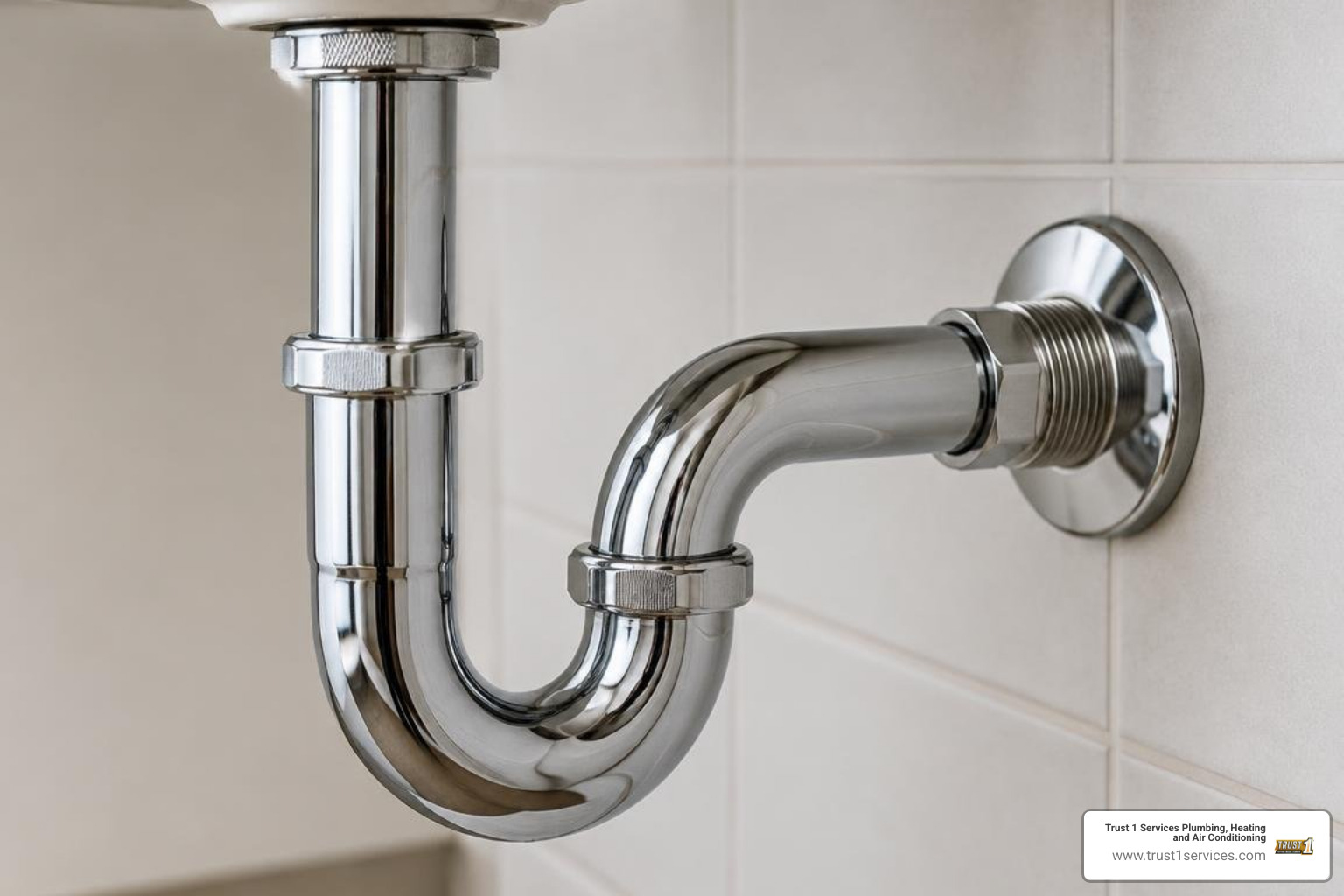
Understanding how under-sink drain parts fit together helps you know when to seek licensed plumbing care from Trust 1 Services. Modern plumbing codes set strict standards for drain, waste, and vent (DWV) systems to ensure waste flows freely while sewer gas stays out.
Trap Arm and Marvel Adapter Assemblies
The pipes beneath your sink differ from those inside the wall. Bathroom P-traps and trap arms commonly use thin-walled plastic or brass tubing about 1-1/4 inches across. The wall drain is often about 1-1/2 inches across. It may use thicker plastic pipe, such as Schedule 40 (a standard for pipe wall thickness) PVC or ABS, or metal pipe such as copper.
For compatible plastic pipes, a plumber can bond the adapter to the wall pipe with the correct plumbing cement. The adapter has threads on the outside. A slip nut presses a tapered washer around the trap arm to seal the connection. When the pipe sizes differ, a plumber can use a reducing washer, which fits the smaller pipe into the larger connection and helps seal the joint.
When Connection Failures Require Professional Service
Recognizing the warning signs of connection failure helps you decide when to call Trust 1 Services for prompt professional service:
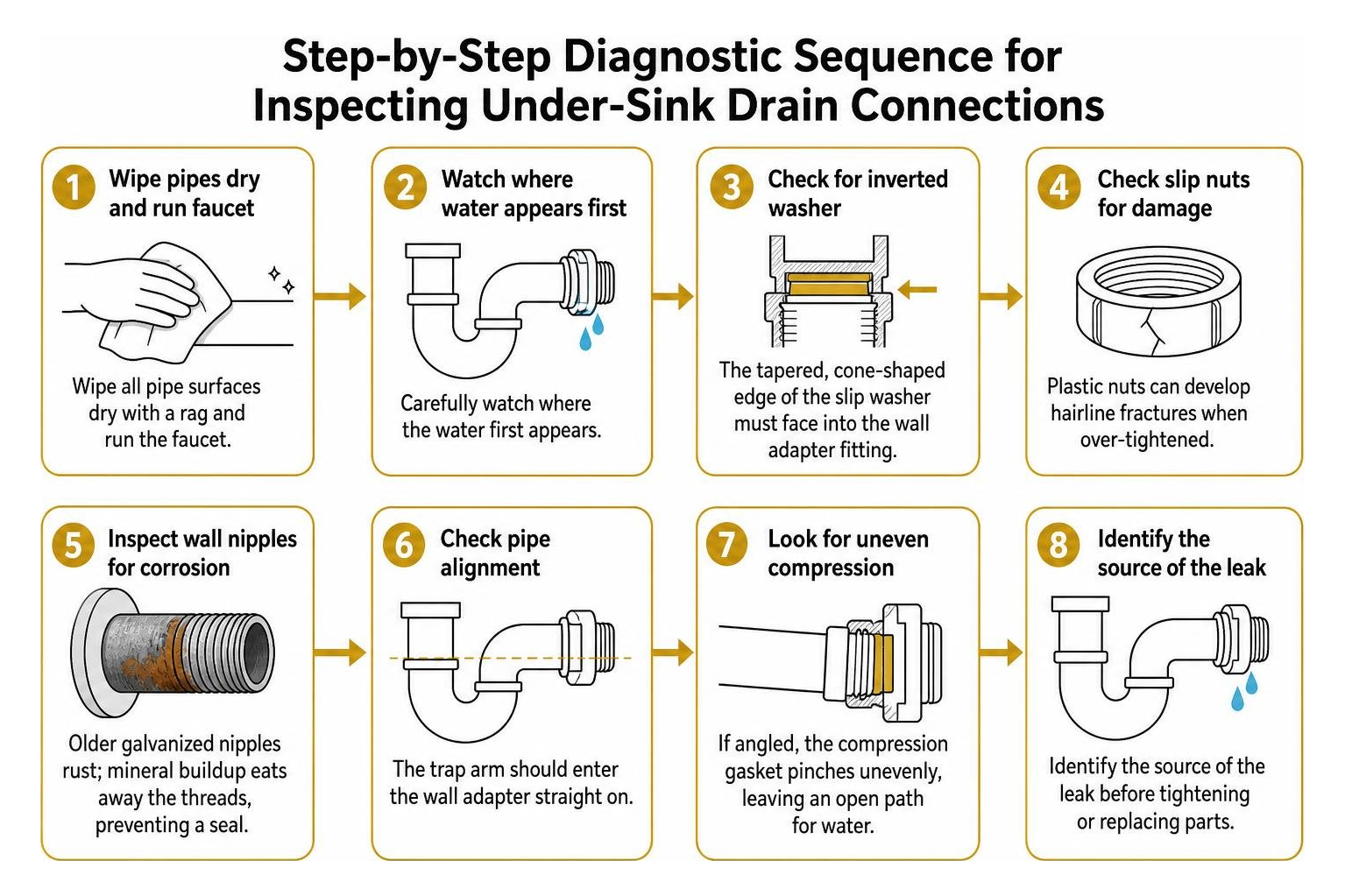
- Stripped or fractured slip nuts: Over-tightened plastic nuts can develop small cracks and need professional refitting.
- Rusted wall fittings: Short threaded iron pipes in older homes can rust from the inside out. A licensed plumber should remove damaged sections.
- Poor pipe alignment: If the trap arm enters the wall adapter at an angle, it can squeeze the sealing washer unevenly. A plumber can realign the pipes.
Professional Restoration vs. DIY Risks for Wall Pipe Leaks
Before trying to patch a wall connection, consider how tools and sealants can damage the fitting or hide the leak.
When to Call Trust 1 Services for Wall Connection Leaks
Avoid using heavy household tools, sealants, or caulk on leaking drain joints. Too much force from a wrench can snap brittle plastic fittings or crack a pipe inside the wall. Silicone and adhesives create temporary patches that quickly degrade and complicate future mechanical repairs.
Call Trust 1 Services if a leak returns after tightening, mineral buildup surrounds a metal wall fitting, or a pipe shifts freely inside the wall opening.
Our licensed plumbers pinpoint the structural cause of the leak and make permanent, code-compliant repairs that keep your home safe.
Comprehensive In-Wall Pipe Restoration
When wall stub-outs crack, rust, or separate, DIY solutions are ineffective and risky. Depending on the pipe material, a plumber may cut out damaged sections, join new copper fittings with heat and solder, or bond compatible plastic pipes with the correct plumbing cement.
If the internal sanitary tee cracks or disconnects, forcing the exterior slip nut can cause active flooding inside the wall framing. Trust our licensed plumbers for precision pipe repair to restore your drainage system safely.
We provide clear details on leak repair costs for homeowners in Quincy so you can make informed decisions about your plumbing repairs.
Professional Diagnostic Techniques and Long-Term Prevention
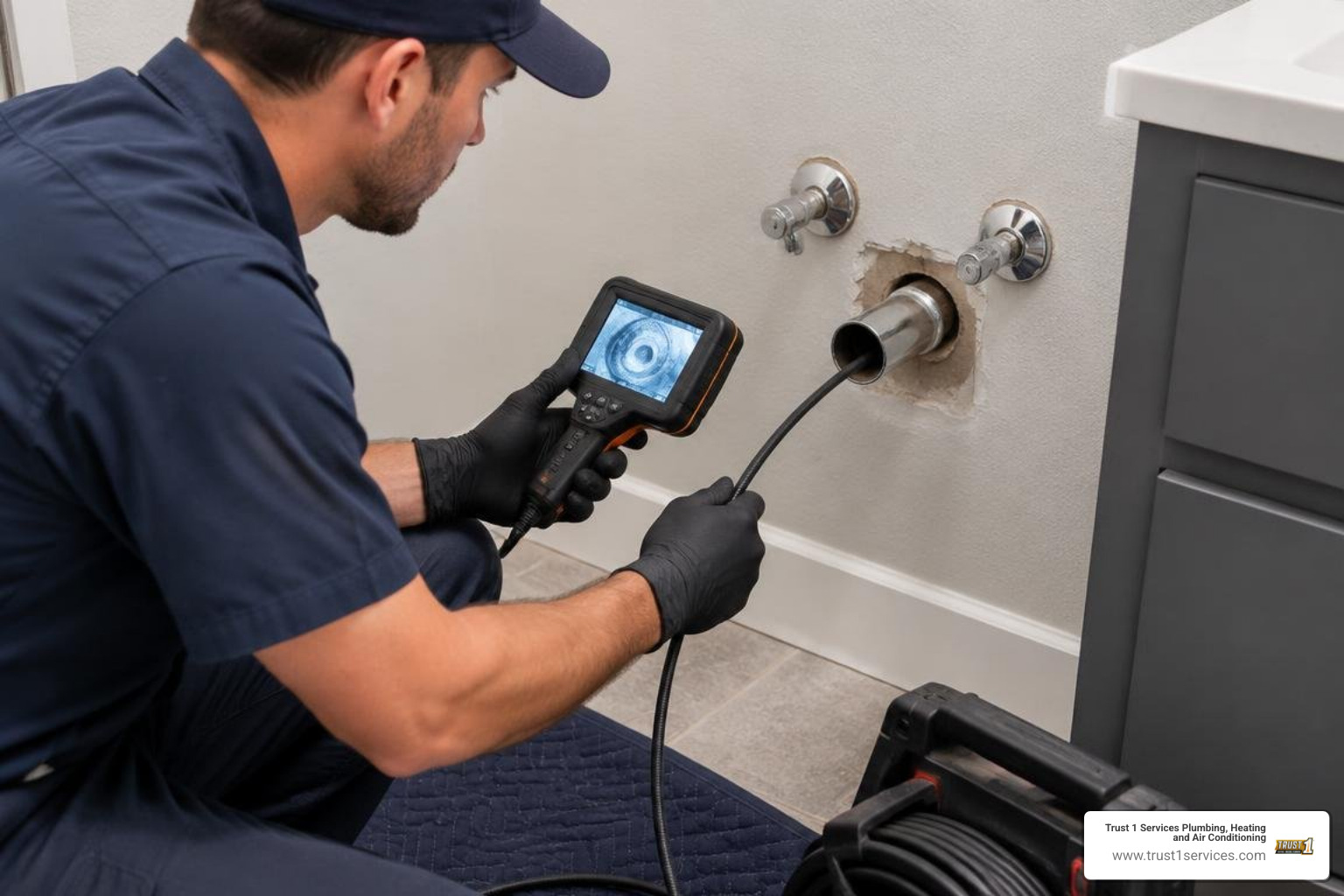
Modern plumbing diagnostics eliminate the guesswork that used to require tearing out vanity cabinets and opening large drywall sections. Our team uses non-invasive tools to pinpoint the exact location and cause of hidden wall leaks.
Advanced Leak Detection and Wall Cavity Evaluation
When a pipe leaks behind a wall, professional diagnostic tools ensure targeted repairs:
- Video drain inspection cameras: High-resolution flexible cameras travel down your drain lines to reveal interior cracks, roots growing into the pipe, or deep blockages past the wall bend.
- Acoustic leak detectors: Sensitive audio equipment listens for the sound of pressurized water escaping inside enclosed framing.
- Digital moisture meters: Thermal and moisture sensors map out damp areas behind drywall without damaging your walls.
Our technicians handle complete plumbing repair and installation to replace damaged pipes inside walls, correct the drainpipe’s downward angle, and stop recurring leaks.
Winter Plumbing Readiness and Annual Drain Inspections
As cold New England weather approaches, temperature changes can put stress on indoor pipes. As November turns to winter, freezing temperatures can affect exterior walls where sink supply and drain pipes run. Even a slight freeze-thaw cycle can shift pipe alignment and cause compromised wall joints to leak.
Before winter, schedule a plumbing inspection to discuss concerns about pipes near cold exterior walls. Our team checks how well drains flow, inspects shut-off valves, and tests all wall connections across your home.
Frequently Asked Questions About Sink Wall Leaks
How tight should the slip nut at the wall connection be?
A slip nut needs enough tightening force to seal the washer without bending or cracking the fitting.
Why does the wall connection leak only when I drain a full sink?
A full sink sends a large amount of water into the drain at once. A partial blockage can make water back up and expose a weak seal. A trap arm that does not fit correctly may also leak during this heavier flow. Call Trust 1 Services to evaluate the drainpipe’s downward angle and clear downstream blockages.
What should I do if the drain pipe inside the wall is corroded or stripped?
If the short threaded metal pipe or plastic adapter at the wall is corroded, rusted through, or stripped, do not try to force a new nut over the damaged threads. Shut off water to the bathroom and call Trust 1 Services right away.
Restoring Your Bathroom Plumbing with Expert Solutions
When you book a visit, describe where you see moisture and when the leak appears.
Our team provides expert solutions to fix a leaky pipe under your sink and keep your home protected from water damage.
At Trust 1 Services Plumbing, Heating and Air Conditioning, we provide dependable, locally owned plumbing services throughout Quincy, MA. We back every project with upfront pricing, same-day service, flexible financing options, and a 100% satisfaction guarantee. We have over 1,500 five-star reviews and an A+ BBB rating. Our technicians work to keep your bathroom plumbing safe and dry.
If you suspect a leak behind your vanity or need immediate help with a failing drain connection, contact our plumbing repair specialists today to schedule an inspection.