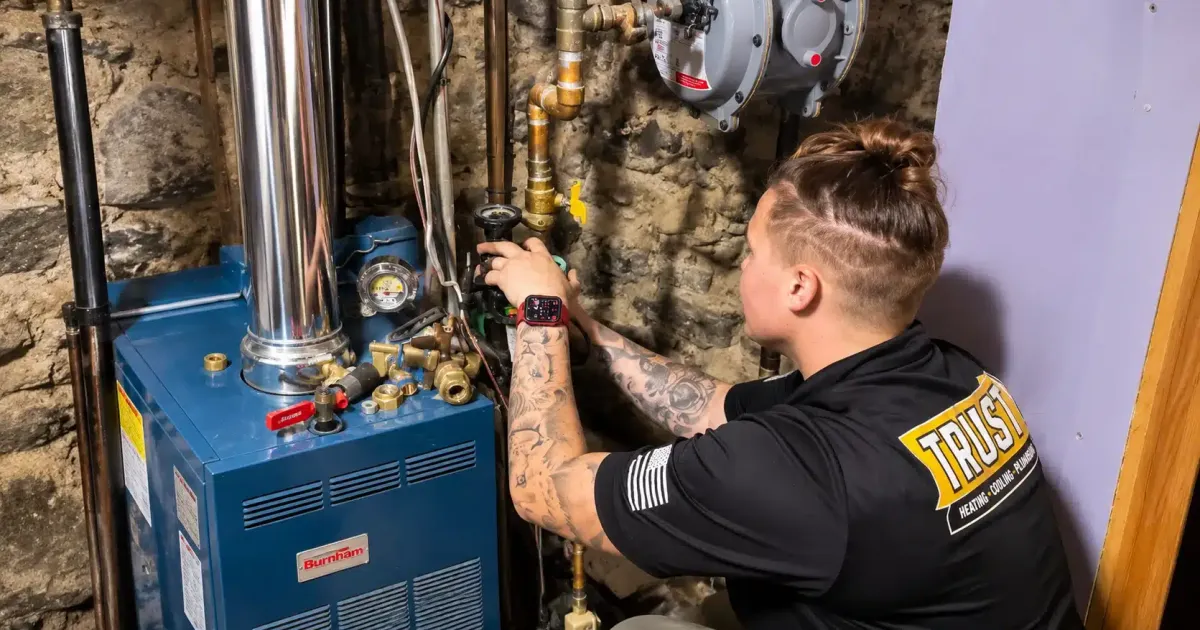
Gas Water Heater Repair: When Do You Need a Technician?


Gas Water Heater Repair: When to Call a Technician
A cold shower is frustrating, but a gas water heater that stops working can also create safety concerns that deserve quick attention. Knowing which warning signs call for professional help can protect your home, avoid bigger repair bills, and help restore reliable hot water sooner.
Call the licensed team at Trust 1 Services Plumbing, Heating and Air Conditioning for gas water heater repairs involving fuel supply, exhaust venting, ignition trouble, water leaks, or other safety concerns. Our team provides clear written pricing before work begins and tests the gas piping and vent system after a repair or installation. If you smell gas, get everyone outside, then contact your gas utility or call 911 from a safe location. Leave the appliance alone until qualified help arrives.
Loss of hot water, rust-colored water, rumbling sounds, and dampness near the tank can point to a water heater problem. A technician may be able to correct a worn part or minor connection issue, but corrosion that causes the tank itself to leak usually calls for replacement. The sections below help homeowners recognize when to schedule gas water heater repair.
Trust 1 Services Plumbing, Heating and Air Conditioning helps Quincy homeowners understand when a gas water heater repair needs professional attention and what to expect during a service visit.
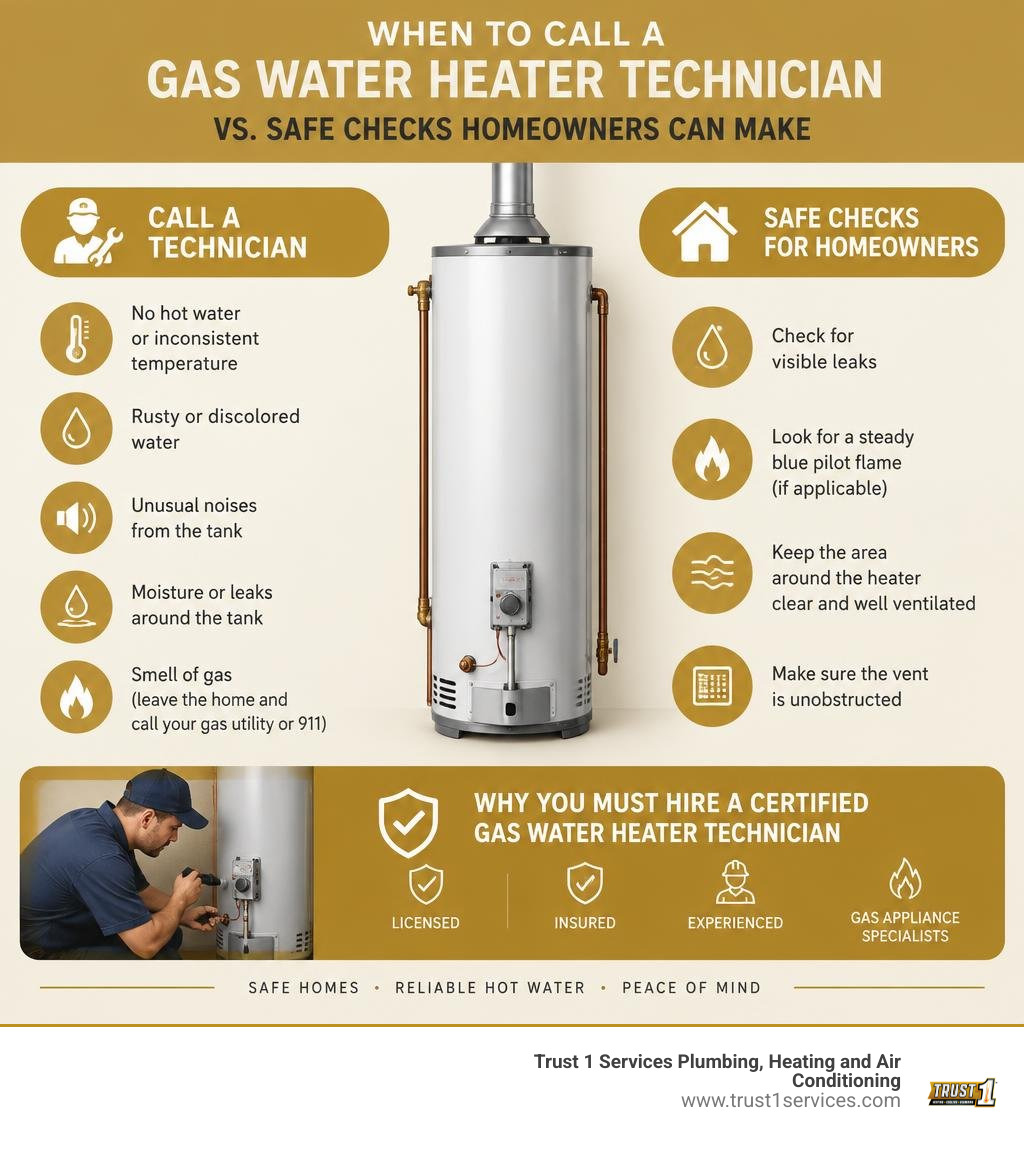
Why You Must Hire a Certified Gas Water Heater Technician
Working on a gas-fired appliance is fundamentally different from tackling a basic plumbing fix like clearing a clogged sink or replacing a faucet washer. Natural gas and propane water heaters combine pressurized water, high-voltage or millivolt electrical circuits, combustible gases, and dedicated exhaust systems into a single footprint. Because of these overlapping systems, attempting unauthorized DIY repairs or hiring an unlicensed handyman poses severe property and life-safety hazards.
When an unqualified person works on a gas burner assembly or gas valve, minor installation mistakes can lead to catastrophic consequences:
- Combustion Gas Leaks: Loose gas unions, cross-threaded iron pipes, or degraded flare fittings can leak raw natural gas or propane into your basement or mechanical room, creating a severe explosion risk.
- Carbon Monoxide (CO) Poisoning: Improper combustion air mixtures or misaligned flue pipes can allow carbon monoxide, an invisible, odorless, and deadly gas, to enter living spaces instead of venting outdoors.
- Draft Hood Spillage & Backdrafting: If venting pitch, chimney liner integrity, or room depressurization aren’t calculated correctly, exhaust gases get pulled back down the flue pipe during operation.
- Gas Supply Line Undersizing: High-demand units, particularly high-output tankless water heaters, require precise fuel volume. If an installer connects a 199,000 BTU unit to an undersized supply line, the system starves for fuel, causing incomplete combustion, soot accumulation, and premature component failure.
Licensed professionals understand local fuel gas codes, National Fire Protection Association (NFPA) standards, and municipal permitting requirements. Industry residential repair training expectations often include several years of hands-on experience, which supports accurate team diagnostics. For help with leaks, ignition problems, or tank issues, Trust 1 Services Plumbing, Heating and Air Conditioning provides water heater repair and water heater replacement for Quincy homeowners.
Critical Qualifications of a Gas Water Heater Technician
When evaluating service providers for your home, you must verify their credentials before allowing anyone to touch your fuel lines or exhaust assemblies. A qualified professional should possess:
- State Plumbing and Gas Fitting Licenses: Proof of Journeyman or Master-level licensing indicating tested proficiency in fuel gas piping, drainage, venting physics, and local code compliance.
- Specialized Manufacturer Certifications: Factory training from major equipment brands confirming the specialist knows how to diagnose proprietary electronic control boards and specialized commercial or residential burners.
- Comprehensive Liability and Workers’ Compensation Insurance: Complete coverage protecting your home against accidental property damage or water/fire loss during the service call.
- Clean Background Checks and Professional Vetting: Assurance that the individuals entering your private residence have passed drug screens and criminal background checks.
- Proven Residential Track Record: Multi-year experience troubleshooting real-world issues across both atmospheric tank units and complex condensing systems.
Safety Protocols and Professional Diagnostic Equipment
A licensed technician relies on specialized, calibrated diagnostic tools rather than guesswork. When we evaluate a residential gas water heater, our service vehicles arrive stocked with advanced safety instrumentation:
- Digital Manometers: Instruments used to measure static and dynamic gas supply pressure in inches of water column (in. w.c.), ensuring the burner receives the manufacturer’s exact specified fuel delivery.
- Electronic Gas Sniffers: Highly sensitive detection devices capable of pinpointing microscopic hydrocarbon leaks along fittings, valves, and gas flex lines.
- Flue Gas Combustion Analyzers: Probes inserted into the exhaust stream to measure oxygen, carbon dioxide, ambient temperature, and parts-per-million (PPM) of carbon monoxide to verify clean, complete combustion.
- Thermal Imaging & Digital Multimeters: Tools used to track wiring continuity, millivolt thermocouple generation, electronic igniter resistance, and internal tank thermal layers.
- Draft Gauge Verification Tools: Equipment to confirm that exhaust vents establish proper negative pressure draft within seconds of main burner ignition.
Common Gas Water Heater Problems and Warning Signs
Water heaters rarely fail without giving a few subtle hints first. Recognizing these red flags early lets you book a repair before waking up to an icy shower or a flooded utility area.
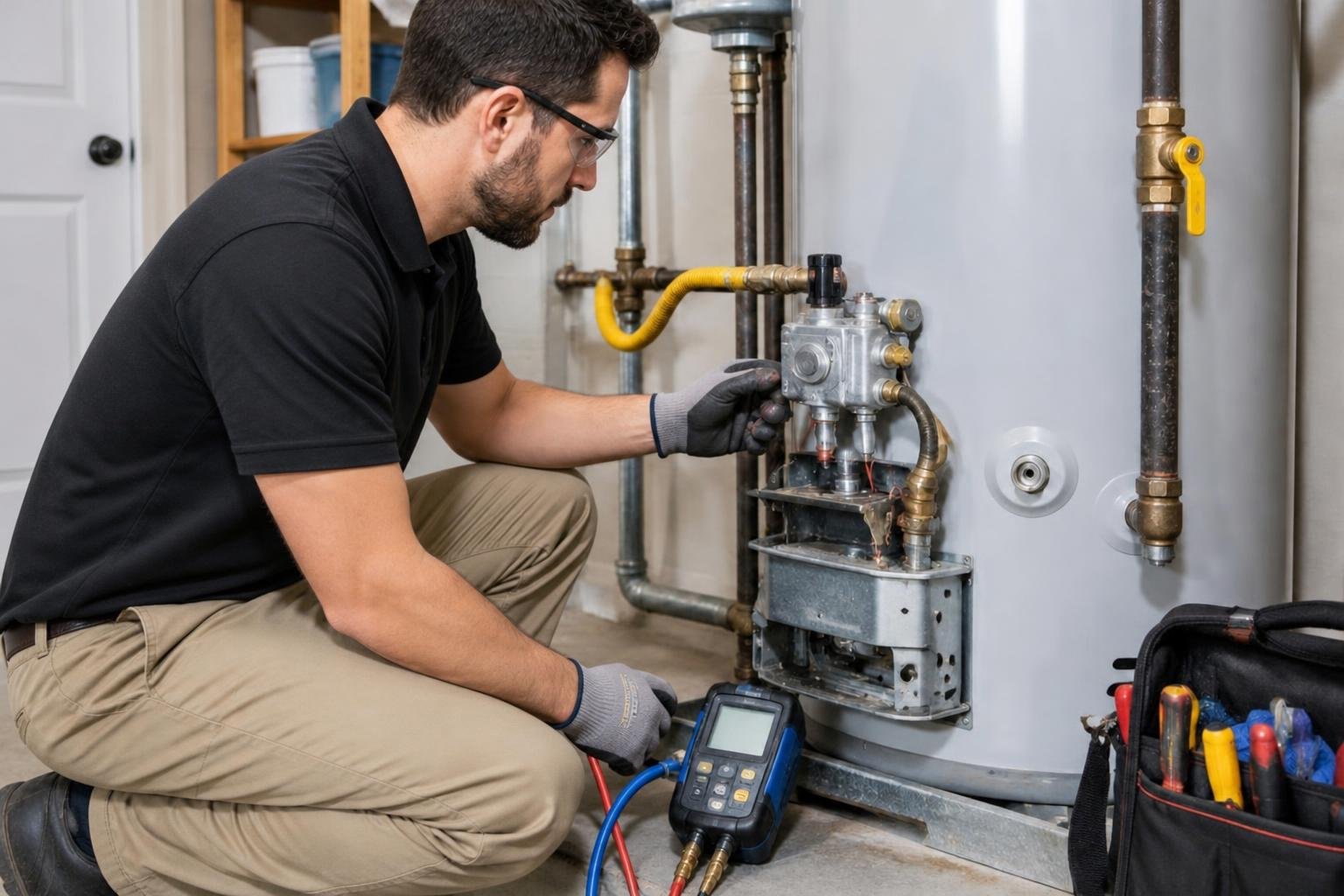
- Pilot Light Won’t Stay Lit: If your standing pilot flame repeatedly goes out or the electronic spark ignition fails to catch, the thermocouple or flame sensor may be coated in carbon soot, misaligned, or electrically defective. It can also point to a failed gas control valve.
- Inconsistent Water Temperatures: Lukewarm water or rapid loss of hot water during a single shower often stems from a broken internal dip tube (which dumps cold incoming water directly at the top of the tank instead of the bottom) or heavy sediment accumulation insulating the water from the burner.
- Discolored, Rusty Water: Red, brown, or cloudy hot water indicates advanced internal corrosion. If the rust only appears on the hot water side of your fixtures, the tank lining is deteriorating or the sacrificial anode rod has been completely consumed.
- Rotten Egg or Sulfur Odors: A distinct sulfur smell near the unit could be a dangerous natural gas leak (mercaptan additive). If the odor is coming exclusively from the hot water faucets themselves, anaerobic bacteria inside the tank may be reacting with an aluminum or magnesium anode rod.
- Popping, Rumbles, or Knocking Sounds: When hard water minerals settle to the bottom of a tank, they form a hardened layer of scale over the bottom burner. Trapped water pockets boil beneath this sediment crust, creating mini steam explosions that sound like popcorn popping or loud knocking against the steel shell.
- Moisture or Pooling Water Around the Base: Water pooling beneath the unit can originate from a loose drain valve, a leaking Temperature and Pressure Relief (T&P) valve, or catastrophic internal tank rupture.
Tank vs. Tankless Gas Water Heater Issues
While traditional storage tanks and on-demand tankless units perform the same ultimate job, their internal mechanics lead to very different service issues:
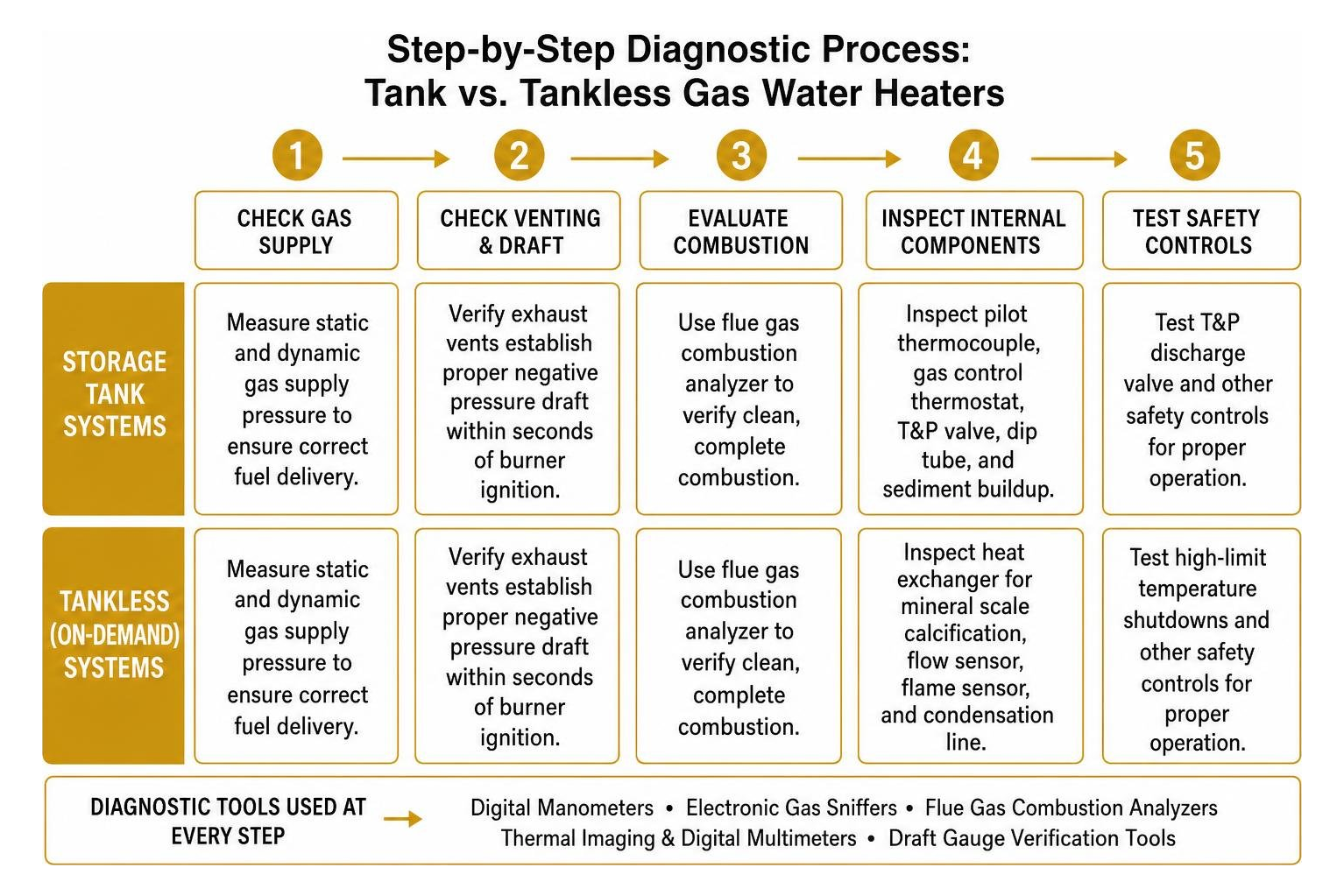
- Storage Tank Systems: Common failures center around pilot thermocouples, gas control thermostats, T&P discharge valves, dip tubes, and gradual sediment buildup on the tank floor.
- Tankless (On-Demand) Systems: Because tankless units heat water instantly through compact, high-efficiency heat exchangers, their primary vulnerability is mineral scale calcification. Without regular system descaling, narrow heat exchanger passages clog, triggering flow sensor errors, flame sensor faults, high-limit temperature shutdowns, and condensation line blockages.
Pre-Service Troubleshooting Steps for Homeowners
Before you pick up the phone to book a service visit, there are a few basic, safe visual inspections you can perform yourself:
- Check the Main Fuel Shutoff: Verify that the manual inline gas valve handle is parallel to the pipe (open position). If the valve was bumped or partially closed, the burner will starve.
- Inspect the Electrical Switch: Power-vented tanks and tankless units require standard 120V electricity to operate exhaust blowers and computer control boards. Check that the electrical disconnect switch is on and your main breaker panel hasn’t tripped.
- Check the Thermostat Dial: Ensure the temperature dial on the gas control valve has not been accidentally bumped down to “Vacation” or a very low setting. We recommend keeping it set to 120°F (49°C) for safety and energy efficiency.
- Perform a Visual Pilot Check: Look through the sight glass at the bottom of the tank. If you see a small blue flame, the pilot is lit. If it’s completely dark or burning lazy and yellow, shut off the gas valve dial and call a professional.
- Do Not Attempt Gas Disassembly: Never loosen gas flare nuts, attempt to re-wire safety switches, or bypass a tripping T&P valve on your own.
Repair vs. Replacement: Making the Right Financial Decision
Every homeowner eventually faces the dilemma of whether to patch up an existing water heater or invest in a brand-new, energy-efficient system.
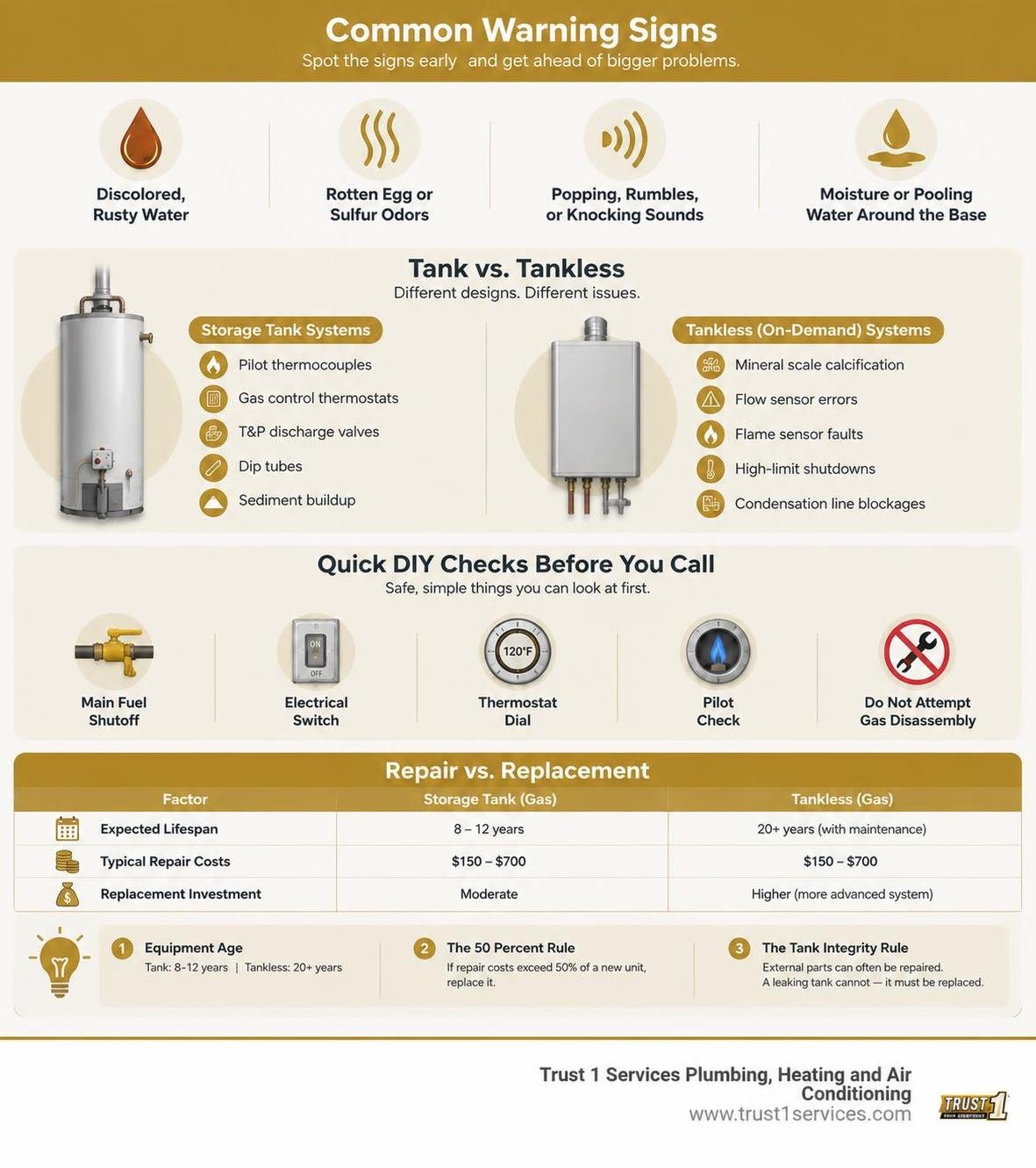
To make an objective financial choice, apply these standard industry guidelines:
- Equipment Age: A traditional atmospheric gas tank water heater has an expected lifespan of 8 to 12 years. If your tank is past the 10-year mark, putting hundreds of dollars into major component replacements is rarely a wise long-term investment. Tankless gas units last 20 years or more when maintained and descaled on schedule.
- The 50 Percent Rule: If the estimated cost of an immediate repair exceeds 50% of the price of installing a new unit, replace it immediately.
- The Tank Integrity Rule: Component issues, such as a faulty thermocouple, a broken igniter, an electronic control valve failure, or an external pipe fitting leak, can easily be repaired for $150 to $700. However, if the main internal steel tank is leaking due to corrosion, it cannot be repaired. The entire unit must be replaced to prevent major structural flooding.
- Energy Efficiency Upgrades: Modern high-efficiency tank models and condensing units can cut your annual water heating energy bills by 20% to 30%, helping offset the initial installation cost over time.
| Metric / Consideration | Repairing Existing Unit | Standard Tank Replacement | Tankless System Replacement |
|---|---|---|---|
| Typical Cost | Varies by the failed part, unit condition, and required safety testing | Varies by tank size, venting, permits, and installation needs | Varies by equipment, gas-line upgrades, venting, and installation complexity |
| Average Lifespan | Extends current life 1–3 years | 8–12 years | 20+ years with regular descaling |
| When to Choose | Unit is under 8 years old and needs a straightforward component repair | Unit is over 10 years old or the tank is leaking | Hot-water demand is high and you plan to stay in the home long term |
| Energy Savings | No meaningful efficiency gain | Improved efficiency compared with an older unit | Potentially lower gas use, depending on household demand and installation |
| Installation Time | Often completed in one service visit | Typically completed in one day | May require additional time for gas-line or venting updates |
Quincy homeowners can compare common warning signs in our guide to eight signs you need water heater repair, including changes in water temperature, unusual noises, rusty water, and moisture around the tank. Those warning signs can help you decide whether a repair visit is the right next step before a minor issue turns into a loss of hot water or water damage.
If you are deciding whether to repair or replace your system, our article on tank vs. tankless water heaters explains how household hot-water needs, available space, maintenance expectations, and long-term plans can affect the best choice. Trust 1 Services Plumbing, Heating and Air Conditioning can assess your current equipment and explain the available options for your Quincy home.
To help protect a water heater between service visits, learn what a water heater anode rod does. Regular maintenance, including checking for corrosion and addressing changes in water quality or performance early, can help you prepare for a service visit and avoid more serious problems.
What to Expect When a Gas Water Heater Technician Arrives
When you hire a reputable, customer-first service company, the service visit should follow a structured, professional workflow:
- Courtesy Dispatch Call: You receive a confirmation text or call letting you know your technician is 20 to 30 minutes away, often with the technician’s name and photo.
- System Assessment & Code Inspection: The specialist inspects the burner, fuel piping, expansion tank, vent pitch, and water shutoff valves, performing combustion and draft checks.
- Upfront, Flat-Rate Pricing: Before any tool touches the unit, you receive clear, written options outlining fixed repair or replacement costs, with zero hidden labor charges or surprises.
- Execution of Service: Standard component repairs typically take 1 to 2 hours. A full standard tank installation requires 2 to 4 hours, while complex tankless conversions take 3 to 5 hours to accommodate larger dedicated gas lines and direct vent runs.
- Safety Verification & Clean-Up: The technician performs soap-bubble leak tests and digital manometer pressure checks, confirms proper exhaust draft, tests water temperature, and leaves your mechanical room spotless.
Frequently Asked Questions About Gas Water Heater Services
How long does a gas water heater installation or repair usually take?
A minor repair, such as replacing a worn thermocouple, flame sensor, pilot assembly, or heating element, typically takes 1 to 2 hours. A full standard atmospheric gas tank replacement takes our team roughly 2 to 4 hours from arrival to final testing. Upgrading from a storage tank to an on-demand tankless system generally takes 3 to 5 hours because our technicians often need to run larger gas supply lines and install specialized concentric PVC/polypropylene venting through an exterior wall.
How much does professional gas water heater repair cost?
Most professional gas water heater repairs cost between $150 and $700, depending on the failed component and system type. Minor fixes like replacing a thermocouple, flushing moderate sediment, or swapping an external shutoff valve sit on the lower end ($150 to $350). Replacing a proprietary digital electronic gas control valve, combustion blower fan, or complex tankless circuit board falls toward the higher end ($400 to $700+).
What is the most common reason a gas water heater stops producing hot water?
The most common culprit is an extinguished pilot light caused by a worn or dirty thermocouple/flame sensor. When this safety sensor fails to detect a continuous flame, it automatically shuts off the gas supply valve to prevent unburned fuel from filling your home. Other frequent causes include failed electronic ignition modules, severe bottom sediment buildup that insulates the water from the heat source, or a broken cold water dip tube.
Protect Your Investment with Trust 1 Services
Your water heater is the unsung hero of your household, operating 24 hours a day, 365 days a year to keep your family comfortable. Protecting that system requires regular professional care and swift attention whenever warning signs appear. Homeowners can dramatically extend equipment life, prevent internal corrosion, and preserve tank integrity by having a qualified professional inspect the system before the anode rod deteriorates completely.
At Trust 1 Services Plumbing, Heating and Air Conditioning, we provide homeowners across Quincy, MA and surrounding communities with full-service plumbing and HVAC solutions. Whether you need an emergency gas valve repair, routine annual sediment flushing, or a high-efficiency tankless conversion, our certified specialists are ready to help.
We stand behind every repair and installation with:
- Upfront, Flat-Rate Pricing with zero hidden fees
- Fast, Same-Day Service from fully stocked service vehicles
- A 100% Customer Satisfaction Guarantee
- Flexible Financing Options tailored to your household budget
- Over 1,500 Five-Star Reviews and an A+ BBB Rating
Don’t spend another morning enduring freezing cold showers or worrying about hidden gas leaks. Contact our professional gas water heater technicians today to schedule an inspection or repair.