Furnace Filter Replacement Made Simple for Every Homeowner


How to Replace Your Furnace Filter
When cold weather arrives in Quincy, checking your furnace filter is a small maintenance task worth tackling.
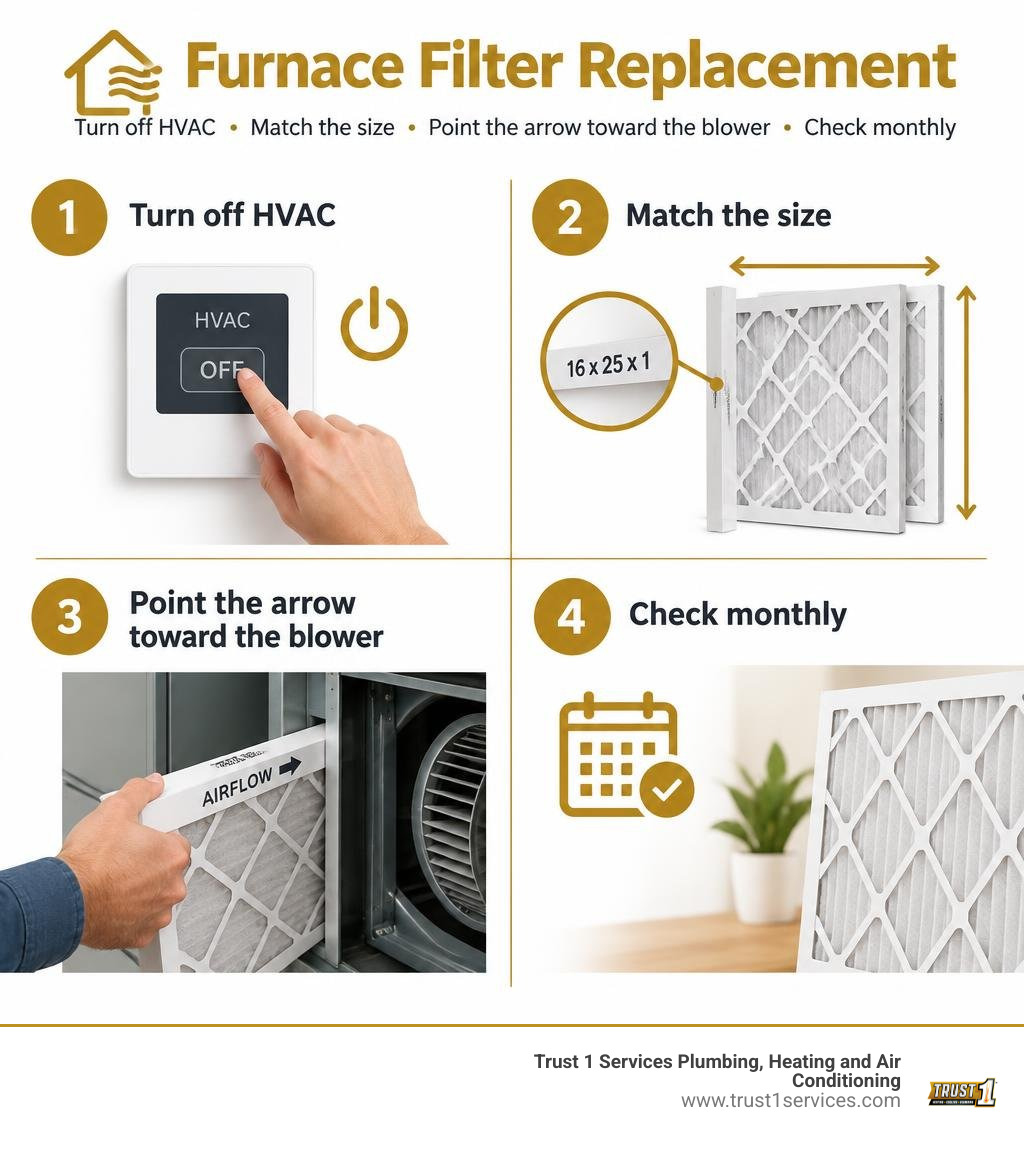
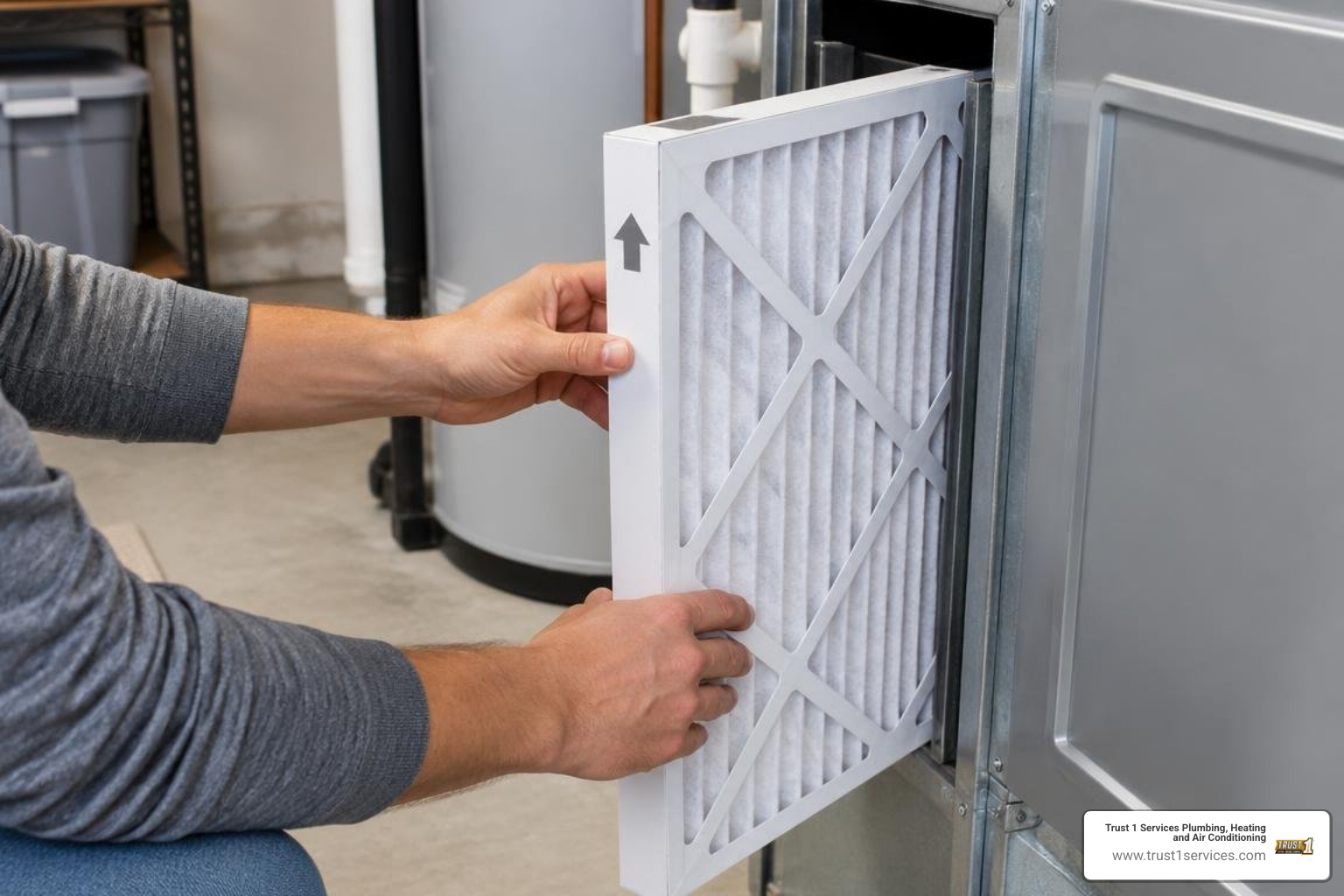
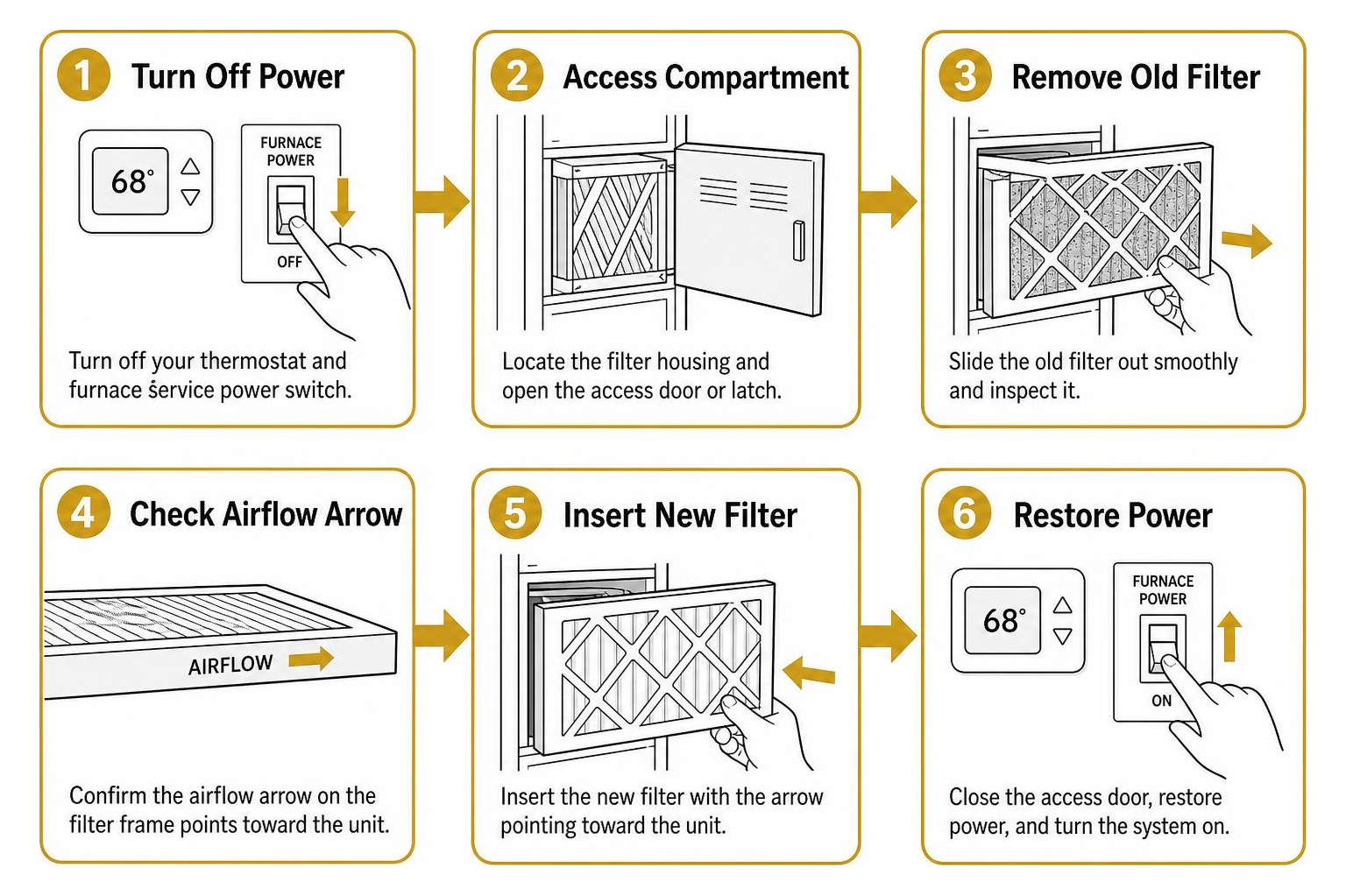
For furnace filter replacement, turn off your heating and cooling system, remove the old filter, and check the size the maker prints on its frame. Slide in a matching filter with its airflow arrow pointing toward the blower. Close the cover before turning the system back on.
Check a 1-inch filter each month and replace it when dust builds up, often every 1 to 3 months. Thicker filters may last longer. In Quincy, checking your filter now can help you catch a clog before winter heating puts more demand on your system.
At Trust 1 Services Plumbing, Heating and Air Conditioning, we help homeowners keep air flowing and spot heating problems early. Regular filter changes help with both.
Sizing, MERV Ratings, and Choosing the Right Filter
Every heating system needs a filter that fits securely in its filter slot or return plenum, the chamber that carries indoor air back to the furnace. A loose fit lets dirty air bypass the filter and carry pet hair and dust into HVAC equipment. A filter that is too tight can buckle, collapse, and create air gaps.
When shopping for a filter, consider its size, the thickness of its filtering material (media), and how well it traps airborne particles. Choosing a filter that suits your system helps it capture debris without limiting airflow. Our team can help check that fit during regular heating system maintenance. Our HVAC services can also help address ongoing airflow concerns.
| Filter Thickness | MERV Rating Range | Typical Replacement Lifespan | Best Household Application |
|---|---|---|---|
| 1-inch Pleated | MERV 8 to 11 | 1 to 3 Months | Standard residential systems, single pets |
| 2-inch Pleated | MERV 8 to 11 | 2 to 4 Months | Light dust environments, small families |
| 4-inch Deep Media | MERV 11 to 13 | 6 to 9 Months | Systems with a separate cabinet for thick filters; homes with allergy sufferers |
| 5-inch High-Capacity | MERV 11 to 16 | 9 to 12 Months | Whole-home air cleaners, multiple pets |
Sizing Dimensions: Nominal vs. Actual Measurements
Filters have two sets of measurements: nominal size and actual dimensions. The nominal size is the rounded size the maker prints on the frame, such as 16x25x1 or 20x25x4. To find the actual size, measure the filter with a tape measure. Its measurements are often up to half an inch smaller than the label size.
Manufacturers build filters slightly smaller so they slide easily into the mounting rack without jamming. When buying replacements, always check the printed label first. If the label has worn away, measure the old frame’s length, width, and depth to match the correct replacement size.
Choosing MERV Ratings for Home Comfort and Airflow
The Minimum Efficiency Reporting Value (MERV) rates how effectively a filter traps airborne particles. Ratings range from 1 to 16 for standard residential systems. Higher ratings capture smaller particles such as pollen, fine dust, and pet dander.
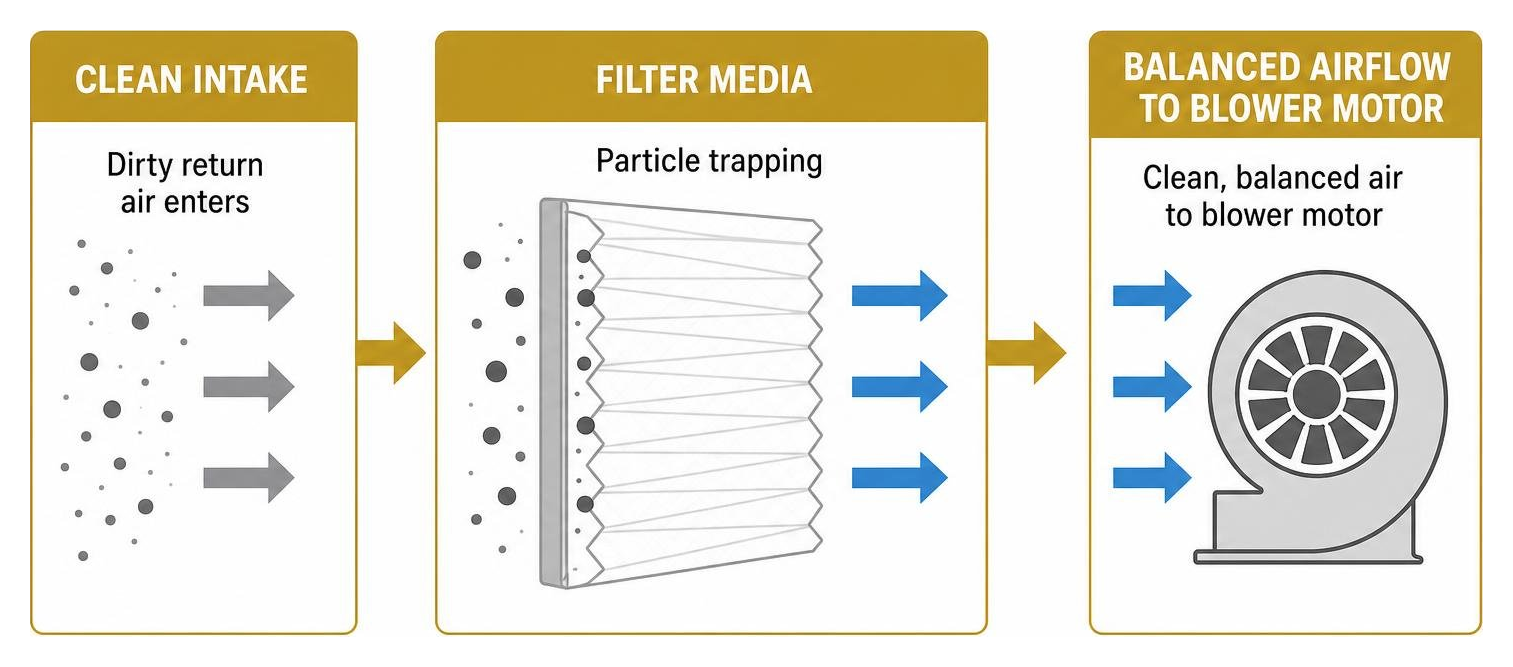
Using the highest rating is not always ideal for every home. Dense filters can resist airflow and raise static pressure, the pressure the blower works against to move air. Too much resistance can reduce airflow and may strain or overheat the blower.
For most homes, a MERV 8 to MERV 11 filter provides excellent particle capture while maintaining safe airflow. The U.S. Department of Energy offers guidance on HVAC proper installation of filters. For broader seasonal upkeep, see our guide on what an AC tune-up includes.
Recommended Replacement Frequency and Clogged Filter Symptoms
A clean filter helps air flow through your system and keeps your home comfortable. Check basic 1-inch filters every 30 days and generally replace them every 1 to 3 months. Thicker 4-inch to 5-inch media filters hold more dust and often last between 6 and 12 months. Seasonal upkeep also matters. Our post on protecting an HVAC outdoor unit in winter explains how to keep the outdoor equipment clear during cold weather.
As winter approaches in late autumn, running a complete furnace test and changing the filter ensures your system operates safely during cold snaps. Preparing ahead of time can help prevent heating interruptions and keep your system ready for cold snaps.
Environmental and Household Factors Affecting Filter Life
Fixed replacement calendars serve as basic guidelines, but everyday household activities dictate real-world filter life. You will need to replace your filter more frequently if your home has:
- One or more shedding pets that generate fur and dander.
- Many people living in the home, or residents with seasonal allergies or asthma.
- Active home renovation projects that release drywall dust and wood particles.
- Dusty outdoor air from nearby construction or unpaved roads.
- Heavy furnace runtime during freezing winter weather.
Warning Signs of a Severely Restricted Filter
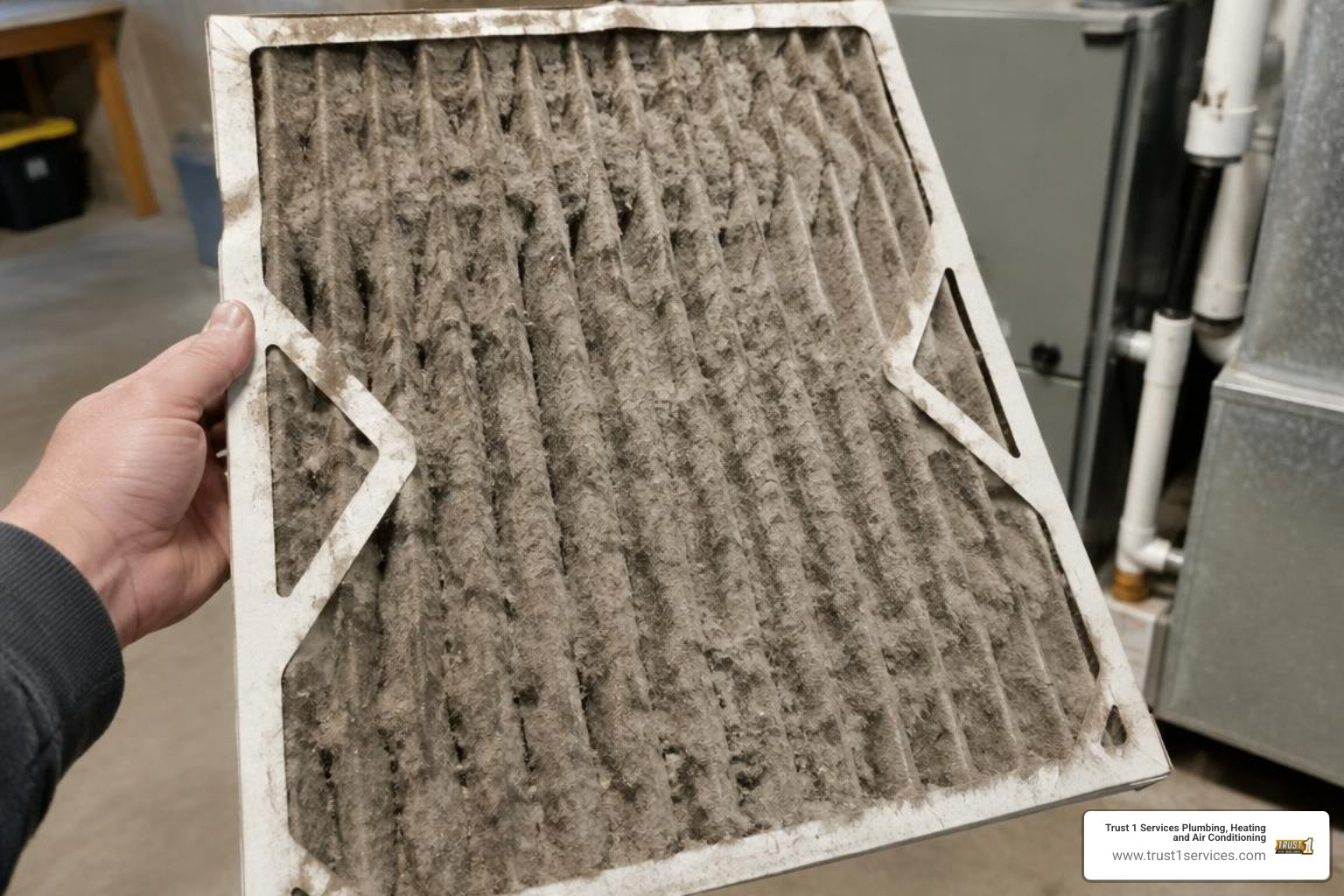
A clogged air filter creates noticeable operating symptoms across your home. Watch for these common warning signs:
- Visible gray or black dust matting across the pleated filter surface.
- Weak airflow coming from supply vents in distant rooms.
- Rapid dust buildup on furniture shortly after cleaning.
- A faint burning dust odor when the furnace burners ignite.
- Unusually high winter heating bills from longer heating cycles.
- Furnace short-cycling, where the unit runs for two minutes, shuts down, and restarts repeatedly.
If your furnace shares air ducts with an AC unit, a clogged filter can also cause cooling trouble. Low airflow can let ice form on the indoor evaporator coil, the part that absorbs heat from indoor air. This can create serious HVAC airflow problems.
Basic Filter Care Between Professional Maintenance Visits
Routine filter care supports airflow between professional maintenance visits. A technician should check heating problems that continue after a filter change.
Keep Routine Filter Care Simple
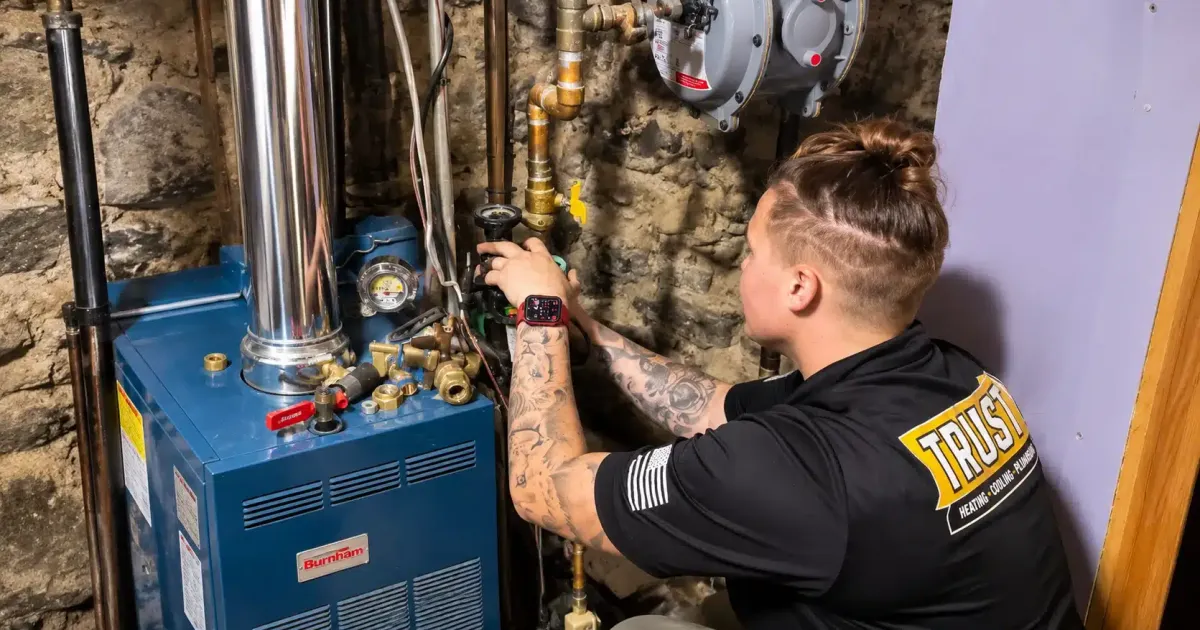
Follow your system manual, turn off power before changing the filter, and match the filter size and airflow direction. Secure the cover before restoring power. If you cannot safely reach the filter or confirm the right replacement, ask our team for help. A professional visit also checks heating components beyond the filter. Our heating services can help when you need a technician to inspect ongoing airflow or furnace concerns.
Common Installation Mistakes and Backward Filter Hazards
A common installation mistake is placing the filter backward. Many filters use wire or mesh backing to support the filter material as air passes through.
Installing a filter backward can leave its material without proper support as air passes through. The material can bend, pull free from its cardboard frame, and collapse into the blower wheel, the fan that moves air through the system. A backward filter can also limit airflow and raise temperatures inside the furnace. This can strain the heat exchanger, the metal part that transfers furnace heat to your home’s air.
Another frequent mistake is using the wrong physical dimensions. Forcing an oversized filter into a small rack bends the frame and causes air leaks. An undersized filter leaves open gaps that allow unfiltered debris to bypass the media completely.
Furnace Filter Replacement Expenses and System Value
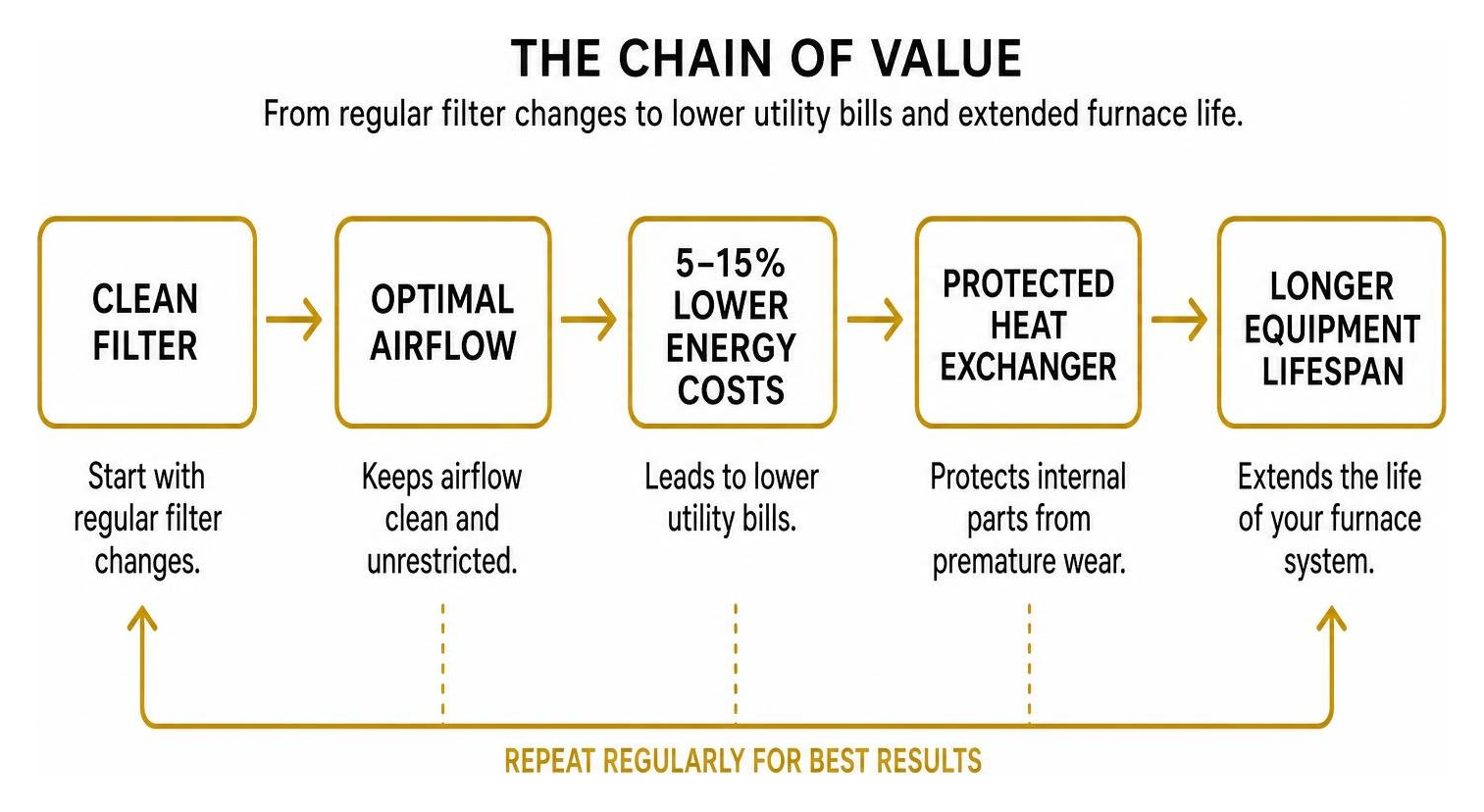
Regular filter changes represent one of the least expensive yet most valuable home maintenance tasks. Keeping airflow clean and unrestricted protects expensive internal parts from premature wear.
Professional vs. DIY Furnace Filter Replacement Cost
Purchasing basic 1-inch replacement filters directly usually costs between $10 and $25 per filter, while thick 4-inch to 5-inch specialty media filters range from $30 to $80 each. Ordering multi-packs online often lowers your individual filter cost significantly.
If you choose a professional maintenance visit, the service call typically ranges from $45 to $180. A technician does more than swap the filter material. They check wiring, measure how much electric current the blower motor uses, clean the sensors that detect the burner flame, and check that the heat exchanger works safely.
Lowering Energy Bills Through Seasonal Furnace Filter Replacement
The U.S. Department of Energy reports that replacing a dirty filter with a clean one can lower your heating and cooling system’s energy consumption by 5% to 15%. For an average household, this efficiency gain saves roughly $75 to $300 annually on utility expenses.
The average gas furnace lasts between 15 and 20 years. Good airflow helps prevent overheating that can damage heat exchangers. It can also help your furnace last longer. Homeowners in Massachusetts can contact our professional heating technicians if airflow problems, unusual noises, or frequent cycling continue after a filter change.
To maximize your household savings, adopt these dependable maintenance habits:
- Inspect 1-inch filters at the start of every month during peak heating and cooling seasons.
- Stock up on properly sized multi-packs before winter weather arrives.
- Write the replacement date on the filter frame at every installation.
- Keep return air vents clear of furniture, rugs, and drapes.
- Schedule a professional furnace tune-up each autumn to verify overall system safety.
Frequently Asked Questions About Furnace Filters
Are furnace filters and AC filters the exact same component?
Yes. In central HVAC systems, the heating unit and air conditioning equipment share the same blower motor and ductwork. The filter in the return air plenum cleans the air during both winter heating and summer cooling cycles.
Can I use a different brand than my furnace manufacturer?
Yes. You do not need to buy your furnace maker’s own filter brand. Choose a filter that matches the required size and fits the slot snugly. Check your system manual for the filter type and airflow limits your blower supports. A different brand can work if it meets those needs.
What happens if I install a furnace filter backwards?
A backward filter places its support layer on the wrong side. Air can bend the filter material, buckle the frame, and push dust through gaps. This can strain the blower and make the furnace overheat.
Maintaining Home Comfort with Reliable Professional Care
Regular furnace filter changes help keep your indoor air clean and support heating system performance. Routine filter checks help between professional visits. Our team can help if you cannot safely reach the filter or if heating problems continue.
If your heating system makes unusual noises, has weak airflow, or cycles often even after a filter change, contact our professional heating technicians. Trust 1 Services Plumbing, Heating and Air Conditioning serves Quincy, MA, and nearby communities with prompt, dependable HVAC care, upfront pricing, flexible financing, and a 100% satisfaction guarantee. Schedule a seasonal heating tune-up to help keep your home warm all winter.