Water Line Replacement in Quincy: Signs You Need It


When Does a Quincy Water Line Need Replacement?
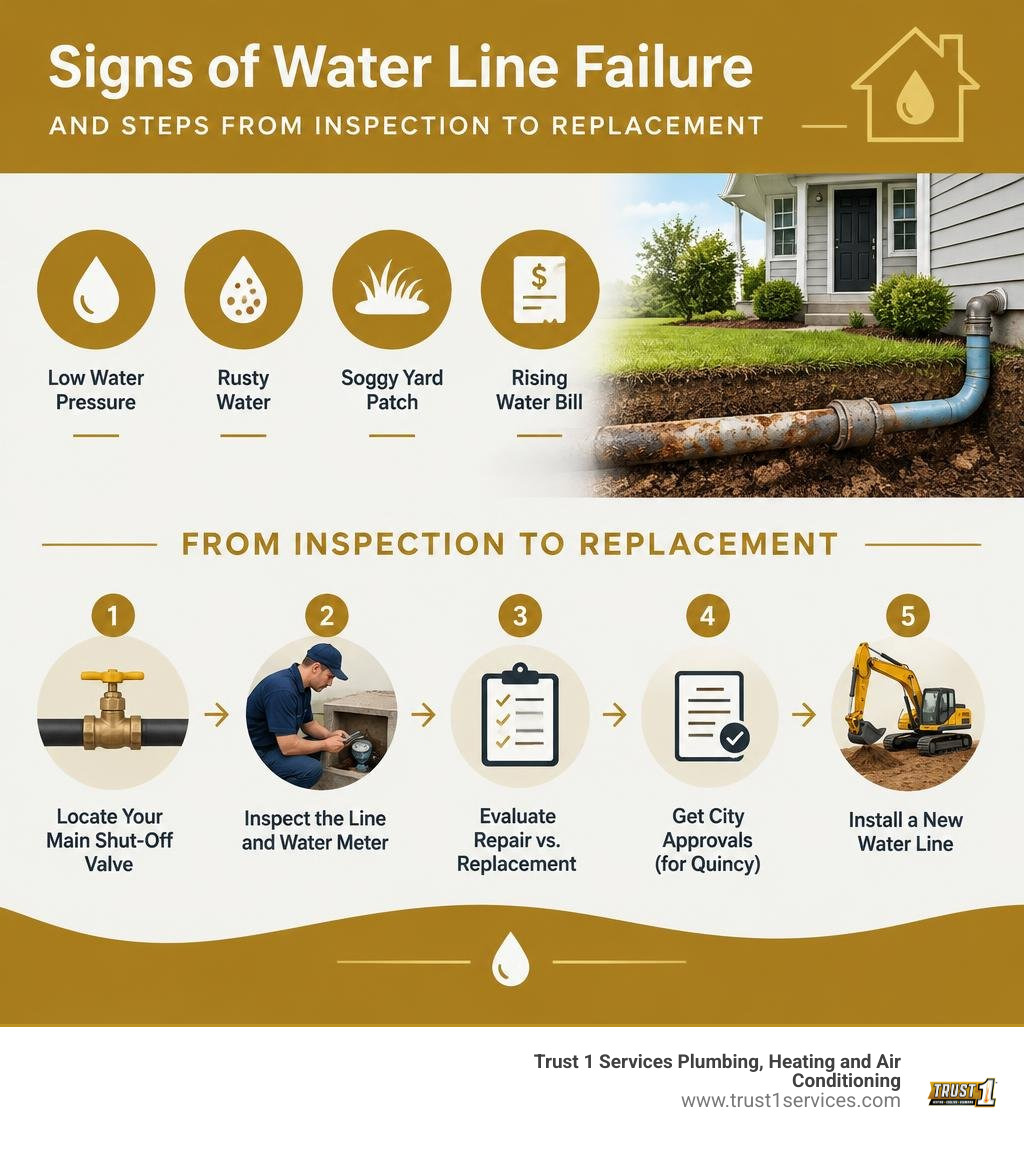
A sudden drop in water pressure, rusty water, a soggy patch of yard, or an unexplained rise in your water bill can signal a failing water service line. Start by locating your main shut-off valve, then have a plumber check the line and water meter. They can tell you whether a repair will last or replacement makes more sense. For water line installation in Quincy, MA, ask about city approvals before work begins.
A water service line carries fresh water from the public main into your home. In older homes, pipe age and material matter, especially as cold weather approaches.
At Trust 1 Services Plumbing, Heating and Air Conditioning, our experienced plumbing team helps Quincy homeowners assess water line problems and plan the right solution. This guide explains which warning signs deserve a closer look and what replacement involves.
Key Warning Signs Your Quincy Home Needs Water Line Replacement
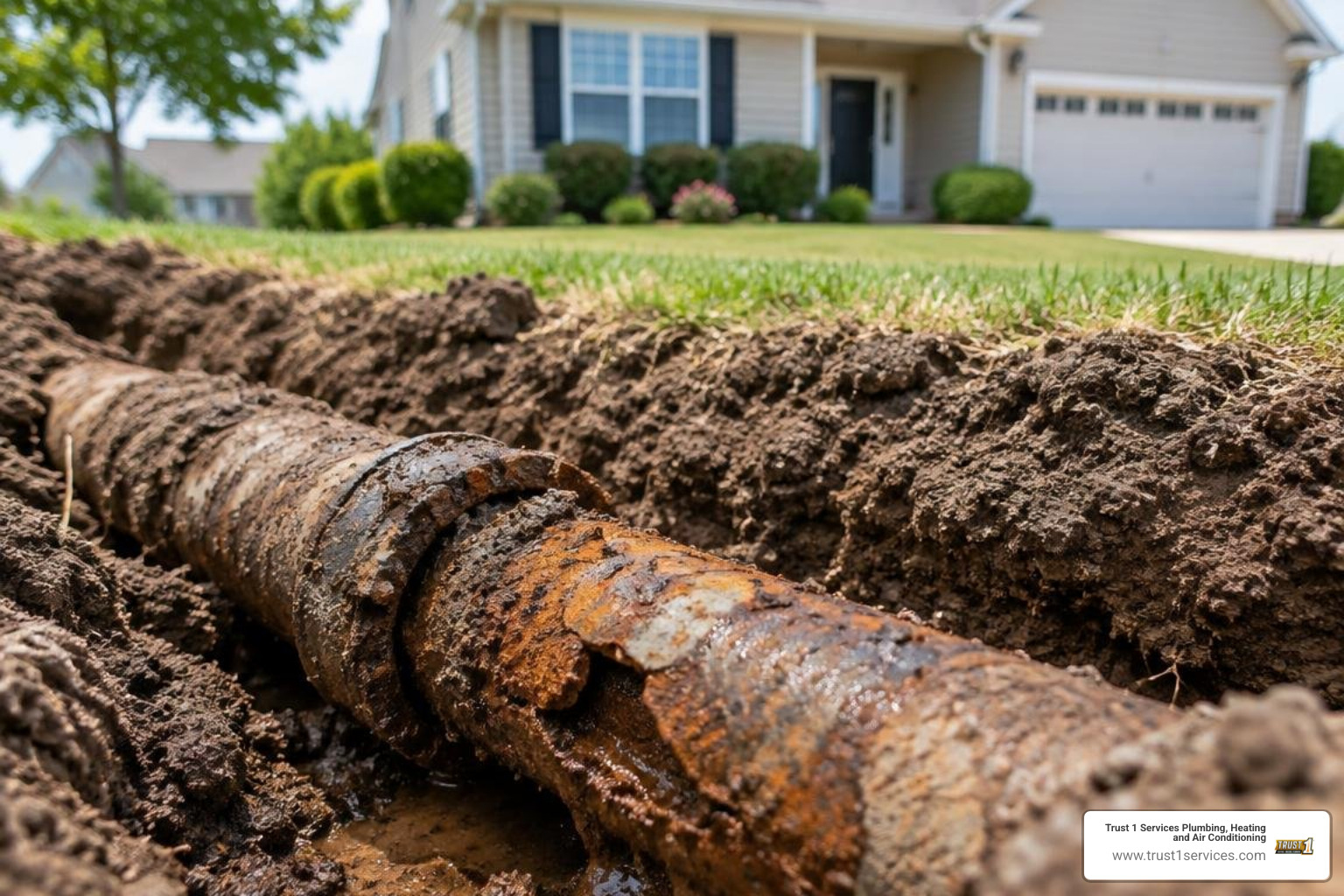
Your underground main water service line stays under pressure. Because the pipe runs beneath your lawn or driveway, you may not notice damage until signs appear inside your home. Spotting these signs early can help you avoid major water damage and costly emergency digging.
Common indicators of an underground water line leak include:
- A sudden, persistent drop in water volume across multiple plumbing fixtures
- Persistent discolored, brownish, or cloudy tap water from corrosion inside the pipe
- Unexplained wet spots, pooling water, or unusually lush, spongy patches on your lawn
- A sharp, unexplained spike in your municipal utility bill
- The sound of running or hissing water when all household taps are off
When investigating drops in pressure or pooling water, homeowners can learn how to identify the source of a water leak by checking different parts of their plumbing system. You can also monitor your water meter for signs of an active leak. Turn off all faucets, showers, and water-using appliances. Check the small leak indicator on your meter, if it has one. This dial moves when water flows through the meter. If it moves while all water use is off, you may have a leak after the meter, but this does not confirm that the leak is underground.
Homeowners should also watch for signs of a hidden water leak in walls, such as peeling paint, musty odors, or warped drywall. If you detect a major rupture, immediately shut off your main water valve. This valve sits where the main water line enters your foundation, usually in the basement near the front wall facing the street. Turn the wheel clockwise or pull the lever perpendicular to the pipe to halt water flow and protect your home.
Identifying Pipe Material and Aging Infrastructure
Many older Quincy homes still have their original pipes, which use outdated materials. Decades ago, builders often installed lead service lines or galvanized iron pipes, which have a zinc coating to help prevent rust. Over time, minerals build up inside galvanized steel pipes and narrow the opening. Corrosion also wears away the pipe walls. Understanding pipe corrosion and effective ways to counter it can help homeowners replace old pipes before they break.
Lead pipes present a serious health hazard. Swallowing lead can harm the brain, nerves, and kidneys. It can also delay children’s development. A plumber can check your service pipe material where the line enters your basement. A coin scratch and magnet test can offer clues:
- Lead: Dull gray in color, very soft, shows a bright shine after a coin scratch, and does not attract a magnet.
- Galvanized steel: Dull gray or silver-brown, hard to scratch, and strongly attracts a magnet.
- Copper: Metallic bronze color, shows a penny-like shine after a scratch, and does not attract a magnet.
- Plastic pipe: Smooth blue, white, or black material that does not attract a magnet; some types are flexible, while others are rigid.
If you confirm a lead service line, schedule a full replacement to safeguard your drinking water.
Seasonal Stress and Winter Freeze Damage
As late November arrives, New England temperatures approach freezing. As Massachusetts soil freezes deeper, underground pipes face repeated freezing and thawing. Freezing soil can expand and shift, putting pressure on old, brittle pipes.
Reviewing how to prepare your plumbing for freezing temperatures in Quincy ensures your pipes survive harsh winter conditions. If frost reaches a shallow water line or an unheated crawlspace, ice expansion inside the pipe can crack the line open. Knowing your main shut-off valve location and keeping crawlspaces insulated prevents cold snaps from turning into costly plumbing disasters.
Modern Water Line Installation in Quincy: Materials, Costs, and Methods
Replacing an underground water line does not always require digging up your entire front yard. Plumbers can dig a trench or use boring and pipe-pulling methods that need only small access pits. Directional boring lets our technicians install a new water line horizontally underground through these pits. This method can limit damage to your lawn, trees, driveway, and paved walkways.
Compare leak repair costs for homeowners in Quincy with the cost and long-term benefits of replacement. A plumber can help you decide which option makes sense for your home.
If an old line has several tiny leaks, a pipe repair may offer only a short-term fix. Replacing the whole line can restore water pressure and help protect your home’s value.
| Pipe Material | Average Material Cost | Durability Rating | Estimated Lifespan | Best Application |
|---|---|---|---|---|
| Copper (Type K) | Higher | Very High (Rigid & Strong) | 50 to 70+ Years | Direct burial, high-pressure city mains |
| PEX-a (cross-linked polyethylene, a flexible plastic) | Moderate | High (Flexible & Freeze Resistant) | 40 to 50+ Years | Trenchless boring, tight access routes |
| PVC / HDPE (plastic pipe types) | Lower to Moderate | Moderate to High (Corrosion Proof) | 50+ Years | Extensions of the main water network, stable soils |
Choosing Pipe Materials for Water Line Installation in Quincy
The right pipe material depends on your soil, water pressure, and budget. Type K copper has thick walls and no seam along its length. Its strength and long history of use make it a common choice for underground connections to city water.
PEX tubing has become a popular choice for modern installations. Its flexibility lets technicians route it around underground obstacles with fewer fittings, reducing possible leak points. Plumbers use PEX for whole-home repiping, which means replacing the home’s water pipes, and for service line upgrades. PEX can expand slightly if water freezes inside it. This helps it resist splitting better than rigid plastic pipe.
What to Expect During Professional Water Line Installation in Quincy
Plumbers follow these steps to replace your water line, meet local codes, and limit disruption to your day:
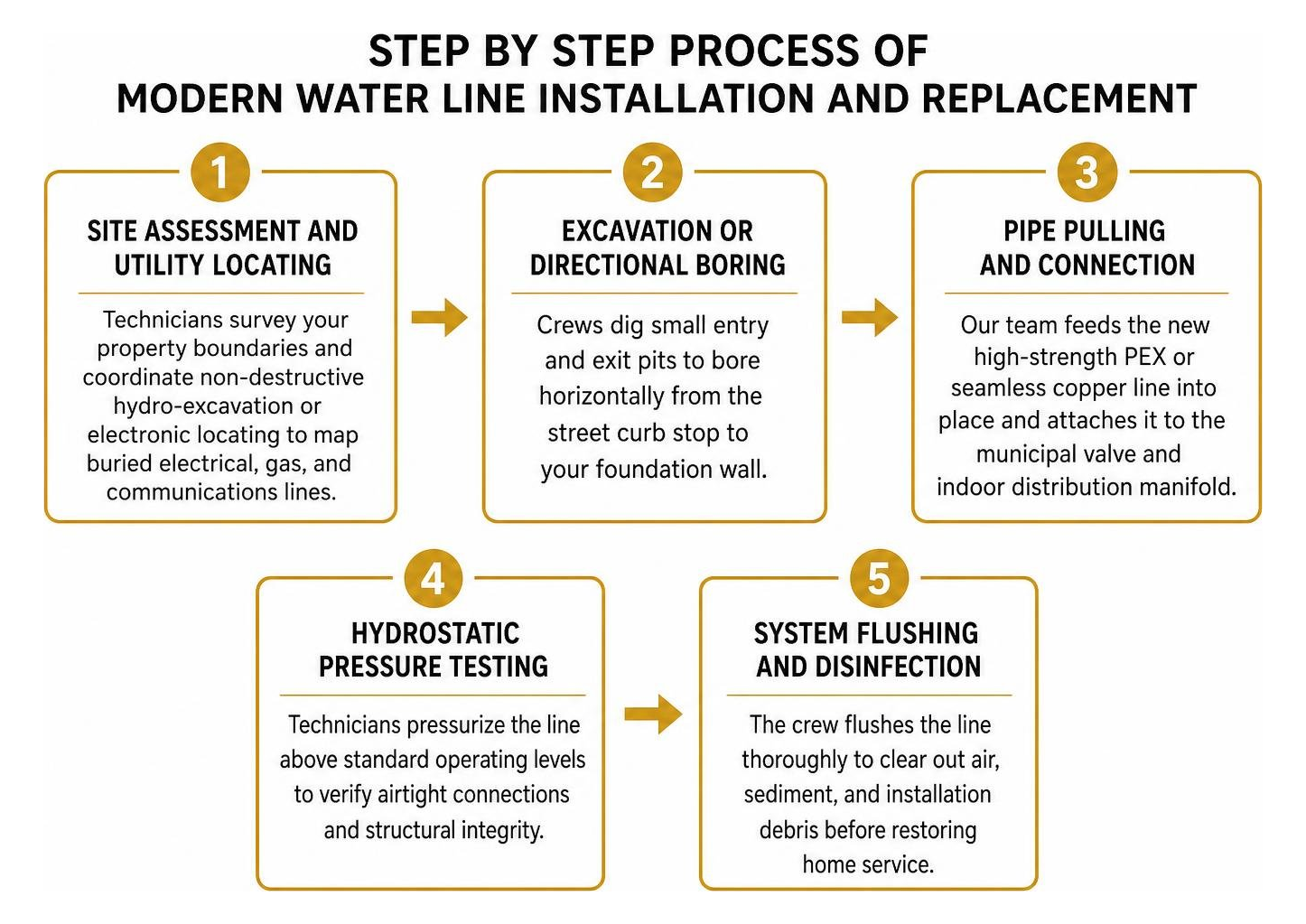
- Property Check and Utility Locating: Technicians check property boundaries and locate buried power, gas, and communications lines. They use electronic tools or water-powered digging to help find lines without damaging them.
- Excavation or Directional Boring: For directional boring, crews dig small entry and exit pits to bore horizontally from the city’s shut-off valve near the curb to your foundation wall. Other projects may need an open trench.
- Pipe Pulling and Connection: Our team feeds the new PEX or seamless copper line into place and connects it to the city valve and the indoor fitting that sends water to different pipes.
- Water Pressure Test: Technicians test the line with water at a higher pressure than normal to check for leaks and weak spots.
- System Flushing and Disinfection: The crew flushes the line to clear out air, sediment, and installation debris. They follow local disinfection requirements before restoring home service.
- Landscape Restoration and Inspection: Technicians arrange required city inspections before covering the work. They refill the access pits or trench, pack down the soil, and arrange final approval from city plumbing inspectors.
Our licensed professionals handle everything from checking your property to testing and starting your new water line through our plumbing repair and installation services.
Quincy City Regulations, Permits, and Safety Compliance
A new water service line in Quincy must meet city rules and Department of Public Works (DPW) guidelines. Before work begins, ask the DPW which parts of the service pipe you must maintain. The Quincy DPW oversees city utility systems, connection permits, and water system standards.
City fees and rules that homeowners should confirm before work begins include:
- Current DPW application and inspection fees for residential water connections
- Any sewer connection application fees if the project also involves sewer work
- City fees for turning water service off and back on
- Rules that determine which service pipe repairs the homeowner must cover
- Whether any service line protection program covers outside utility line repairs, including its limits and exclusions
Quincy continues to maintain and upgrade its public water infrastructure. For a water line replacement project at your home, confirm the current city requirements, approvals, and inspection steps with the Quincy Department of Public Works before work begins.
Backflow happens when water flows backward into the drinking water supply. Backflow prevention helps keep contaminated water out of that supply. Ask your plumber which connection checks and safety devices your home needs.
After emergency water main repairs, the city may issue a boil water advisory. Check Massachusetts’ official Boil Water Order Search for active notices, and follow local instructions for drinking water, cooking, and food preparation until utility officials say the water is safe.
Frequently Asked Questions About Water Line Replacement in Quincy
How do I know if my water service line contains lead?
Start by locating where the service pipe enters your home through the basement floor or foundation wall. A dull gray pipe that scratches easily to reveal shiny silver metal and does not attract a magnet may be lead. Ask a plumber to confirm the material rather than relying on appearance alone. You can also order a drinking water test kit from a certified lab or ask the city to check its records for your service line. A water test measures lead in the sample; it does not identify the pipe material.
What fees and permits does Quincy require for water line work?
Before replacing your water service line, have a licensed plumber confirm the required plumbing permits and DPW approvals. Ask the DPW about current connection and inspection fees, plus any charges for city water shut-offs at the valve near the curb. Your plumber should arrange required inspections before crews refill the trench or boring pit.
How do I check if an underground leak is on my side of the meter?
The check depends on where your meter and shut-off valve sit. Turn off all fixtures and water-using appliances. If the meter still moves, water may be leaking after it passes through the meter. This does not prove the leak is underground. If your meter sits outside and water passes through it before reaching your home’s shut-off valve, close that valve. Continued meter movement may point to a leak between the meter and valve. During a plumbing inspection, technicians can check the layout and locate a leak with sound-sensing tools and pressure gauges.
Protecting Your Quincy Home with Expert Water Line Solutions
A failing underground water line can damage your home, raise water bills, and put your clean water supply at risk. Fixing damage from corrosion, tree roots, and frost early can help prevent flooding and costly emergency repairs.
At Trust 1 Services Plumbing, Heating and Air Conditioning, we provide dependable, upfront pricing with same-day emergency response across our entire Quincy, MA service area. Our fully licensed plumbers back every water line replacement with a 100% satisfaction guarantee and flexible financing options. Contact our professional water line replacement technicians to schedule an on-site evaluation and restore safe, reliable water flow to your Quincy home.