Why Is My Furnace Blower Making Noise in Quincy, MA?


Why Your Furnace Blower Is Making Noise
Does your furnace hum or grind when the heat kicks on? Start with a few safe checks, and leave internal repairs to a professional.
Blower heater repair starts with knowing when to stop troubleshooting. Do not open electrical parts or try to discharge a capacitor yourself.
In Quincy, a noisy blower is worth checking before colder weather puts more demand on your furnace. A blocked filter may be a simple fix, but a burning smell or repeated breaker trip needs prompt professional attention.
Our team at Trust 1 Services Plumbing, Heating and Air Conditioning brings hands-on heating and plumbing experience to every blower heater repair, from safe first checks to knowing when to stop.
Identifying Warning Sounds and Blower Heater Repair Symptoms
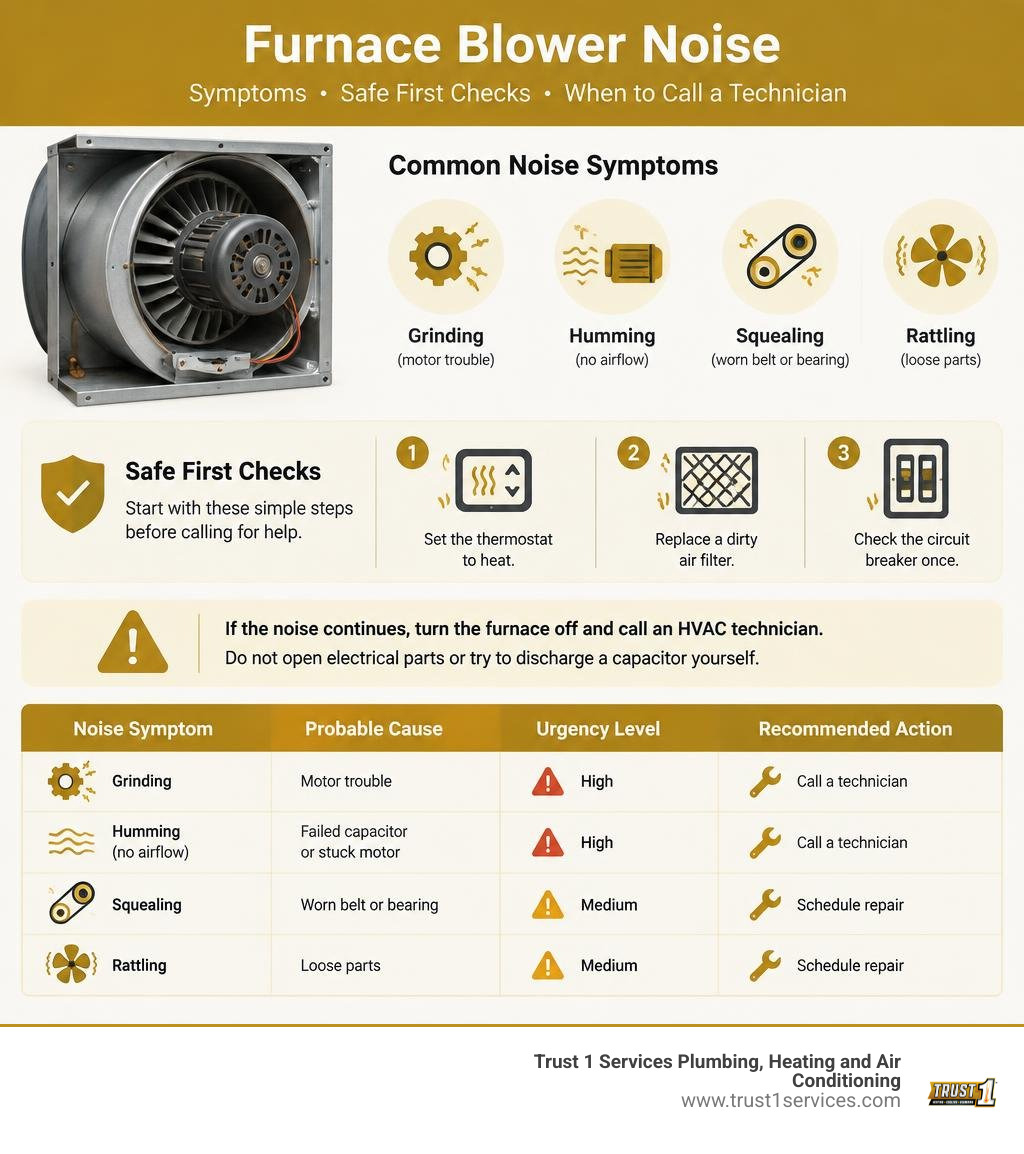
Furnace blowers usually make a steady, quiet whoosh of moving air. Worn parts or electrical problems can cause unusual sounds. Catching these noises early can help protect other parts from overheating damage, including the heat exchanger, which transfers heat from combustion gases to your home’s air.
| Noise Symptom | Probable Cause | Urgency Level | Recommended Action |
|---|---|---|---|
| Metal Grinding or Scraping | Worn motor bearings or loose blower wheel | High | Turn off the system immediately to prevent motor seizure. |
| High-Pitched Screeching | Dry bearings or slipping blower fan belt | Medium | Schedule service; lubricate or replace the belt. |
| Deep Electrical Humming | Failed run capacitor or locked motor rotor | High | Cut power; a stalled motor can burn out windings quickly. |
| Rattle or Fast Thumping | Debris in housing or out-of-balance wheel | Medium | Inspect filter track; schedule professional housing cleaning. |
| Chirping or Squeaking | Initial bearing wear or minor belt misalignment | Low | Monitor closely and book routine maintenance. |
Bearings support the spinning motor shaft. The blower wheel is the fan that moves air. A locked rotor or seized motor cannot turn. Windings are coils of wire inside the motor.
Unusual sounds often accompany other subtle signs you need furnace repair, such as weak airflow from your vents or rooms that take hours to reach the set temperature. If you smell burning plastic, hot wiring, or metallic dust coming through your vents, shut the furnace off right away at the furnace power switch.
Screeching, Squealing, and Rattling: What the Sounds Mean
A loud screeching or squealing sound often comes from the parts that drive the blower. Older furnaces with belt-driven motors may squeal when the rubber belt dries out, cracks, or loses tension.
In a direct-drive furnace, the motor turns the blower without a belt. Squealing may mean its bearings are wearing out. Many modern motors have sealed bearings that do not allow routine lubrication.
Rattling and thumping sounds usually happen when foreign objects enter the blower compartment. Children’s toys, loose duct tape, or dislodged insulation can fall into the housing and strike the spinning wheel. Alternatively, if one of the balancing clips falls off the blower wheel blades, the wheel will wobble violently, rattling against the metal housing as it spins.
Electrical Humming and No Airflow
If your furnace starts and makes a steady, low humming sound without moving air through your vents, the blower motor may have power but be unable to turn.
A failed run capacitor can cause this problem in a permanent split capacitor (PSC) motor. This electrical part shifts the timing of current in the motor’s coils to help it start and keep turning. If the motor stalls, it can still draw power and overheat.
When a furnace fan motor won’t start, you must act quickly. A humming, stalled motor can overheat within minutes if you leave the furnace on. Heat can melt the coating on its copper wire coils and cause a permanent short circuit, letting electricity flow along an unintended path.
Safe DIY Troubleshooting and Electrical Safety Checks
Before you book a service call, you can perform several basic, safe checks around your home. You do not need technical tools or specialized knowledge to evaluate your furnace’s operating environment.
Step-by-Step Initial Diagnostics for Blower Heater Repair
Follow these steps to safely troubleshoot basic airflow and power issues:
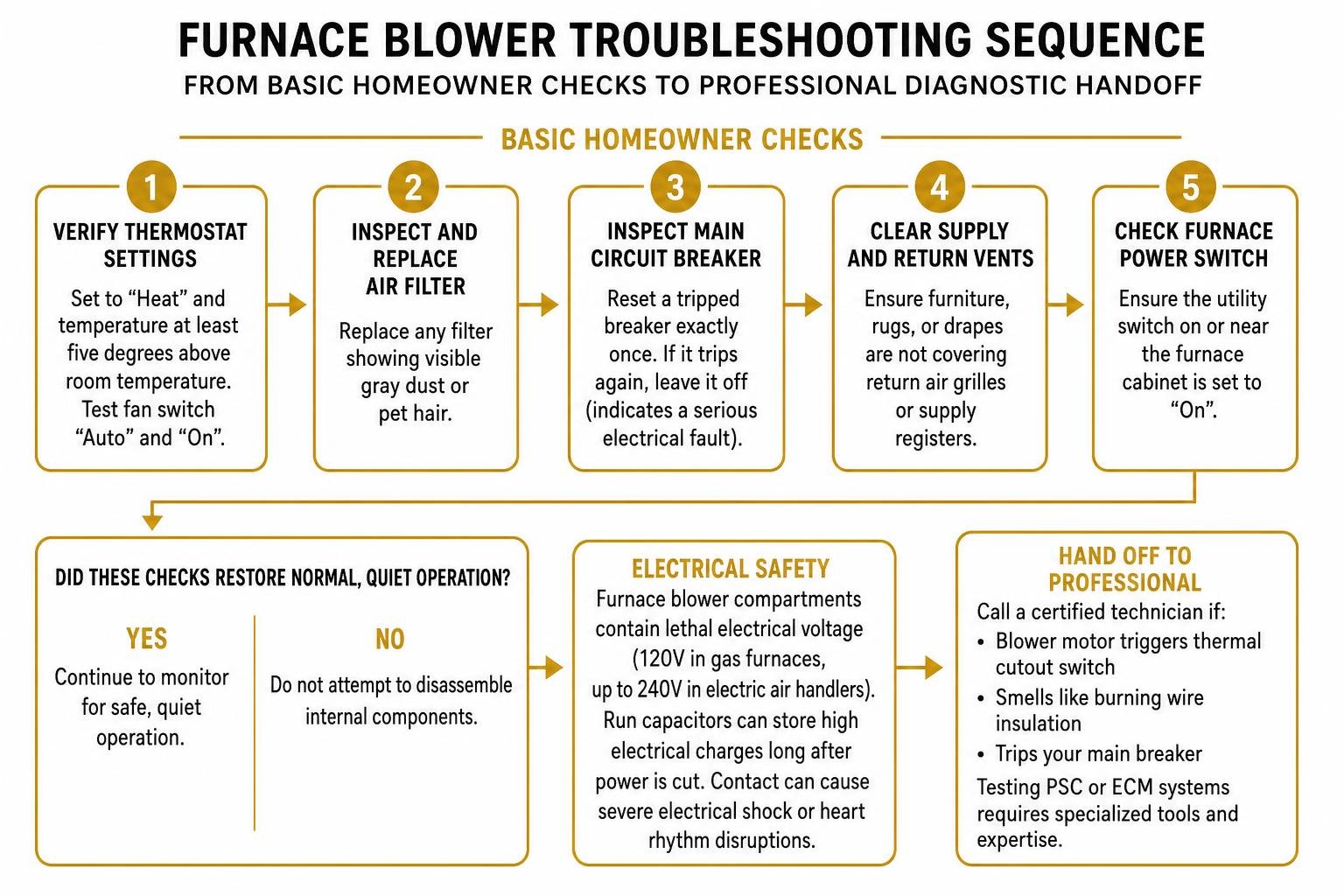
- Verify Thermostat Settings: Set your thermostat to “Heat” and choose a temperature at least five degrees above the current room temperature. Test the fan switch by toggling it between “Auto” and “On” to see if the blower responds without a call for heat.
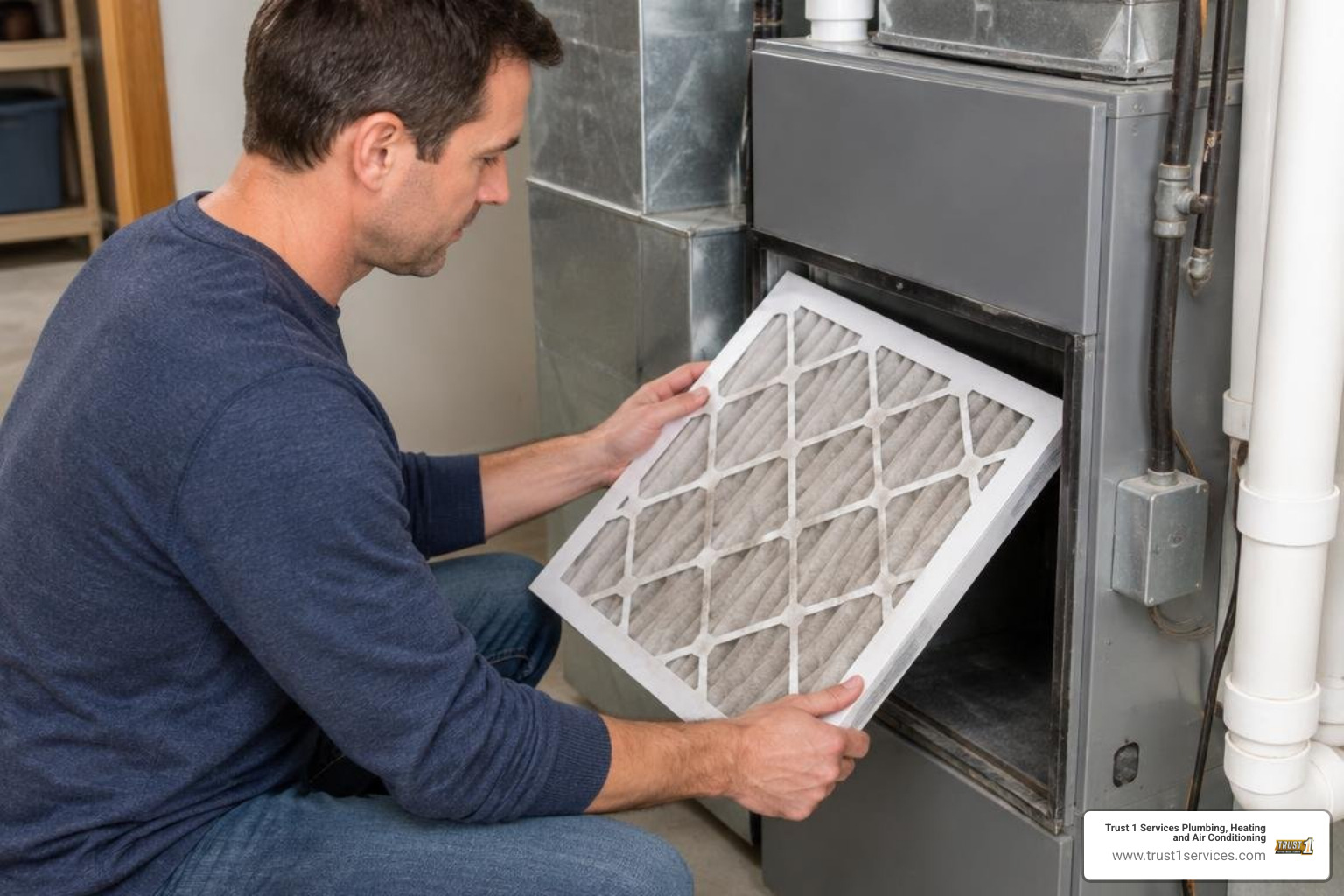
- Inspect and Replace the Air Filter: A clogged, dirty filter limits the blower’s return air. The blockage increases resistance to airflow and changes the air pressure in the ducts. It can strain the system and lead to excess heat or unusual noise. Replace any filter showing visible gray dust or pet hair.
- Inspect the Main Circuit Breaker: Check your home’s electrical panel to see whether your heating system’s breaker has tripped. Reset a tripped breaker exactly once. If it trips a second time, leave it off, as this indicates a serious electrical fault.
- Clear Supply and Return Vents: Walk through your living spaces to check whether furniture, rugs, or drapes cover your return air grilles or supply registers. Move anything blocking them.
- Check the Furnace Power Switch: Set the utility switch on or near the furnace cabinet to “On.”
If these simple checks do not restore normal, quiet operation, do not attempt to disassemble internal components.
Electrical Safety and When to Call a Professional
Furnace blower compartments contain electrical voltage that can kill, typically 120 volts in residential gas furnaces and up to 240 volts in electric air handlers. Run capacitors can store high electrical charges long after you cut power to the unit. Touching an electrical connection that still carries power can cause a severe shock or disrupt your heartbeat.
Modern heating systems use either PSC motors or electronically commutated motors (ECM). PSC motors use external capacitors. ECM systems use electronic control modules on the back of the motor to manage its operation.
A technician uses a digital multimeter, a tool that measures electrical values, and tools that measure air pressure in the ducts to test the system.
Stop troubleshooting if the motor’s heat-protection switch shuts it off, you smell burning wire insulation, or the main breaker trips. Let a certified technician handle the repair.
Repair vs. Replacement: Can You Repair Your Blower Motor?
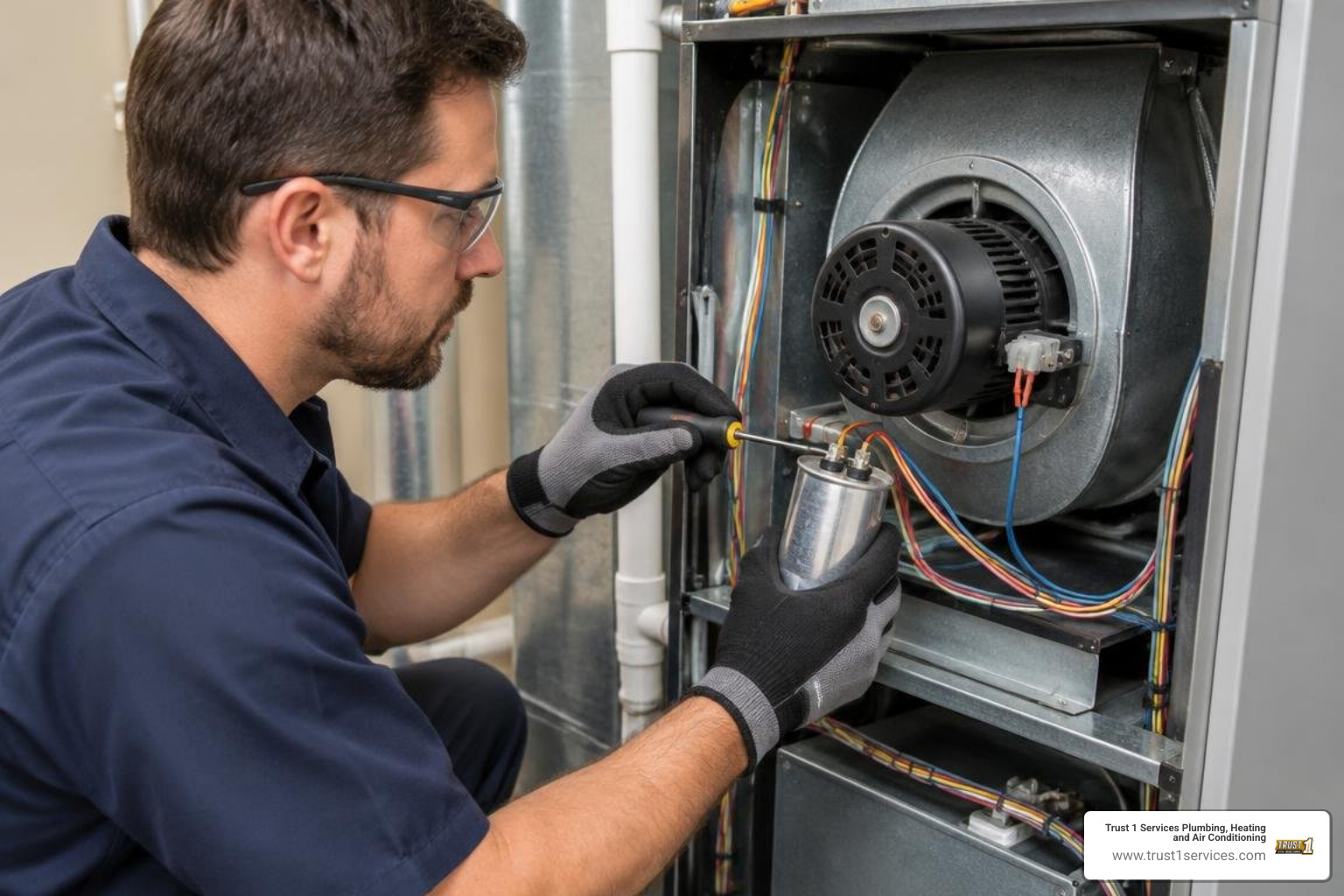
A noisy or stalled blower does not always mean you must purchase a brand-new motor. In many situations, an affordable component fix will restore full performance.
Fixable Components vs. Motor Replacement
During a professional service visit, a technician tests the motor assembly systematically to separate minor electrical issues from total mechanical failure.
A technician can often repair or replace these parts without replacing the complete motor:
- Run Capacitors: Replacing a weak or swollen capacitor can fix a humming PSC motor at a lower cost than motor replacement.
- Blower Wheel Cleaning: Removing heavy layers of pet hair, dust, and grime from the curved blower blades helps the wheel spin evenly and can stop wobbling noises.
- Wiring and Connectors: A technician can repair corroded electrical contacts, loose flat connectors, or damaged wire plugs to restore the motor’s power supply.
- Drive Belts and Pulleys: On older belt-driven systems, a technician can adjust pulley alignment or install a new drive belt to address squeaks.
A technician may recommend replacing the entire motor when:
- Internal bearings lock up, grind, or allow too much sideways movement of the motor shaft.
- Motor windings, the wire coils inside the motor, suffer an electrical short or burn out completely.
- An ECM control module fails, and permanent protective sealant encases it inside the motor housing.
- A hard impact or collapsed bearing bends the motor shaft.
When motor replacement becomes necessary, our team offers new motors from the original equipment manufacturer (OEM) and rebuilt motors with programming that matches the furnace.
For more about testing methods and industry diagnosis standards, read the expert meeting report: HVAC fault detection, diagnosis, and repair/replacement from the National Renewable Energy Laboratory.
Expected Costs for Blower Heater Repair
Repair costs depend on whether your furnace requires a minor electrical part or a complete motor swap:
- Run Capacitor Replacement: Replacing a weak or swollen capacitor is often one of the more straightforward blower repairs, but the final cost depends on the furnace model, part specifications, and required safety testing.
- Blower Motor Resistor or Relay: These electrical components control current or switch power to the motor. A technician can diagnose whether a faulty control part is affecting blower operation.
- Standard PSC Motor Replacement: Replacing a standard blower motor may be appropriate when the motor has failed mechanically or electrically. Labor needs can vary based on access to the blower assembly and the correct replacement part.
- ECM or Variable-Speed Motor Replacement: High-efficiency ECM motors may require model-specific programming and setup. A technician can confirm whether repair of the control module or full motor replacement makes the most sense for your system.
A professional diagnosis is the best way to understand the repair options for your furnace and receive clear, upfront pricing before work begins.
Home heating units share similar fan principles with vehicle heaters, but their electrical controls differ greatly. Car fans use 12-volt direct current (DC) and resistors or electronic controls to change speed. Home blower motors use higher-voltage alternating current (AC). Some offer fixed speed settings, while ECM motors use programmed electronic controls.
Addressing these home heating issues quickly through furnace repair helps keep your home warm and prevents stress on nearby parts.
Preventive Maintenance to Stop Furnace Blower Noise
Regular maintenance keeps your heating system running quietly and extends the working lifespan of your blower motor, which should last between 10 and 20 years under normal conditions.
Routine Air Filter and Blower Wheel Care
Replacing your air filter every 30 to 90 days is an important step in protecting your blower motor.
During an annual tune-up, a technician checks the blower wheel and removes the assembly if it needs cleaning. Dust buildup on the fan blades can reduce airflow and affect how evenly the wheel spins.
Technicians also measure the capacitor’s charge-storage capacity in microfarads. They add oil at service points where the motor allows it, inspect wiring, and check the power supply voltage. Whole-home surge protection can help protect ECM motor controls from sudden voltage spikes during severe coastal storms.
When to Consider Furnace Replacement Over Motor Repairs
If your heating unit is over 15 years old and has a major motor failure, compare repair costs with the cost of replacing the system. Spending $1,000 or more on an aging, inefficient furnace may not make financial sense, especially if the heat exchanger shows corrosion or weakening from repeated heating and cooling.
Scheduling professional furnace maintenance every fall helps uncover minor issues before freezing winter temperatures arrive.
When an old furnace requires frequent repairs, modern furnace replacement delivers higher efficiency, quieter airflow, and lower monthly utility bills across the South Shore winter.
Frequently Asked Questions About Furnace Blower Problems
Can I run my heat if the blower motor is making noise?
You should turn off your heat if your blower makes loud grinding, screeching, or electrical humming noises. If the blower fan stops spinning while the burners remain active, heat quickly builds up inside the furnace cabinet. This extreme heat can crack your heat exchanger, creating a serious carbon monoxide risk, or trip high-limit safety switches that shut the system down completely.
How long does it take to repair or replace a furnace blower motor?
A simple repair, such as swapping a weak run capacitor or clearing debris from the wheel, takes roughly 30 to 60 minutes. Replacing a complete blower motor assembly typically takes 1 to 2 hours, with an average job time of 1.5 hours. Time variations depend on whether your technician has the exact motor on their service truck or needs to source a specialized OEM model.
What should I tell the technician when I call?
Describe the noise, when it starts, and whether air still flows from the vents. Share the furnace make and model if you can read them without opening the cabinet.
Restoring Quiet, Reliable Heat to Your Quincy Home
When your furnace starts making strange sounds, prompt action protects your family from mid-winter heating breakdowns. Trust 1 Services Plumbing, Heating and Air Conditioning provides complete heating diagnostics, upfront pricing, and same-day service throughout Quincy, MA, and surrounding South Shore communities. Our licensed heating technicians arrive with fully stocked trucks to diagnose motor noises, replace weak capacitors, and restore balanced airflow to every room in your home.
Whether you need a quick component fix or full-system heating care, our team stands behind every project with clear communication and a 100% satisfaction guarantee. Contact our professional furnace repair technicians today and ensure your home stays warm and comfortable all season long.