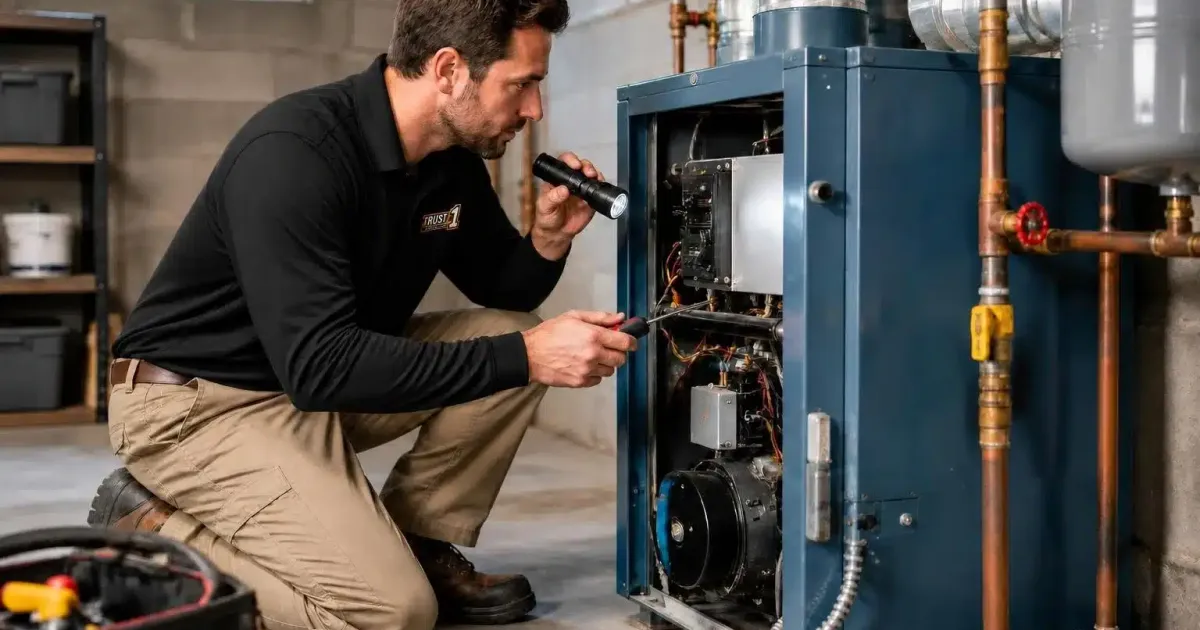
Water Heater Replacement in Greater Boston: Tank vs. Tankless vs. Heat Pump


If your water heater is leaking, running out of hot water, or getting up in years, a reliable plumber should explain your options (tank, tankless, or heat pump), size the new unit for your household, and install it to code with permits. Trust 1 Heating, Cooling & Plumbing replaces water heaters across Greater Boston and the South Shore, with same-day service in many cases and a 1-year parts and labor warranty on the install on top of the manufacturer’s warranty.
Table of Contents
- What are the signs it’s time to replace your water heater?
- How long do water heaters last?
- Tank vs. tankless vs. heat pump: which is right for you?
- How do you size a water heater?
- What should a good water heater installation include?
- How do you choose a reliable plumber for water heater replacement?
- FAQ
- Key Takeaways
What are the signs it’s time to replace your water heater?
- Water leaking from the base of the tank. A leaking fitting can often be fixed, but a leak from the tank itself means replacement.
- Rusty or discolored hot water. This can mean the inside of the tank is corroding.
- Not enough hot water. Showers running cold sooner than they used to is a common sign of sediment buildup or a failing unit.
- Rumbling, popping, or banging noises. Usually sediment hardening at the bottom of the tank.
- Age. If your tank is near or past the end of its expected life, plan the replacement before it fails and floods the basement.
How long do water heaters last?
A traditional tank water heater typically lasts about 6 to 10 years. Tankless water heaters typically last 10 to 15 years. In both cases, water quality and maintenance make a big difference. An annual tank flush, or a descale for tankless units, helps you get the most out of the equipment.
Tank vs. tankless vs. heat pump: which is right for you?
Tank water heaters (gas or electric) are the most familiar option and the lowest upfront cost. They store hot water so it’s ready when you need it, but you can run out during heavy use.
Tankless water heaters (gas) heat water on demand, so you don’t run out, and they take up much less space. They cost more upfront and need annual descaling, especially with harder water. Trust 1 installs Rinnai gas tankless units.
Heat pump water heaters pull heat from the surrounding air to heat water, using much less electricity than a standard electric tank. They need some space and airflow around them, and they may qualify for Mass Save rebates, which can cut the upfront cost.
The right choice depends on your fuel type, how much hot water your household uses, the space you have, and how long you plan to stay in the home. A good plumber walks you through the trade-offs instead of pushing one option.
How do you size a water heater?
For tank units, sizing is based on how many people live in the home and how much hot water you use at peak times, like back-to-back morning showers. For tankless units, it’s based on how many fixtures run at the same time and how much the water needs to be heated. An undersized unit means cold showers, and an oversized one wastes money.
What should a good water heater installation include?
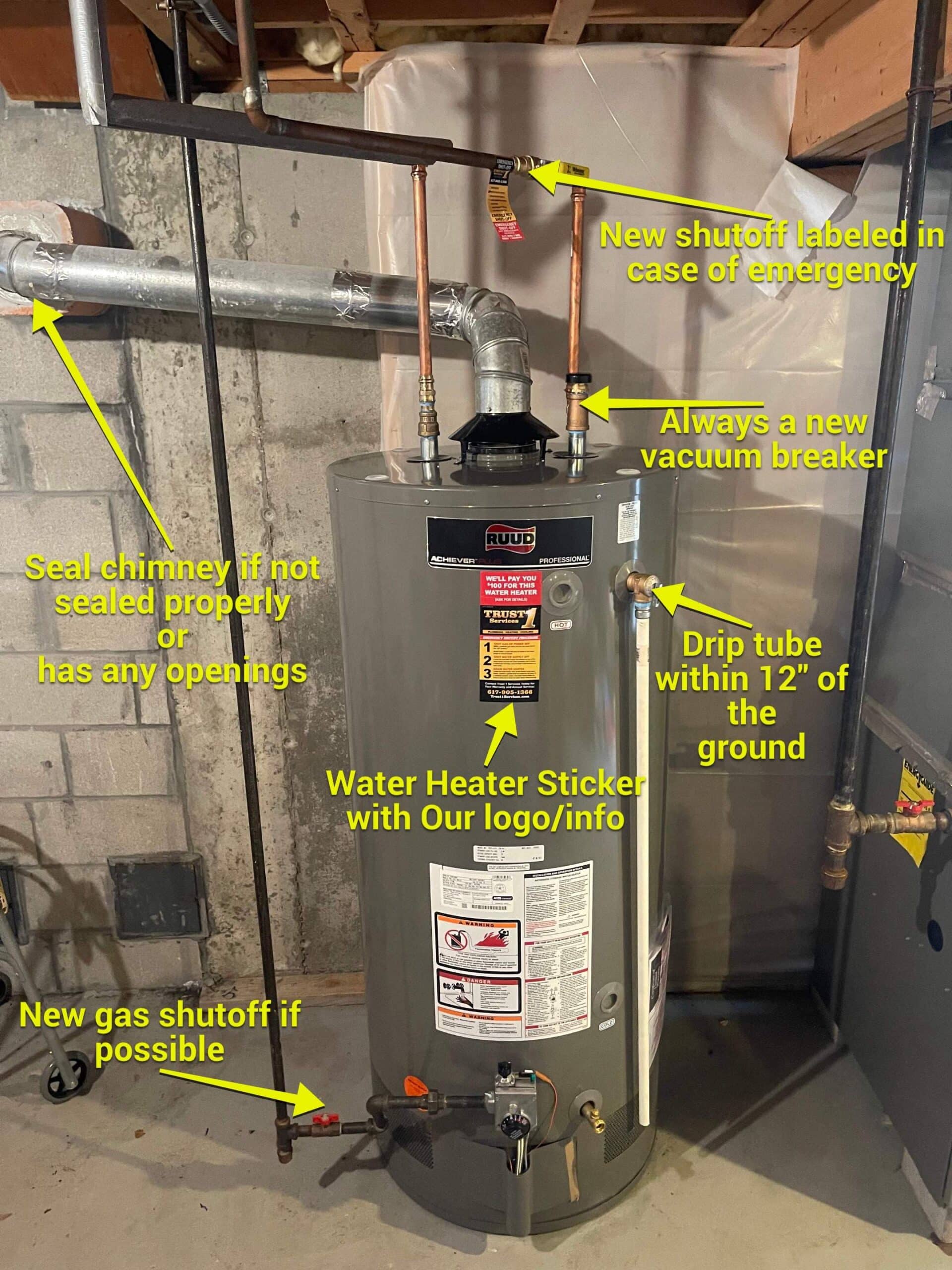
- A permit and an installation to Massachusetts code
- Correct venting for gas units
- An expansion tank where required
- Proper gas, water, and electrical connections
- Removal and disposal of the old unit
- A new vacuum breaker and a labeled emergency water shutoff
- A relief valve drip tube that ends within 12″ of the floor
- A properly sealed chimney or vent connection
- A written warranty on the installation, separate from the manufacturer’s warranty
How do you choose a reliable plumber for water heater replacement?
Make sure the company uses licensed plumbers, pulls permits, gives you upfront pricing, and puts the warranty in writing. Read reviews for patterns: on-time arrival, clean work, and clear explanations.
Trust 1 Heating, Cooling & Plumbing is a locally owned company serving Greater Boston and the South Shore since 2020, with 1,700+ five-star Google reviews and an Inc. 5000 ranking. Our licensed plumbers install tank, tankless, and heat pump water heaters, with same-day service in many cases. Every water heater install comes with a 1-year parts and labor warranty on our work, and the manufacturer’s warranty is typically up to 10 years on the unit.
We replace water heaters in Boston, Dorchester, Quincy, Braintree, Milton, Weymouth, Randolph, Canton, and the surrounding towns.
FAQ
Can a leaking water heater be repaired?
If the leak is from a fitting or valve, often yes. If water is coming from the tank itself, the tank needs to be replaced.
Is a tankless water heater worth it?
It can be if you want endless hot water, need to save space, and plan to stay in the home a while. It costs more upfront and needs annual descaling.
Are there rebates for heat pump water heaters?
Heat pump water heaters may qualify for Mass Save rebates. Ask your installer to confirm the current rebate for the specific model.
How long does water heater replacement take?
A straight swap of a tank water heater is usually done the same day. Switching fuel types or going tankless can take longer because of venting, gas, or electrical changes.
Key Takeaways
- A leak from the tank itself, rusty water, and running out of hot water are the main signs it’s time to replace.
- Tanks typically last 6 to 10 years; tankless units 10 to 15 years, depending on water quality and maintenance.
- Choose between tank, tankless, and heat pump based on fuel type, usage, space, and budget.
- Trust 1 installs all three, with same-day service in many cases and a 1-year parts and labor warranty on the install.
Need a new water heater? Call Trust 1 at 617-905-1366 or book online.