Gas Water Heater Installation: Why Proper Venting Matters

Connecting a Gas Pipe for a Water Heater Safely
A cold shower on a chilly New England morning is frustrating, but a gas leak or blocked vent poses a much greater risk. Have a qualified professional connect the water heater’s gas line. The installer should choose approved piping that meets the heater’s fuel needs and test each new joint for leaks before lighting the heater.
The vent needs equal attention: it must carry combustion gases outdoors to help prevent carbon monoxide from entering your home. Have a qualified professional check both connections.
Our team at Trust 1 Services Plumbing, Heating and Air Conditioning includes a trained plumbing and heating team with hands-on experience in residential gas piping and water heater work. Our work with gas pipe for water heater installations has taught us to check the gas supply and vent together.
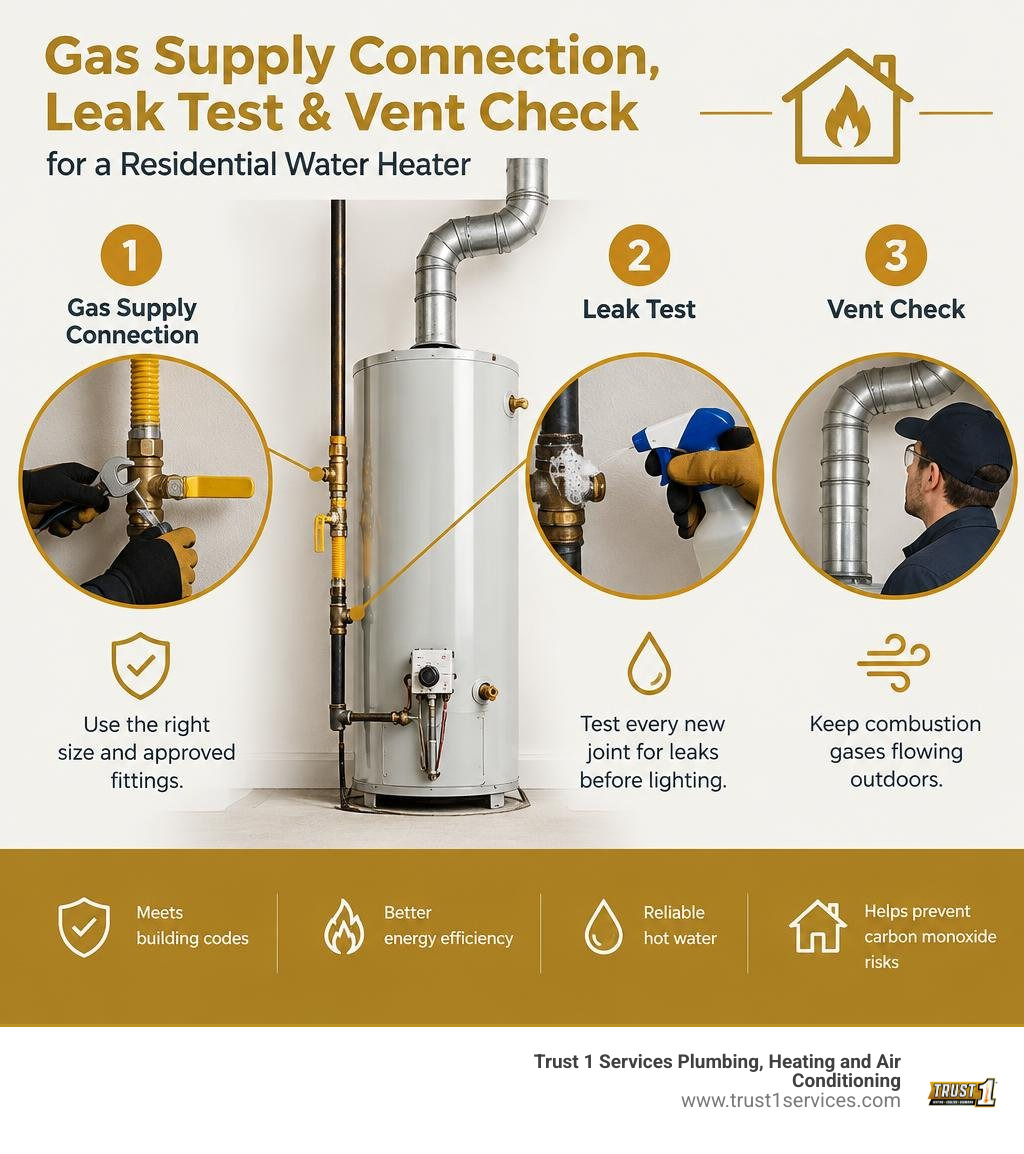
As fall arrives in New England, preparing your home heating equipment becomes a top priority. Your gas line and exhaust vent work together. The vent must stay clear so harmful gases can escape outdoors. Proper installation helps your heater run safely and efficiently through the cold months.
Choosing the Proper Gas Pipe for Water Heater Installations
Selecting the correct pipe material helps deliver fuel safely and reliably to your water heater burner. Gas pipes must handle the system’s pressure and resist damage. They must also resist corrosion, which happens when chemical reactions wear away metal.
Residential gas systems rely on three primary pipe options:
- Black Iron Pipe: This rigid steel pipe has a dark iron oxide coating. Its strength makes it a common choice for main gas lines and vertical appliance supply pipes.
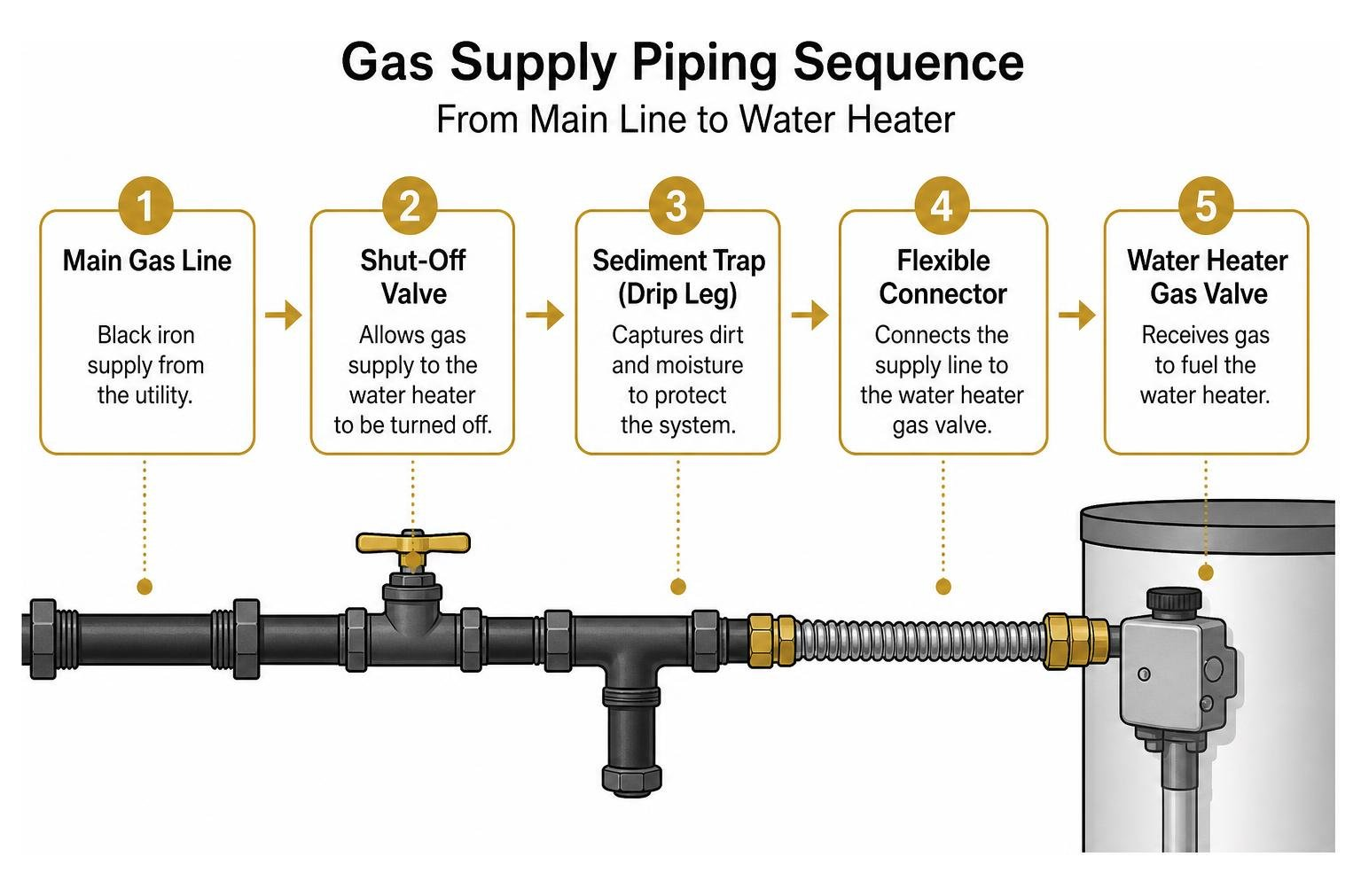
- Corrugated Stainless Steel Tubing (CSST): This flexible stainless steel tubing typically has a yellow or black protective jacket. It can route through wall cavities and floor joists with fewer fittings, but it requires correct fittings and electrical bonding based on the manufacturer’s instructions and local code.
- Flexible Appliance Connectors: These coated stainless steel connectors join the rigid supply pipe to the water heater’s gas control valve. They allow minor movement and help a qualified installer align the connection safely.
| Pipe Type | Primary Material | Flexibility | Best Use Case | Key Code Requirement |
|---|---|---|---|---|
| Black Iron | Carbon Steel | Rigid | Main supply lines and drops | Must use malleable iron fittings |
| CSST | Stainless Steel | Semi-Flexible | Long interior runs through framing | Requires electrical bonding to ground |
| Flex Connector | Coated Stainless | Fully Flexible | Final 12 to 36 inches to heater | Cannot pass through walls or floors |
Carbon steel contains mainly iron and carbon. Manufacturers heat-treat iron to make malleable iron, which resists cracking. Electrical bonding connects gas piping to the home’s electrical grounding system.
Rigid vs. Flexible Gas Pipe for Water Heater Connections
The right connection depends on the space, local codes, and how much the building may move. Your installer can choose rigid black iron pipe or a flexible connector to suit those needs.
Rigid black iron pipe offers strong support. It stays firmly in place and resists accidental impacts in busy basements or utility rooms. A plumber needs special tools and exact measurements to cut the pipe and line it up. The plumber must also cut threads, or spiral grooves, into the pipe ends so the fittings can screw on.
Flexible stainless steel connectors help installers line up connections on new tanks. Manufacturers added thicker insulation to many water heaters to meet the 2015 efficiency standards. That extra insulation can make newer tanks wider than older units. A flexible connector can fit the new tank’s position without requiring the plumber to cut new threads along the existing pipe run.
Flexible lines also allow small earthquake movements and expansion as parts heat up. This reduces strain on the gas control valve. If your existing rigid supply line shows signs of corrosion, physical damage, or loose threads, schedule professional gas line repair before attaching a new water heater.
Sizing Your Gas Pipe for Water Heater Demand and BTU Ratings
The right pipe size supplies enough gas when demand is highest. A pipe that is too small can keep fuel from burning fully. This can leave black soot on the burner, prevent the heater from lighting, and wear out parts sooner.
A licensed plumber checks the heater’s fuel demand and pipe length when sizing the gas line:
- Fuel Demand: The plumber checks the heater’s label for its British thermal units (BTUs) per hour. This rating measures how much fuel energy the heater uses. Standard 40-gallon and 50-gallon tanks often use 35,000 to 50,000 BTUs per hour.
- Pipe Length: The plumber measures the route from the gas meter or main pressure regulator to the heater. A regulator controls gas pressure. Gas loses more pressure as it travels through longer pipes.
An atmospheric water heater uses rising hot exhaust gases to move exhaust outdoors. A short gas line may be 1/2 inch, but the plumber must confirm the size for the heater and the home’s gas system. High-demand units may need larger piping.
If you upgrade to an on-demand tankless water heater, the burner demand often rises to 150,000 to 199,000 BTUs per hour. Your plumber may need a separate 3/4-inch or 1-inch gas line for this higher demand. The plumber should check that the heater can get enough fuel without reducing gas pressure to your furnace or stove.
Essential Safety Components: Sediment Traps and Shut-Off Valves
Every code-compliant gas water heater installation requires two dedicated safety devices on the incoming fuel line: a manual shut-off valve and a sediment trap, or drip leg.
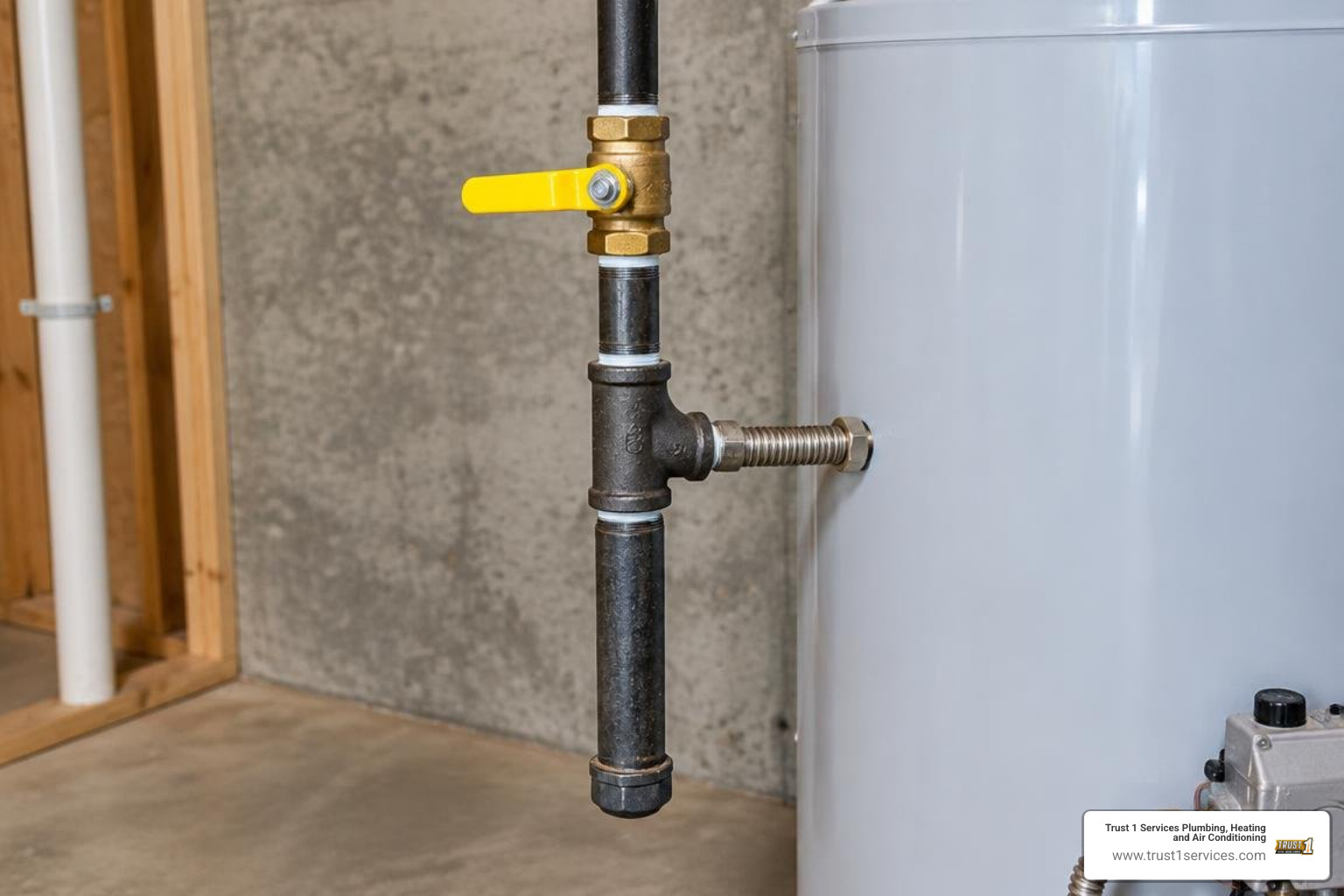
A sediment trap changes the gas’s direction so gravity can pull loose debris into a collection pocket. Gas piping can contain small amounts of moisture, dirt, loose material from pipe walls, and metal bits left from cutting threads.
If this debris reaches the gas control valve, it can block the small opening that feeds the pilot flame. It can also jam the safety shut-off or damage the burner’s gas outlets.
In a sediment trap, the gas turns toward the heater while debris falls into a short, capped pipe below. Your plumber should follow local code and the heater’s instructions for the trap’s size and placement.
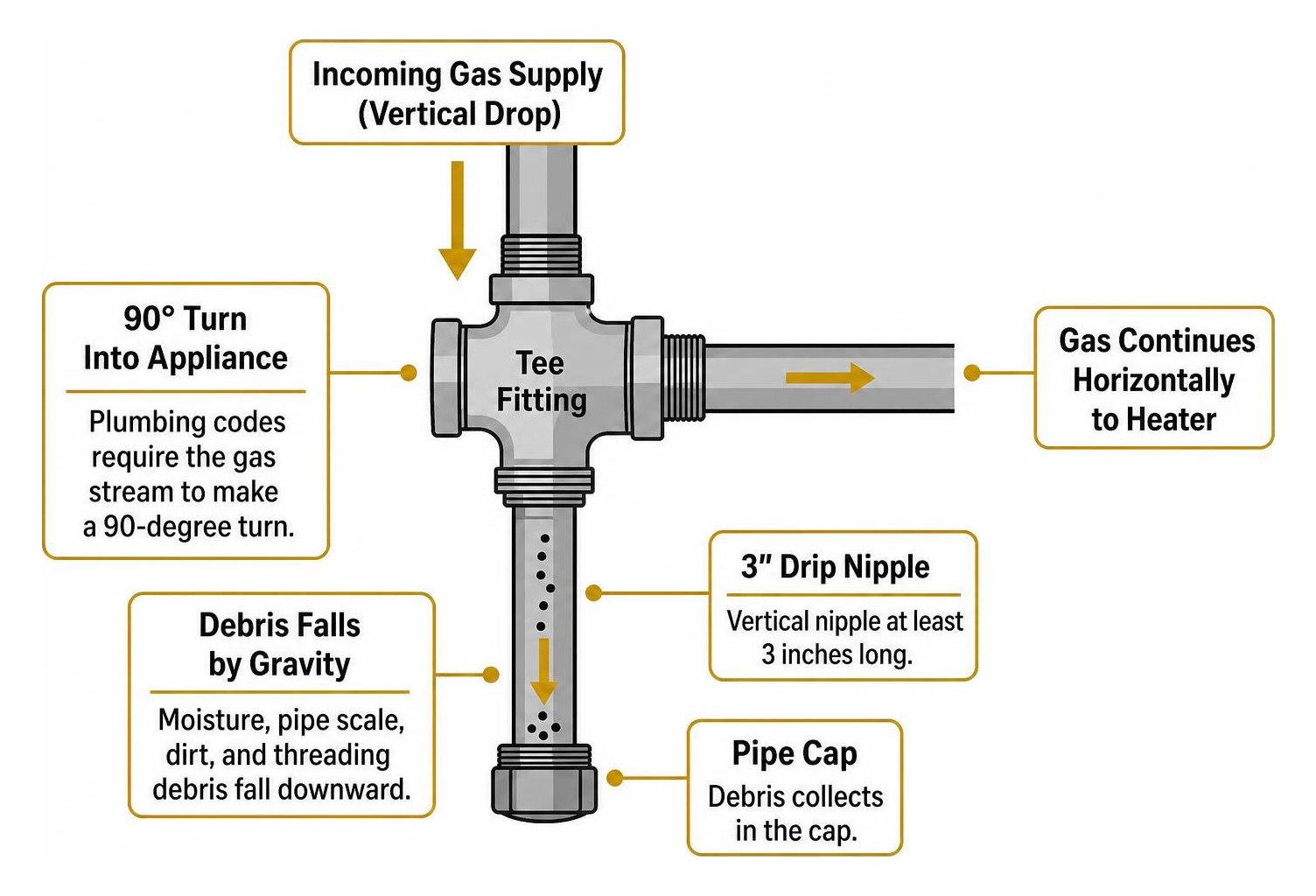
Local codes also require a separate manual gas shut-off valve before the sediment trap. The installer must put it in an easy-to-reach spot in the same room, within 6 feet of the heater.
This valve lets you isolate fuel to the water heater during maintenance or emergencies without cutting off gas to the rest of your home. Scheduling a comprehensive plumbing inspection ensures these essential safety fittings meet current standards before winter arrives.
The Critical Role of Proper Water Heater Venting
Burning natural gas or propane creates water vapor and gases such as carbon dioxide, nitrogen oxides, and carbon monoxide. Some of these gases can harm your health. The vent carries exhaust outdoors, either above the roof or through an outside wall, depending on the heater’s design.
Atmospheric water heaters rely on hot gases rising naturally. Exhaust moves up through the tank’s flue, or exhaust passage, past a baffle that directs its flow. It then enters the draft hood above the tank. The hood mixes room air with exhaust to help keep the flow steady. It also helps keep downward air currents from blowing out the pilot flame.
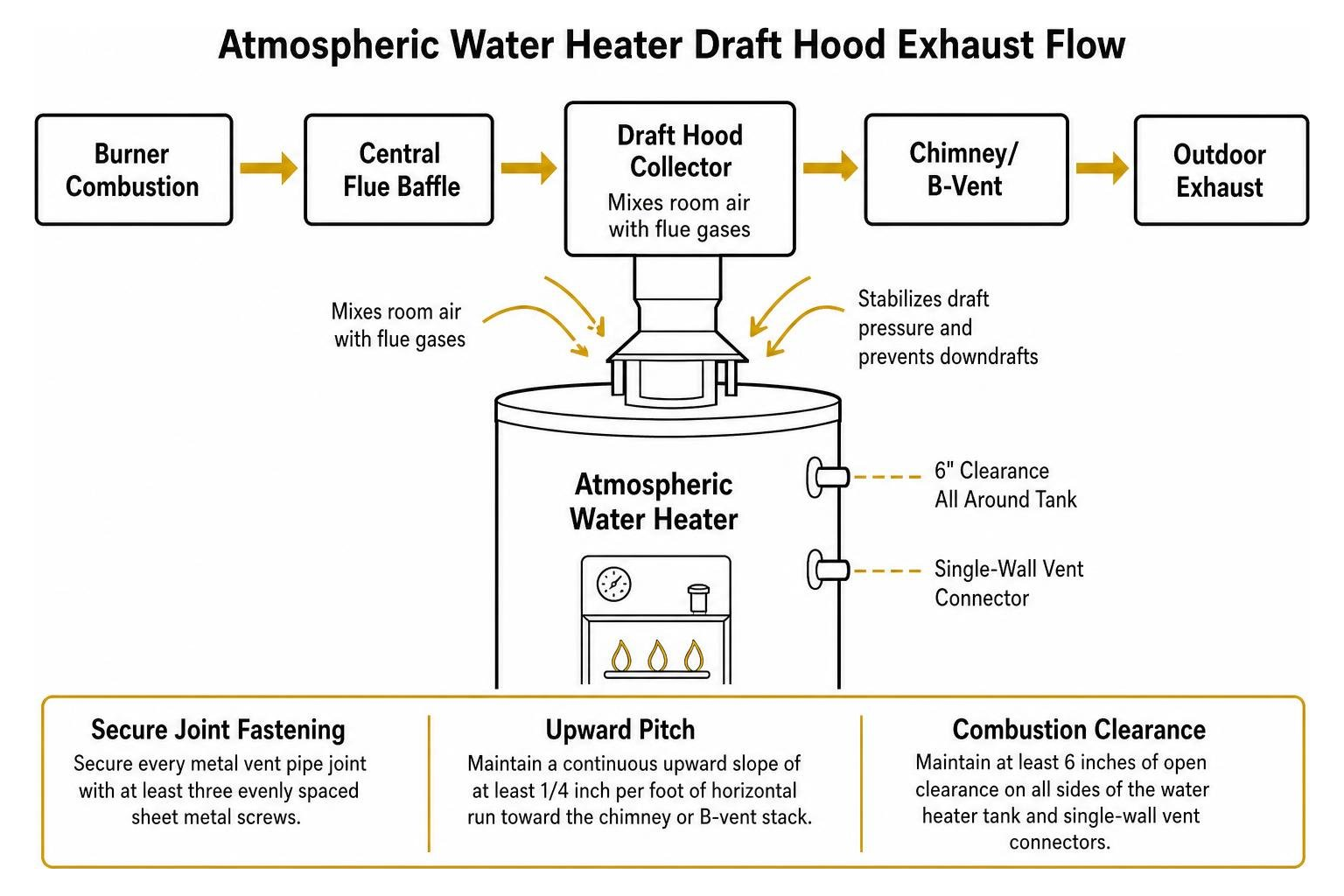
Have a qualified professional check these vent features so exhaust can flow outdoors safely:
- Secure Joints: The installer checks that vent joints have the fasteners the vent maker requires. Loose joints can let harmful exhaust escape indoors.
- Upward Slope: The installer checks the vent’s slope and route so exhaust can rise outdoors without collecting in low spots.
- Safe Clearance: The installer checks the space around the heater and vent against the manufacturer’s instructions and local code. Proper spacing helps prevent fires and allows enough air for the burner.
As you consider the question is your water heater ready for fall?, have a professional check the draft hood for rust or heat stains. These can warn that exhaust is not flowing properly.
What a Professional Checks During Gas Line Installation
Gas connections need special tools and careful safety tests. A licensed professional should handle the installation and check the following items:
- Safe Gas Connections: The installer shuts off the fuel and checks the valve, sediment trap, fittings, and connector.
- Suitable Parts: The installer selects gas-rated sealants, fittings, and a new connector that match the water heater manufacturer’s instructions and local code requirements.
- Safety Testing: Before putting the heater into service, the installer tests for gas leaks and checks that exhaust flows outdoors as the manufacturer requires.
If your tank has rust, worn parts, or a faulty pressure-relief valve, ask a plumber whether repair or water heater replacement makes sense. The pressure-relief valve releases water if pressure gets too high. A new heater can offer better efficiency and updated gas safety controls.
Common Mistakes in Gas Line and Vent Installation
Gas line errors create severe safety risks. Ask your installer how they prevent these common water heater installation mistakes:
- Wrong Thread Sealant: The installer should use tape or pipe sealant approved for the fuel and fitting type. Pipe sealant is a paste that helps seal threaded connections. Color alone does not show whether tape suits gas use.
- Reused Gas Connectors: The installer should use a new flexible gas connector. Reusing an old one can damage it and cause leaks.
- Missing CSST Bonding: The installer should check the electrical bonding required for corrugated stainless steel tubing. Proper bonding helps reduce damage from electrical current, including lightning.
- Too Many Vent Bends: Ask your installer to check that the number of bends meets the vent manufacturer’s limits.
Recognizing early warning signs helps you address hazards quickly. The 8 signs you need water heater repair can help homeowners spot burner soot, strange noises, or leaking fittings before severe damage occurs. Learning about the benefits of professional water heater installation can also help homeowners understand why licensed service matters for gas connections and venting.
Frequently Asked Questions About Gas Water Heater Installation
Why Does My Gas Water Heater Make a Hissing Sound?
Cold water entering the tank can cause condensation, or water droplets, to form near the burner. These droplets can hit the hot burner below, creating a sizzling or hissing noise that typically stops once the water reaches operating temperature.
However, if you hear continuous hissing accompanied by a sulfur odor (similar to rotten eggs), you may have an active gas leak. In that situation, evacuate your home immediately and call your local gas utility from a safe location.
Ensuring Safe Gas and Vent Installation with Local Professionals
Installing gas pipes and exhaust vents takes special tools and training. The work must follow local plumbing and gas codes. In Quincy, Massachusetts, licensed professionals must handle changes to gas piping and the required permits.
Professional service helps reduce the risks of gas leaks, fires, and harmful exhaust flowing back into your home. Following local codes, choosing the right fuel line size, and protecting the manufacturer’s warranty all support a safer installation.
Our team at Trust 1 Services Plumbing, Heating and Air Conditioning provides complete, code-compliant water heater and fuel piping installations throughout the South Shore. We deliver upfront pricing, same-day service, and a 100% satisfaction guarantee to keep your home warm and safe all season long. To schedule an inspection or replacement, contact our professional water heater technicians.