


How Does an HVAC System Work: The Heating & Cooling Process


Living in Massachusetts means dealing with sticky summer heat waves and freezing winter snowstorms. With our local weather constantly changing, your home relies heavily on its heating and cooling system to keep your family comfortable year-round. Despite how important it is, many homeowners in Hanover, Randolph and the surrounding areas still aren’t quite sure what an HVAC system is, how the different parts work together, or when it needs professional attention. Our team at Trust 1 Services created this guide to break down the basics in plain English. Read on to learn how your heating and cooling equipment works, how to spot early warning signs of trouble, and how to know when it is time for an HVAC system replacement.
What is an HVAC System?
HVAC stands for heating, ventilation, and air conditioning. Rather than being just one single machine, an HVAC system is a connected network of equipment designed to manage three main jobs in your home:
- Temperature Control: Keeping your home warm during the winter and cool during the summer.
- Humidity Control: Pulling extra moisture out of the air during muggy summer months to prevent sticky indoor air.
- Air Filtration: Filtering out dust, pollen, pet dander, and other airborne particles so your family breathes clean air.
Think of your HVAC system as the lungs and climate control center of your home, continuously circulating, filtering, and conditioning the air you breathe.
How Does an HVAC System Work?
To understand how an HVAC system works, it helps to look at the individual parts that handle heating, cooling, and ventilation.
1. The Furnace or Heating Unit
When temperatures drop across the South Shore, your furnace takes over to keep your home warm. A standard home furnace relies on a few key parts:
- Intake Fan and Filter: The intake fan pulls stale, cool air from your home through a return vent. An air filter catches dust and allergens before the air moves into the system.
- Burner: The burner ignites a fuel source such as natural gas, propane, oil, or electricity to generate heat.
- Heat Exchanger: This is a safe metal chamber located right above the burner. As the air passes over the hot heat exchanger, it warms up quickly without mixing with any fuel fumes.
- Blower Motor: Once the air reaches the right temperature, the blower motor pushes the warm air through your home’s ductwork and out of your vents.
- Flue Pipe: Your heating system also uses an exhaust pipe or chimney flue to safely direct toxic gases, like carbon monoxide, out of your home.
2. Air Conditioner
Many homeowners know central air conditioning as a split system because it has two main parts: an outdoor unit and an indoor unit. Here is how they work together to cool your home:
- Indoor Evaporator Coil: Located inside near your furnace, this coil holds cold liquid refrigerant. As warm indoor air blows across the coil, the cold refrigerant absorbs the heat and pulls moisture out of the air.
- Outdoor Compressor and Condenser: The outdoor unit holds the compressor, which pumps the heat-filled refrigerant outside. A large fan blows air across the outdoor coils to release that absorbed heat into the outside air.
- Refrigerant Line: The cooled refrigerant travels back indoors through copper lines to repeat the cycle until your home reaches the temperature set on your thermostat.
An air conditioner does not actually create cold air. Instead, it works by absorbing the heat inside your home and dumping it outdoors.
3. Ductless Mini-Split Systems
Ductless units are a popular choice for smaller spaces, home additions, finished basements, or older New England homes without existing ductwork. These compact systems mount directly on a wall and connect to a small outdoor unit. Because they do not rely on ducts, they deliver direct heating and cooling to specific rooms, making them flexible and energy efficient. This allows you to create customized comfort zones, heating or cooling only the rooms you are actively using rather than conditioning the entire house. Plus, installation is straightforward and avoids the stress, hassle, and expense of tearing into walls to run major new ductwork.
4. Ventilation
Your heating and cooling equipment cannot do its job without proper ventilation. Ventilation moves stale air out of your living space and distributes fresh, conditioned air throughout the house.
- Ductwork: A network of metal or flexible tubes running through your walls, attic, or basement that carries conditioned air to every room.
- Vents and Registers: Covers on your floors or walls that allow air to flow into rooms and return back to the HVAC unit.
- Exhaust Fans: Fans in your kitchen and bathrooms that help pull out moisture, smoke, and odors to keep your indoor air fresh.
5. The Thermostat
Every homeowner interacts with at least one part of their HVAC system regularly: the thermostat. Placed in a central location in your home, the thermostat acts as the brain of your heating and cooling system, signaling your furnace or air conditioner to turn on whenever room temperatures drift from your preferred setting.
While older thermostats relied on simple manual switches for heat, cool, and fan control, modern thermostats offer advanced features designed to boost comfort and lower monthly utility costs. Today’s options generally fall into three categories:
- Basic Digital Thermostats: Offer straightforward manual controls with accurate digital temperature displays.
- Programmable Thermostats: Allow you to set automatic temperature schedules based on your routine. For example, you can program the heat to step down after you leave for work in the morning, then turn back up right before you arrive home so you never waste energy on an empty house.
- Smart and Wi-Fi Thermostats: Connect directly to your home network so you can adjust temperatures from your smartphone anywhere you have cell service. Smart models take automation a step further by learning your daily schedule over time, optimizing energy usage automatically, and sending helpful monthly efficiency reports.
Upgrading an outdated thermostat is often one of the quickest, most affordable ways to improve your home’s energy efficiency and keep your HVAC system running smoothly.
Common Signs Your HVAC System Needs Repair
Catching minor issues early prevents total HVAC system breakdowns during peak weather. You should reach out to a local professional if you notice any of these common warning signs in your home:
- Strange Noises: Squealing, grinding, or loud banging sounds usually mean a loose belt, a failing motor, or a damaged fan.
- Uneven Temperatures: Rooms that feel too hot or cold while other areas feel fine often point to airflow issues or failing system parts.
- Spikes in Energy Bills: If your utility bills suddenly jump up without a change in usage, your HVAC system is working harder than it should to keep up.
- Short-Cycling: If your furnace or AC turns on and off every few minutes without completing a full cycle, it could be overheating or dealing with a faulty sensor.
- Blowing the Wrong Temperature: Cold air coming from your vents during the winter, or warm air blowing when the AC is running, means something is wrong with your heating or cooling components.
Repair vs. Replace: When Is It Time for a New HVAC System?
While routine care helps extend your equipment’s life, every HVAC system eventually needs to be replaced. Consider upgrading your setup if you notice these signs:
- Your System is Over 12 to 15 Years Old: Most heat pumps and central air conditioners last around 12 to 15 years, while well-maintained furnaces can last up to 15 or 20 years.
- Frequent and Costly Repairs: If you are calling a technician multiple times a year, those repair costs are usually better spent toward a reliable new system with a fresh warranty.
- The System Uses Outdated Refrigerant: Older air conditioning units use phased-out refrigerant that is becoming extremely expensive to repair when leaks occur.
- Your Home Never Feels Comfortable: If your system runs constantly but still struggles to keep your home warm in the winter or cool in the summer, it may no longer be operating efficiently enough for your space.
Contact Trust 1 for Your HVAC System Needs in Randolph, MA
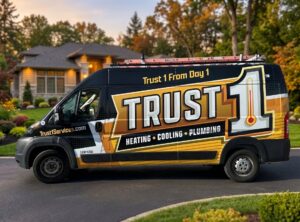
Trust 1 Services Plumbing, Heating and Air Conditioning offers a comprehensive range of HVAC services for furnaces, air conditioners, heat pumps, ductless mini-splits, air handlers, and complete ventilation systems. Keeping your home comfortable through New England’s changing weather requires a skilled team that understands local climate demands and complex equipment.
Whether you are dealing with an unexpected mid-winter heating emergency, preparing your central air conditioner for a summer heatwave, or looking to boost your home’s energy efficiency, our team has the training, tools, and local experience to handle the job properly.
We are here to make managing your home’s climate control simple and stress-free. Whether you still have questions about how your HVAC system operates, want to establish a custom air filter replacement schedule for your home, or need to schedule a professional maintenance visit, our team is ready to guide you through every step. Call us at (617) 420-1358 or reach out online to speak directly with a local specialist and book your service in Hanover, Randolph or the surrounding areas.


